PHA Exam Questions with 100% Correct
Answers 2024/2025
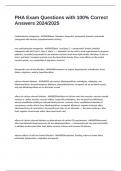
Cardioselective antagonists - ANSWERSbeta 1 blockers: bisoprolol, metoprolol, atenolol, acebutolol
(antagonist with intrinsic sympathomimetic activity)
non-cardioselective antagonists - ANSWERSbeta 1 and beta 2 --> propranolol, timolol, pindolol
(antagonist with ISA); beta 1, beta 2, alpha 1 --> labetalol (can be used to treat hypertension in pregnant
patients), carvedilol; propranolol is non-selective and also much more lipid soluble, therefore, it acts on
beta 1 and beta 2 receptors and can cross the blood brain barrier (thus, more effects on the central
nervous system, e.g. prophylaxis of migraines, tremors)
therapeutic uses of beta blockers - ANSWERStreatment of: angina, hypertension, arrhythmias, heart
failure, migraines, anxiety, hyperthyroidism
calcium channel blockers - ANSWERS3 sub classes: dihydropyridines: amlodipine, nifedipine; non
dihydropyridines: benzothiazepines; diltiazem; phenylalkylamines: verapamil; all act on blood vessels,
only non dihydropyridines act on the heart as well
effects of calcium channel blockers - ANSWERSinhibition of calcium entry into muscles: vascular smooth
muscles or cardiac muscles; vascular effects: (especially amlodipine, also verapamil and diltiazem),
arterial vasodilation leading to reduced blood pressure, coronary artery vasodilation/reduction of
vasospasms; cardiac effects (non dihydropyridines: verapamil, diltiazem): negative inotropic effect
(decreased force of contraction), decreased heart rate; act on arterioles --> decrease resistance, after
load; negative chronotropic effect (decreased heart rate)
effects of calcium channel blockers on determinants of cardiac O2 requirements - ANSWERSdecreased
after load (diastolic blood pressure); for non dihydropyridines --> decreased heart rate and contractility
in addition to decreased after load; dilate coronary arteries and increase O2 delivery
adverse effects of calcium channel blockers - ANSWERSheadaches, flushing, edema in lower limbs,
orthostatic hypotension, costipation (verapamil)
Answers 2024/2025
Cardioselective antagonists - ANSWERSbeta 1 blockers: bisoprolol, metoprolol, atenolol, acebutolol
(antagonist with intrinsic sympathomimetic activity)
non-cardioselective antagonists - ANSWERSbeta 1 and beta 2 --> propranolol, timolol, pindolol
(antagonist with ISA); beta 1, beta 2, alpha 1 --> labetalol (can be used to treat hypertension in pregnant
patients), carvedilol; propranolol is non-selective and also much more lipid soluble, therefore, it acts on
beta 1 and beta 2 receptors and can cross the blood brain barrier (thus, more effects on the central
nervous system, e.g. prophylaxis of migraines, tremors)
therapeutic uses of beta blockers - ANSWERStreatment of: angina, hypertension, arrhythmias, heart
failure, migraines, anxiety, hyperthyroidism
calcium channel blockers - ANSWERS3 sub classes: dihydropyridines: amlodipine, nifedipine; non
dihydropyridines: benzothiazepines; diltiazem; phenylalkylamines: verapamil; all act on blood vessels,
only non dihydropyridines act on the heart as well
effects of calcium channel blockers - ANSWERSinhibition of calcium entry into muscles: vascular smooth
muscles or cardiac muscles; vascular effects: (especially amlodipine, also verapamil and diltiazem),
arterial vasodilation leading to reduced blood pressure, coronary artery vasodilation/reduction of
vasospasms; cardiac effects (non dihydropyridines: verapamil, diltiazem): negative inotropic effect
(decreased force of contraction), decreased heart rate; act on arterioles --> decrease resistance, after
load; negative chronotropic effect (decreased heart rate)
effects of calcium channel blockers on determinants of cardiac O2 requirements - ANSWERSdecreased
after load (diastolic blood pressure); for non dihydropyridines --> decreased heart rate and contractility
in addition to decreased after load; dilate coronary arteries and increase O2 delivery
adverse effects of calcium channel blockers - ANSWERSheadaches, flushing, edema in lower limbs,
orthostatic hypotension, costipation (verapamil)