PSY 203 EXAM 4 || A+ Guaranteed.
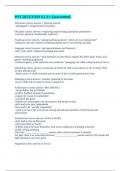
Nurturance correct answers + showing warmth
- disengaged or inappropriately disruptive
Discipline correct answers +explaining and providing appropriate punishment
-coercive, physical, insufficiently explained
Teaching correct answers +asking teaching questions "where are you coming from?"
-taking over the task without considering mental state or not offering any help
Language correct answers +age appropriateness and frequency
-talk "at the child" without encouraging interaction
Materials correct answers +what materials are provided to support the child's play- books, toys,
games- enabling imagination
-minimal support, prefer materials more useful for "managing" the child- sitting in front of the tv
Monitoring correct answers +awareness of where the chid is and what he or she is doing. What
are they playing with?
- barely aware of child's activities and no sense of how a child spends her/his time
Managing correct answers +routines, planning for the future
-leave a child with no sense of what's coming next
Authoritative correct answers -Best (HW/HC)
- set guidelines but are flexible
-positive feedback instead of punishment
-explain the reason for punishment
-consistent discipline
-children are encouraged to be autonomous, but are given rules
-girls tend to be more independent
-boys tend to be "socially responsible"
- seem to be his or her own person, having internalized standards of self-restraint and
achievement
Authoritarian correct answers -Worst (LW,HC)
-don't tend to rely on discussion
-often prescribed as "harsh"
-children tend to be more dependent, lack social competence in dealing with peers
-public yelling, spanking
-For boys: ___________________ parents tend to lead to increases in hostility
For girls: there is an association between __________________ parents and low self-esteem and
high depression: set lower goals
Neglectful correct answers (LW/LC)
, -don't really interact with their child
-shows up sometimes when parents have their own problems
-these children tend to be generally ignored by their parents
-children tend to be susceptible to peer pressure
Permissive correct answers (HW,LC)
-opposite of authoritarian parents
-don't often discipline children
-like to meet the children's needs
-children tend to be less mature and be less independent
-more likely to have high self-esteem, but also problem behaviors
-less likely to accept responsibility for their actions
Behavioral control correct answers -associated with authoritative parents
-attempting to regulate a child's behavior by setting guidelines that follow the norms and values
of the family/society
-used by families of high SES
Psychological control correct answers -associated with authoritarian parents
-regulating a child's behavior by manipulating their feelings
-withdrawing affection from the child
-inducing guilt or shame
-associated with more depressive and anxious symptoms in children
-better outcomes in Chinese-American families
Economic Hardship correct answers _____________ ____________ and other life stressors are
strongly associated with a drop in parental social responsiveness and parents' warmth and
empathy toward their children
-parents were more likely to be authoritarian way with the non-cooperative child
Friendship correct answers ongoing, reciprocal, positive relationship
Preschoolers correct answers (2yo-3/4yo)
-genuine sharing and cooperative exchange, pretend play
-toddlers: 2yo tend to have conflict over objects; older children tend to have conflicts over ideas
elementary correct answers -more friends, less supervision, decline in pretend play, same-sex
interactions
-boys tend to have larger social circles than girls
-boys' play tends to be based around dominance
-girls' play tends to be more prosocial
-develop negative relationship styles such as bullying and verbal aggression
-girls victimize friends in social ways-relationship aggression
-boys victimize friends physically
Nurturance correct answers + showing warmth
- disengaged or inappropriately disruptive
Discipline correct answers +explaining and providing appropriate punishment
-coercive, physical, insufficiently explained
Teaching correct answers +asking teaching questions "where are you coming from?"
-taking over the task without considering mental state or not offering any help
Language correct answers +age appropriateness and frequency
-talk "at the child" without encouraging interaction
Materials correct answers +what materials are provided to support the child's play- books, toys,
games- enabling imagination
-minimal support, prefer materials more useful for "managing" the child- sitting in front of the tv
Monitoring correct answers +awareness of where the chid is and what he or she is doing. What
are they playing with?
- barely aware of child's activities and no sense of how a child spends her/his time
Managing correct answers +routines, planning for the future
-leave a child with no sense of what's coming next
Authoritative correct answers -Best (HW/HC)
- set guidelines but are flexible
-positive feedback instead of punishment
-explain the reason for punishment
-consistent discipline
-children are encouraged to be autonomous, but are given rules
-girls tend to be more independent
-boys tend to be "socially responsible"
- seem to be his or her own person, having internalized standards of self-restraint and
achievement
Authoritarian correct answers -Worst (LW,HC)
-don't tend to rely on discussion
-often prescribed as "harsh"
-children tend to be more dependent, lack social competence in dealing with peers
-public yelling, spanking
-For boys: ___________________ parents tend to lead to increases in hostility
For girls: there is an association between __________________ parents and low self-esteem and
high depression: set lower goals
Neglectful correct answers (LW/LC)
, -don't really interact with their child
-shows up sometimes when parents have their own problems
-these children tend to be generally ignored by their parents
-children tend to be susceptible to peer pressure
Permissive correct answers (HW,LC)
-opposite of authoritarian parents
-don't often discipline children
-like to meet the children's needs
-children tend to be less mature and be less independent
-more likely to have high self-esteem, but also problem behaviors
-less likely to accept responsibility for their actions
Behavioral control correct answers -associated with authoritative parents
-attempting to regulate a child's behavior by setting guidelines that follow the norms and values
of the family/society
-used by families of high SES
Psychological control correct answers -associated with authoritarian parents
-regulating a child's behavior by manipulating their feelings
-withdrawing affection from the child
-inducing guilt or shame
-associated with more depressive and anxious symptoms in children
-better outcomes in Chinese-American families
Economic Hardship correct answers _____________ ____________ and other life stressors are
strongly associated with a drop in parental social responsiveness and parents' warmth and
empathy toward their children
-parents were more likely to be authoritarian way with the non-cooperative child
Friendship correct answers ongoing, reciprocal, positive relationship
Preschoolers correct answers (2yo-3/4yo)
-genuine sharing and cooperative exchange, pretend play
-toddlers: 2yo tend to have conflict over objects; older children tend to have conflicts over ideas
elementary correct answers -more friends, less supervision, decline in pretend play, same-sex
interactions
-boys tend to have larger social circles than girls
-boys' play tends to be based around dominance
-girls' play tends to be more prosocial
-develop negative relationship styles such as bullying and verbal aggression
-girls victimize friends in social ways-relationship aggression
-boys victimize friends physically