UNIT 1
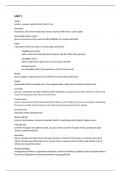
Haves:
lenders, possess capital and can lend it out
Havenots:
borrowers, have more needs than money and they will have to raise capital
Household balance sheet:
gives an overview of the assets and the liabilities of a single household
Asset:
a possession that has value in an exchange transaction
Tangible/real assets:
derive value from their physical character and the utility they generate
Intangible assets:
derive value from a legal claim to some future benefit
Financial assets:
are intangible assets that represent a claim to future cash
Bonds:
piece of paper stating the terms on which the money will be paid back
Equity:
shareholder funds consisting out of the original equity, right issues and the retained profit
Leverage:
gearing, companies use debt to finance their operations, expecting the profits made from borrowed
money to be greater than the cost of the loan
Trading book:
assets a bank had on their balance sheet that they use for trading, they have no intention of keeping
the shares on their sheet long term, the shares only have purpose for the clients
Banking book:
long term assets typically loans
Bond portfolio:
interest rate business, transform deposits (debt) in something which yields a higher return
Mutual fund:
portfolio manager who gathers funds, you give money and the manager invest, passing through
system, professional deal
Securities:
pieces of paper that refer to the borrower issuing a receipt for the money, a promise to pay back
which will show key information such as how much is owned, when it will be paid and the rate of
interest to reward the lender
Shadow banking:
unregulated activities by regulated institutions, financial activities of getting credit to people without
the normal legislation (consumer protection) being applicable
, Bail outs:
injection of money into a business or organisation that would otherwise face imminent collapse
UNIT 2
The term structure of interest rates:
yield curve, graph that is going to change on a daily basis because of the change in interest rates
Interest rate convention:
agreement between borrower and lender
Timelines:
linear representation of the timing of potential cash flows (in- and outflows)
Value additivity:
cash flows can only be summed if their values are expressed at the same moment
Spot rates:
different interest rates for every maturity
T-year spot rate sT:
return on single CF that will be received at the of period T
UNIT 3
Modifiers:
further qualification of AA+, AA flat and AA-, enhancing granularity of ratings
Investment grade:
likelihood that you will default (not be able to pay) is small
Speculative grade:
likelihood that you will default is much bigger
Default:
more than 90 days overdue with specific payment
Split rating:
2 or more rating agencies give a different rating
Credit watch:
refers to a variety of special programs offered by credit rating agencies and financial institutions to
monitor an individual’s credit report for any credit-related changes
Rating migration:
a change in rating reflects the assessment that the companies credit quality has improved (upgrade)
or deteriorated (downgrade)
Upgrade:
positive change in the rating of a security, doesn’t go fast, a whole process downgrade
Fallen angel:
a bond that has been reduced to junk status (downgraded firms) because its issuer has fallen into
financial trouble
Haves:
lenders, possess capital and can lend it out
Havenots:
borrowers, have more needs than money and they will have to raise capital
Household balance sheet:
gives an overview of the assets and the liabilities of a single household
Asset:
a possession that has value in an exchange transaction
Tangible/real assets:
derive value from their physical character and the utility they generate
Intangible assets:
derive value from a legal claim to some future benefit
Financial assets:
are intangible assets that represent a claim to future cash
Bonds:
piece of paper stating the terms on which the money will be paid back
Equity:
shareholder funds consisting out of the original equity, right issues and the retained profit
Leverage:
gearing, companies use debt to finance their operations, expecting the profits made from borrowed
money to be greater than the cost of the loan
Trading book:
assets a bank had on their balance sheet that they use for trading, they have no intention of keeping
the shares on their sheet long term, the shares only have purpose for the clients
Banking book:
long term assets typically loans
Bond portfolio:
interest rate business, transform deposits (debt) in something which yields a higher return
Mutual fund:
portfolio manager who gathers funds, you give money and the manager invest, passing through
system, professional deal
Securities:
pieces of paper that refer to the borrower issuing a receipt for the money, a promise to pay back
which will show key information such as how much is owned, when it will be paid and the rate of
interest to reward the lender
Shadow banking:
unregulated activities by regulated institutions, financial activities of getting credit to people without
the normal legislation (consumer protection) being applicable
, Bail outs:
injection of money into a business or organisation that would otherwise face imminent collapse
UNIT 2
The term structure of interest rates:
yield curve, graph that is going to change on a daily basis because of the change in interest rates
Interest rate convention:
agreement between borrower and lender
Timelines:
linear representation of the timing of potential cash flows (in- and outflows)
Value additivity:
cash flows can only be summed if their values are expressed at the same moment
Spot rates:
different interest rates for every maturity
T-year spot rate sT:
return on single CF that will be received at the of period T
UNIT 3
Modifiers:
further qualification of AA+, AA flat and AA-, enhancing granularity of ratings
Investment grade:
likelihood that you will default (not be able to pay) is small
Speculative grade:
likelihood that you will default is much bigger
Default:
more than 90 days overdue with specific payment
Split rating:
2 or more rating agencies give a different rating
Credit watch:
refers to a variety of special programs offered by credit rating agencies and financial institutions to
monitor an individual’s credit report for any credit-related changes
Rating migration:
a change in rating reflects the assessment that the companies credit quality has improved (upgrade)
or deteriorated (downgrade)
Upgrade:
positive change in the rating of a security, doesn’t go fast, a whole process downgrade
Fallen angel:
a bond that has been reduced to junk status (downgraded firms) because its issuer has fallen into
financial trouble