This summary from Applied Animal Ecology contains all the important stuff from all the lectures and all de
articles from brightspace.
Index
Lecture 1 General Framework…………………………………..………………………………..………………………………..……………………2
Lecture 2 Populations………………………………..………………………………..………………………………..…………………………………..5
Lecture 3 Birds and mammals………..………………………………..……………..………………………………..……………..………………..7
Lecture 4 Top Down: predators………..………………………………..……………..………………………………..……………..………….…..8
Lecture 5 Bottom-up control.………..………………………………..……………..………………………………..……………..……………….11
Lecture 6&7 Orangutan population management…………………………………………………………………………………………….13
Lecture 8 Food intake. Acquiring energy and nutrients……………………………………………………………………………..……..14
Lecture 9 Food intake. Herbivores. Being vegetarian………………………………………………………………………………………..16
Lecture 10 Expenditure. The costs of living……………………………………………………………………………………………………….20
Lecture 12&13 Disease ecology. Implications for wildlife management……………………………………………………………21
Lecture 11&14 Energy and nutrient budgets. Gain or loss………………………………………………………………………………..23
Lecture 15 Assingment……………………………………………………………………………………………………………………………………..24
Lecture 16&17 Wildlife management & monitoring…………………………………………………………………………………………24
Lecture 18/19 Moose and Oystercatcher population dynamics………………………………………………………………………..26
,Lecture 1 28 oct 2019
How to increase/decrease wildlife population size?
What causes the increase/decrease in wildlife populations?
Focus always goes back to the question first
Looking at population and recognize that in the population there are individuals with their own individual
stories which you have to take into account when looking at the population.
Analytical ecologist: considers individual organism (birth, survival, growth, reproduction, mortality) within their
environment (typified by conditions and resources). à does not so much consider general ecological
processes, which are typically at ecosystem level, complex of nature, and ignore the specifics of the individual
organism.
Animals
• Population and individuals (à not the ecosystem)
Performance
• Survival (most easy part)
• Growth (second) (à not richness/diversity)
• Reproduction (most difficult) (à not ecosystem functioning/resilience)
In resource, focus on what your goal is
Animal performance, how is it measured?
à Look at body composition for example
Small
Which is the best?
Seasonality has
Big consequences for
resources and
conditions!!
Resources: food availability, soil type, fertility, fire, etc.
Environmental condition: light availability, temperature, radiation, wind, humidity, and precipitation
2
, We want to increase population:
1. How can it stay warm?
2. How can it stay hydrated?
3. How can it be well fed?
4. How can it be safe?
à Conserving the animal for the sake of the animal (and ofcourse you need knowledge about the
environment)
The motivation to learn about animal ecology, and apply the knowledge
You also need to know what the animal is eating, so plants are also important!
Populations can increase and decrease:
Animal: à individual dynamics
Gaining weight/other nutrients and losing them
Survival and reproduction
Population: à population dynamics
Gaining individuals and losing them (birth & death)
Abundance/density and growth
Abundance refers to the relative representation of
a species in a particular ecosystem.
Always ask yourself: what level and is it gaining or losing?
This course assumes there is no immigration and emigration
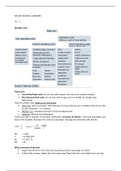
The conceptual model
e.g. Oostvaardersplassen is losing animals
Is that because animals don’t reproduce or
because they are dying or both?
This model separates the different effects and
gives the strengths
Allowing for a
key-factor
analysis
Production has to be fuelled and has waste products. And not just production, but also maintenance and
thermoregulation.
Anabolic – catabolic
Anabolism: costs energy (small molecules become big molecules)
Catabolism: gives energy (big molecules are broken down to small molecules)
3
articles from brightspace.
Index
Lecture 1 General Framework…………………………………..………………………………..………………………………..……………………2
Lecture 2 Populations………………………………..………………………………..………………………………..…………………………………..5
Lecture 3 Birds and mammals………..………………………………..……………..………………………………..……………..………………..7
Lecture 4 Top Down: predators………..………………………………..……………..………………………………..……………..………….…..8
Lecture 5 Bottom-up control.………..………………………………..……………..………………………………..……………..……………….11
Lecture 6&7 Orangutan population management…………………………………………………………………………………………….13
Lecture 8 Food intake. Acquiring energy and nutrients……………………………………………………………………………..……..14
Lecture 9 Food intake. Herbivores. Being vegetarian………………………………………………………………………………………..16
Lecture 10 Expenditure. The costs of living……………………………………………………………………………………………………….20
Lecture 12&13 Disease ecology. Implications for wildlife management……………………………………………………………21
Lecture 11&14 Energy and nutrient budgets. Gain or loss………………………………………………………………………………..23
Lecture 15 Assingment……………………………………………………………………………………………………………………………………..24
Lecture 16&17 Wildlife management & monitoring…………………………………………………………………………………………24
Lecture 18/19 Moose and Oystercatcher population dynamics………………………………………………………………………..26
,Lecture 1 28 oct 2019
How to increase/decrease wildlife population size?
What causes the increase/decrease in wildlife populations?
Focus always goes back to the question first
Looking at population and recognize that in the population there are individuals with their own individual
stories which you have to take into account when looking at the population.
Analytical ecologist: considers individual organism (birth, survival, growth, reproduction, mortality) within their
environment (typified by conditions and resources). à does not so much consider general ecological
processes, which are typically at ecosystem level, complex of nature, and ignore the specifics of the individual
organism.
Animals
• Population and individuals (à not the ecosystem)
Performance
• Survival (most easy part)
• Growth (second) (à not richness/diversity)
• Reproduction (most difficult) (à not ecosystem functioning/resilience)
In resource, focus on what your goal is
Animal performance, how is it measured?
à Look at body composition for example
Small
Which is the best?
Seasonality has
Big consequences for
resources and
conditions!!
Resources: food availability, soil type, fertility, fire, etc.
Environmental condition: light availability, temperature, radiation, wind, humidity, and precipitation
2
, We want to increase population:
1. How can it stay warm?
2. How can it stay hydrated?
3. How can it be well fed?
4. How can it be safe?
à Conserving the animal for the sake of the animal (and ofcourse you need knowledge about the
environment)
The motivation to learn about animal ecology, and apply the knowledge
You also need to know what the animal is eating, so plants are also important!
Populations can increase and decrease:
Animal: à individual dynamics
Gaining weight/other nutrients and losing them
Survival and reproduction
Population: à population dynamics
Gaining individuals and losing them (birth & death)
Abundance/density and growth
Abundance refers to the relative representation of
a species in a particular ecosystem.
Always ask yourself: what level and is it gaining or losing?
This course assumes there is no immigration and emigration
The conceptual model
e.g. Oostvaardersplassen is losing animals
Is that because animals don’t reproduce or
because they are dying or both?
This model separates the different effects and
gives the strengths
Allowing for a
key-factor
analysis
Production has to be fuelled and has waste products. And not just production, but also maintenance and
thermoregulation.
Anabolic – catabolic
Anabolism: costs energy (small molecules become big molecules)
Catabolism: gives energy (big molecules are broken down to small molecules)
3