1
Blood Administration
Preparation for Blood Transfusion
Patient History
o Have they ever had previous complications?
Type and cross match
Consent
o One per hospital stay
o EVERY sing time they have a hospital stay (only need to ask per each stay)
Very important to make sure that you match the correct blood type
Type and Cross Match
2 blood samples taken 5 minutes apart with two RN signature
Universal donor O negative
Universal recipient is AB positive
Donor and recipient is very important
Have to test 2 (2 different times) and 2 RN signatures on the blood tube that gets sent to the lab and
taken 5 minutes apart
If you get the wrong blood, they attack itself so it affects the heart kills the heart patient is dead
Types of Blood Components
Packed Red Blood Cells
o Infusion 1 unit per 2 hours
o Given for low Hematocrit and Hemoglobin or to replace fluid loss
Platelets
o Given rapidly over 15 to 30 minutes
o Given for low platelets
Fresh-frozen plasma
o Given rapidly over 15 to 30 minutes
o Improve clotting factors and improves volume expansion
White Blood Cells
o Used to treat sepsis and neutropenia – when unresponsive to antibiotics
o One unit per one hour
Blood can only be given on certain amount of time
“getting blood” top one and its normal (packed red blood cells)
anything else is abnormal
blood can only be hung for 4 hours after 4 hours it will clot (you have 30 minutes to hang the blood
that is not included in the 4 hours)
blood hanging needs to RNs to hang it
Getting ready for Administration
ONLY one unit at a time should be received from the blood bank
Initiate transfusion within 30 minutes of receiving blood
2 RN need to identify Blood Products:
o ABO group and Rh Type
o Donor number
o Expiration Date
o Patient and Patient ID# (MRN)
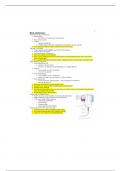
Blood Product Set Up Picture to the right
Only thing that gets hung with blood is normal saline
Not normal saline and meds JUST NORMAL SALINE
MEDS DO NOT GET PUT UP WITH BLOOD!!!
, 2
Monitoring Patient during Blood Product Administration
Baseline Vital Signs
o Prior to transfusion
o Including temperature
1st set of Vital Signs:
o 15 minutes after initiation
o Including temperature
Continuous
o Every hour (usual 4 hours)
TEMPERATURE IS SO IMPORTANT
Example: Starts at 9 (baseline starts now), then 9:15 is the first set; then 10, 11, 12, 1.
Temperature is the most important vital because if they spike a fever, it is called a Febrile Reaction
Blood Administration
ABSOLUTELY NO MEDICATION ADMINISTRATION WITH BLOOD TRANSFUSION
Normal Saline Solution is the only thing that is allowed to be pushed with transfusion
Complications 2
If a reaction occurs during transfusion: IMMEDIATELY STOP BLOOD even as a student nurse
because it’s a life saving measure
Call physician
Obtain vitals
Collect blood product/IV tubing – send to blood bank
Administer isotonic solution at a maintenance rate NS and lactitated ringers
If get a fever during transfusion STOP INFUSION immediately
If complications send everything tubing bag, everything!!
Reactions
Transfusion reaction is an adverse reaction that happens as a result of receiving a blood transfusion
Types: hemolytic, allergic, febrile, septicemia, transfusion-associated graft vs. host disease
S/S: restlessness, Hives, anxiety, chills, flushing, fever, chest/lumbar pain, tachycardia, tachypnea,
nausea, shock
Finished?
Document date/time and volume given
Obtain vital signs
Patient’s status never be sleep at end of transfusion you have to wake them up
Check orders for Labs?
Dispose in contaminated waste-red bag
Acid- Base Imbalances
The arterial blood gas provides the following values:
pH: measurement of acidity or alkalinity, based on the hydrogen (H+) ions present.
o The normal range is 7.35 to 7.45
o pH > 7.45 = alkalosis
o pH <7.35 = acidosis
paO2: the partial pressure of oxygen that is dissolved in arterial blood.
o The normal range is 80 to 100 mmHg.
SaO2: the arterial oxygen saturation
o The normal range is 95% to 100%.
pCO2: the amount of carbon dioxide dissolved in arterial blood.
o The normal range is 35 to 45 mmHg.
o pCO2 > 45 = acidosis
, 3
o pCO2 < 35 = alkalosis
o CO2 what you breathe out
o Shouldn’t be a lot in arterial because its oxygen rich deoxygenated blood is higher in CO2
o Acidosis is higher for CO2; alkalosis is lower for CO2
HCO3: the calculated value of the amount of bicarbonate in the bloodstream
o The normal range is 22 to 26 mEq/liter
o HCO3 > 26 = Alkalosis
o HCO3 < 22 = Acidosis
o How much waste/bad things are in the blood
Acid-base imbalances
Not a disease: a disorder or pathologic process
Caused by: metabolic problems, respiratory problems, or both
Something outside is causing an inside problem
Metabolic center kidneys
o Doesn’t work, going to all go back up
o Flushed too much, going to flush everything out
o Respiratory issues = lungs
Patient History
Risk factors: Kidney Disease and Pulmonary Disease
Drugs: diuretics and antacids
Urinations? Dehydration? Respiratory Distress?
Diuretics help flush out system (kidneys process faster)
o Easier for a metabolic problem to occur
Antacid – like tums
Respiratory distress? having difficulty breathing
Patient Assessment
Vital Signs:
o RR and depth
o HR and Rhythm
o Oxygen Saturation of 95% or higher
Physical Assessment
o Able to speak a sentence of 12 words without stopping for a breath
o Able to walk and talk without stopping for breath
o No cyanosis
o Rapid capillary refill
o Muscle strength consistent
o Urine output equal to fluid intake
Psychological assessment:
o Alert and oriented x3
o Energy level
o Can engage in desired work, recreational, and personal activities
Laboratory assessment:
o ABG
o Electrolytes (especially K and Ca)
Physical assessment what a health patient should be able to do if they are okay
Acidosis
Blood pH below 7.35
Pathophysiology: excess of hydrogen ions (H+)
, 4
Amount of acids present is greater than normal compared with the amount of strengths of bases
Alkalosis
Blood pH above 7.45
Pathophysiology: more base components
Decrease in the free hydrogen ion level of the blood
Respiratory Acidosis = pH less than 7.35 and PaCO2 greater than 45 mmHg
Any condition that results in hypoventilation can cause respiratory acidosis. These conditions include:
o Central nervous system depression related to head injury and/or medications such as narcotics,
sedatives, or anesthesia (especially opioids)
o Impaired respiratory muscle function related to spinal cord injury, neuromuscular diseases, or
neuromuscular blocking drugs
o Pulmonary disorders such as atelectasis, pneumonia, pneumothorax, pulmonary edema, or
bronchial obstruction
o Massive pulmonary embolus
o Hypoventilation due to pain, chest wall injury/deformity, or abdominal distention
o Hypoventilation not getting enough O2 and have too much CO2
Signs and Symptoms
o Dyspnea, respiratory distress, shallow respirations, headache, restlessness, confusion,
tachycardia, dysthymias
o Increasing ventilation will correct respiratory acidosis
o If the patient is unstable, manual ventilation with a bag-mask is indicated until the underlying
problem can be addressed. After stabilization, rapidly resolvable causes are addressed
immediately. Causes that can be treated rapidly include pneumothorax, pain, and CNS
depression related medication. If the cause cannot be readily resolved, the patients with
hypoventilation often require supplemental oxygen, it is important to remember that oxygen
alone will not correct the problem.
o Confusion is a sign because then they have low oxygen – breathing is not working properly
causes confusion
o Treatment: pulse Ox then give them O2
o Always assess before you treat
Respiratory Alkalosis = pH greater than 7.45 and PaCO2 less than 35 mmHg
Any condition that causes hyperventilation can result in respiratory alkalosis. These conditions include:
o Psychological responses, such as anxiety or fear
o Pain
o Increased metabolic demands, such as fever, sepsis, pregnancy, or thyrotoxicosis
o Medications, such as respiratory stimulants
o Central nervous system lesions
o Hyperventilation too much O2 not enough CO2
Signs and Symptoms
o Neurological, light-headedness numbness and tingling, confusion, inability to concentrate,
blurred vision, cardiovascular, dysrhythmias palpitations diaphoresis, dry mouth, tetanic spasms
of the arms and legs
o If the CO2 beccomes extremely high, drowsiness and unresponsiveness may be noted.
o Treatment of respiratory alkalosis centers on resolving the underlying problem. Patients
presenting with respiratory alkalosis have dramatically increased work of breathing and must be
monitored closely for respiratory muscle fatigue. When the respiratory muscles become
exhausted, acute respiratory failure may ensue.
Blood Administration
Preparation for Blood Transfusion
Patient History
o Have they ever had previous complications?
Type and cross match
Consent
o One per hospital stay
o EVERY sing time they have a hospital stay (only need to ask per each stay)
Very important to make sure that you match the correct blood type
Type and Cross Match
2 blood samples taken 5 minutes apart with two RN signature
Universal donor O negative
Universal recipient is AB positive
Donor and recipient is very important
Have to test 2 (2 different times) and 2 RN signatures on the blood tube that gets sent to the lab and
taken 5 minutes apart
If you get the wrong blood, they attack itself so it affects the heart kills the heart patient is dead
Types of Blood Components
Packed Red Blood Cells
o Infusion 1 unit per 2 hours
o Given for low Hematocrit and Hemoglobin or to replace fluid loss
Platelets
o Given rapidly over 15 to 30 minutes
o Given for low platelets
Fresh-frozen plasma
o Given rapidly over 15 to 30 minutes
o Improve clotting factors and improves volume expansion
White Blood Cells
o Used to treat sepsis and neutropenia – when unresponsive to antibiotics
o One unit per one hour
Blood can only be given on certain amount of time
“getting blood” top one and its normal (packed red blood cells)
anything else is abnormal
blood can only be hung for 4 hours after 4 hours it will clot (you have 30 minutes to hang the blood
that is not included in the 4 hours)
blood hanging needs to RNs to hang it
Getting ready for Administration
ONLY one unit at a time should be received from the blood bank
Initiate transfusion within 30 minutes of receiving blood
2 RN need to identify Blood Products:
o ABO group and Rh Type
o Donor number
o Expiration Date
o Patient and Patient ID# (MRN)
Blood Product Set Up Picture to the right
Only thing that gets hung with blood is normal saline
Not normal saline and meds JUST NORMAL SALINE
MEDS DO NOT GET PUT UP WITH BLOOD!!!
, 2
Monitoring Patient during Blood Product Administration
Baseline Vital Signs
o Prior to transfusion
o Including temperature
1st set of Vital Signs:
o 15 minutes after initiation
o Including temperature
Continuous
o Every hour (usual 4 hours)
TEMPERATURE IS SO IMPORTANT
Example: Starts at 9 (baseline starts now), then 9:15 is the first set; then 10, 11, 12, 1.
Temperature is the most important vital because if they spike a fever, it is called a Febrile Reaction
Blood Administration
ABSOLUTELY NO MEDICATION ADMINISTRATION WITH BLOOD TRANSFUSION
Normal Saline Solution is the only thing that is allowed to be pushed with transfusion
Complications 2
If a reaction occurs during transfusion: IMMEDIATELY STOP BLOOD even as a student nurse
because it’s a life saving measure
Call physician
Obtain vitals
Collect blood product/IV tubing – send to blood bank
Administer isotonic solution at a maintenance rate NS and lactitated ringers
If get a fever during transfusion STOP INFUSION immediately
If complications send everything tubing bag, everything!!
Reactions
Transfusion reaction is an adverse reaction that happens as a result of receiving a blood transfusion
Types: hemolytic, allergic, febrile, septicemia, transfusion-associated graft vs. host disease
S/S: restlessness, Hives, anxiety, chills, flushing, fever, chest/lumbar pain, tachycardia, tachypnea,
nausea, shock
Finished?
Document date/time and volume given
Obtain vital signs
Patient’s status never be sleep at end of transfusion you have to wake them up
Check orders for Labs?
Dispose in contaminated waste-red bag
Acid- Base Imbalances
The arterial blood gas provides the following values:
pH: measurement of acidity or alkalinity, based on the hydrogen (H+) ions present.
o The normal range is 7.35 to 7.45
o pH > 7.45 = alkalosis
o pH <7.35 = acidosis
paO2: the partial pressure of oxygen that is dissolved in arterial blood.
o The normal range is 80 to 100 mmHg.
SaO2: the arterial oxygen saturation
o The normal range is 95% to 100%.
pCO2: the amount of carbon dioxide dissolved in arterial blood.
o The normal range is 35 to 45 mmHg.
o pCO2 > 45 = acidosis
, 3
o pCO2 < 35 = alkalosis
o CO2 what you breathe out
o Shouldn’t be a lot in arterial because its oxygen rich deoxygenated blood is higher in CO2
o Acidosis is higher for CO2; alkalosis is lower for CO2
HCO3: the calculated value of the amount of bicarbonate in the bloodstream
o The normal range is 22 to 26 mEq/liter
o HCO3 > 26 = Alkalosis
o HCO3 < 22 = Acidosis
o How much waste/bad things are in the blood
Acid-base imbalances
Not a disease: a disorder or pathologic process
Caused by: metabolic problems, respiratory problems, or both
Something outside is causing an inside problem
Metabolic center kidneys
o Doesn’t work, going to all go back up
o Flushed too much, going to flush everything out
o Respiratory issues = lungs
Patient History
Risk factors: Kidney Disease and Pulmonary Disease
Drugs: diuretics and antacids
Urinations? Dehydration? Respiratory Distress?
Diuretics help flush out system (kidneys process faster)
o Easier for a metabolic problem to occur
Antacid – like tums
Respiratory distress? having difficulty breathing
Patient Assessment
Vital Signs:
o RR and depth
o HR and Rhythm
o Oxygen Saturation of 95% or higher
Physical Assessment
o Able to speak a sentence of 12 words without stopping for a breath
o Able to walk and talk without stopping for breath
o No cyanosis
o Rapid capillary refill
o Muscle strength consistent
o Urine output equal to fluid intake
Psychological assessment:
o Alert and oriented x3
o Energy level
o Can engage in desired work, recreational, and personal activities
Laboratory assessment:
o ABG
o Electrolytes (especially K and Ca)
Physical assessment what a health patient should be able to do if they are okay
Acidosis
Blood pH below 7.35
Pathophysiology: excess of hydrogen ions (H+)
, 4
Amount of acids present is greater than normal compared with the amount of strengths of bases
Alkalosis
Blood pH above 7.45
Pathophysiology: more base components
Decrease in the free hydrogen ion level of the blood
Respiratory Acidosis = pH less than 7.35 and PaCO2 greater than 45 mmHg
Any condition that results in hypoventilation can cause respiratory acidosis. These conditions include:
o Central nervous system depression related to head injury and/or medications such as narcotics,
sedatives, or anesthesia (especially opioids)
o Impaired respiratory muscle function related to spinal cord injury, neuromuscular diseases, or
neuromuscular blocking drugs
o Pulmonary disorders such as atelectasis, pneumonia, pneumothorax, pulmonary edema, or
bronchial obstruction
o Massive pulmonary embolus
o Hypoventilation due to pain, chest wall injury/deformity, or abdominal distention
o Hypoventilation not getting enough O2 and have too much CO2
Signs and Symptoms
o Dyspnea, respiratory distress, shallow respirations, headache, restlessness, confusion,
tachycardia, dysthymias
o Increasing ventilation will correct respiratory acidosis
o If the patient is unstable, manual ventilation with a bag-mask is indicated until the underlying
problem can be addressed. After stabilization, rapidly resolvable causes are addressed
immediately. Causes that can be treated rapidly include pneumothorax, pain, and CNS
depression related medication. If the cause cannot be readily resolved, the patients with
hypoventilation often require supplemental oxygen, it is important to remember that oxygen
alone will not correct the problem.
o Confusion is a sign because then they have low oxygen – breathing is not working properly
causes confusion
o Treatment: pulse Ox then give them O2
o Always assess before you treat
Respiratory Alkalosis = pH greater than 7.45 and PaCO2 less than 35 mmHg
Any condition that causes hyperventilation can result in respiratory alkalosis. These conditions include:
o Psychological responses, such as anxiety or fear
o Pain
o Increased metabolic demands, such as fever, sepsis, pregnancy, or thyrotoxicosis
o Medications, such as respiratory stimulants
o Central nervous system lesions
o Hyperventilation too much O2 not enough CO2
Signs and Symptoms
o Neurological, light-headedness numbness and tingling, confusion, inability to concentrate,
blurred vision, cardiovascular, dysrhythmias palpitations diaphoresis, dry mouth, tetanic spasms
of the arms and legs
o If the CO2 beccomes extremely high, drowsiness and unresponsiveness may be noted.
o Treatment of respiratory alkalosis centers on resolving the underlying problem. Patients
presenting with respiratory alkalosis have dramatically increased work of breathing and must be
monitored closely for respiratory muscle fatigue. When the respiratory muscles become
exhausted, acute respiratory failure may ensue.