Classical Civilisation Imperial Image Sources
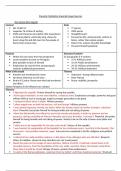
Res Gestae Divi Augusti
Context Style
AD 13/AD 14 1st person
Augustus 76 at time of writing 2500 words
2500 word funerary inscription (the mausoleum Straightforward
on bronze pillars), extremely long, shows he Focused on life, achievements, actions in
lived a long life and did more for the people of Rome, rather than whole empire
Rome than anyone else. Doesn’t lie, actions all public knowledge
Presents himself positively
Purpose Structure/Content
Writes his own story from his perspective 35 paragraphs & 4 sections
Leaves positive account on his legacy 2-14: Political career
Best possible version of himself 15-24: Public benefactions
Emphasises he was the first among equals, 25-33: Military achievements
restores traditional government 34-35: Political statement
What’s left unsaid Themes
Enemies not mentioned by name Imperator- strong military leader
No direct reference to civil wars Pater Patriae
Brutus & Cassius ‘those men who had murdered Peace- stability, prosperity
my father’
Sextus Pompeius & his followers are ‘pirates’
Glossary
‘I liberated the republic’ Praises himself for saving the republic
‘At the age of nineteen, on my own initiative, I raised an army’ Emphasises strength, powerful and good
military skills at such a young age. Inspires younger generation to be great
‘I conquered them twice in battle’ Military prowess
‘I often waged wars on both lad and sea, civil and foreign’ Military prowess
‘I was named imperator twenty one times. When the Senate voted me further triumphs, I declined
them’ Powerful, but prides himself for being humble and not taking all power
‘when the dictatorship was offered to me by the senate and people, in both my absence and my
presence, during consulship of Marcus Marcellus and Lucius Arruntius, I refused it’ Powerful, but prides
himself for being humble and not taking all power. Wants to be on the side of lower class/plebs and
senates
‘I alone was to be responsible for the laws and morals’ Saviour of the republic
‘I was triumvir for organisation of the Republic for ten continuous years. I was first in the Senate[…]for
forty years. I was pontifex maximus, augur’ Successes he completed in his life. Religious and political
success
‘I refused to be made pontifex maximus, in the place of my colleague who was still alive’ Respects
others & tradition, shows his true intentions are not t seek power
About the gates on the temple of Janus Quirinus, ‘Before my birth, it had been closed twice in all
recorded memory, from the foundation of the city; while I was first citizen, the Senate voted three
times that it should be closed’ Bringer of peace, greater than predecessors
‘to each of the Roman plebeians, I paid out from my father’s will three hundred sesterces’ Treats all
, with respect, man of his word
‘the sum was about six hundred million sesterces, which I paid for lands in Italy, and two hundred and
sixty million for provincial lands. I was the first and only person to have done this’ Generous
‘I built the Curia and the Chalcidicum adjacent to it, and the temple of Apollo on the Palatine’ Pious
‘I rebuilt the Capitol and the Theatre of Pompey, both works at great expense without inscribing my
name on either of them’ Generous and not power hungry, doesn’t feel the need to take credit
‘In my sixth consulship I restored eighty two temples of the gods in the city by the authority of the
senate’ Pious, restoring religion
‘I dedicated gifts from the boots […] which cost me about one hundred million sesterces’ Generous
‘I put on games under my own name four times, and in the name of other magistrates twenty three
times’ Providing entertainment for the public, but puts the shine on other people, not seeking
fame/power
‘Silver statues of me, on foot or on horseback and in chariots were erected in about eighty cities, which
I myself removed, and from the money I placed golden gifts in the temple of Apollo’ This emphasises
his power, but presents him as humble and pious
‘I freed the sea from pirates’ Describes Sextus Pompeius. Saviour.
‘I pacified the provinces of Gaul and Spain- Consistent, conquest for peace, military skill
‘I preferred to follow the example of our ancestors’ Follows tradition
‘When I saw people revolted or rebelled, I subdued them through my son Gaius and handed them over
to King Ariobarzanes’ Not a push over or weak leader, saviour of the republic, restores order
28- lists places he founded colonies in- Successful and better than his predecessors
‘I deposited these standards in the inner shrine of the temple of Mars the Avenger’ Savour of the
republic, upholding religion, role model
‘I compelled the Parthians to return the standards’ Strong and powerful
‘Embassies from kings In India were often sent to me; never before that tie had they been sent with
Roman generals’ Clementia & respect
‘When this was written, I was seventy-six years of age’ Completed a lot in his lifetime. Lived a long,
great life. Perhaps reading this would inspire others to try to do the same.
Horace
A Toast to Actium- Horace
Context Form & Structure
30BC Iambic structure
Celebrates victory at Actium 37 lines
Actium- Naval battle off coast of Greece- 31BC Addressed to Maecenas
Octavian, with Agrippa, defeated navy of Antony
& Cleopatra, they then fled to Alexandria
Summary What’s left unsaid
Festive atmosphere at Maecenas’ house in anticipation Antony isn’t named. He’s ‘A Roman’, but one
of the triumph. Antony is portrayed as un-Roman due to who fails Rome.
, his foreign wife, has been deserted by his supporters Civil war not referenced
and he has been defeated by a general greater than Cleopatra not named- A women who is
Marius and the Scipios. Why delay the Triumph? Drink shameful & foreign
away all your fears! No details of battle
Little religious reference
Themes
Actium- key victory
Imperator- strong military leader
Glossary
‘With you in Caesar’s triumph, drinking Caecuban Cellared for festive banquets’ Celebration at a dinner
party and expensive wine
‘That Dorian and these Italian’ Different music styles at prty are mixed
‘As lately, when Pompey, driven from the sea, had fled, with his ships destroyed, Having threatened the
city with shackles he’d taken From those faithless slaves, his friends’ Battle of Naulochus 36BC. Sextus
Pompey had controlled the sea until defeated in 36BC
‘faithless slaves’ Pompey was supported by pirates and runaway slaves- criticism
‘To serve the withered eunuchs, While the sun looks down on her shameful pavilion’ Antony and his
servitude to Cleopatra
‘Hail, Triumph!’ Victory worthy of a triumph
‘unmblemished steers’ Spotless oxen- sacrifice
‘In the war with Jugurtha’ African king defeated by Marius
‘Nor was Africanus, whose courage made a tomb’ Defeat of Hannibal (one of the greatest defeats of
Roman history)
‘The enemy, beaten at sea and on land, changes his scarlet cloak for black’ Defeats, colour imagery,
vivid
‘Against opposing winds, he either heads for Crete ‘Fleeing, running away- Augustus made someone
who was supposed to be a worthy general flee from Rome, shows his power.
‘Chian Lesbian’ First-rate Greek wines
‘Let’s delight in banishing fear and anxiety For Caesar’s affairs, with sweet wine’ Celebratory tone.
Cleopatra- Horace
Context Form & Structure
23BC Lyric poem
About cleopatra, written 7 years after Actium 32 lines
Addresses reader
Summary Techniques
Prepare for a feats. While Rome was under threat it would Antony not mentioned
have been wrong to drink. Now, the mad & corrupt enemy Cleopatra not named
has been defeated. Yet, she showed bravery by opting for Caesar is strong, but the poem focuses on the
suicide to avoid being paraded in a Triumph vanquished not the victor
in death, Cleopatra acts like a man rather
than a woman
Res Gestae Divi Augusti
Context Style
AD 13/AD 14 1st person
Augustus 76 at time of writing 2500 words
2500 word funerary inscription (the mausoleum Straightforward
on bronze pillars), extremely long, shows he Focused on life, achievements, actions in
lived a long life and did more for the people of Rome, rather than whole empire
Rome than anyone else. Doesn’t lie, actions all public knowledge
Presents himself positively
Purpose Structure/Content
Writes his own story from his perspective 35 paragraphs & 4 sections
Leaves positive account on his legacy 2-14: Political career
Best possible version of himself 15-24: Public benefactions
Emphasises he was the first among equals, 25-33: Military achievements
restores traditional government 34-35: Political statement
What’s left unsaid Themes
Enemies not mentioned by name Imperator- strong military leader
No direct reference to civil wars Pater Patriae
Brutus & Cassius ‘those men who had murdered Peace- stability, prosperity
my father’
Sextus Pompeius & his followers are ‘pirates’
Glossary
‘I liberated the republic’ Praises himself for saving the republic
‘At the age of nineteen, on my own initiative, I raised an army’ Emphasises strength, powerful and good
military skills at such a young age. Inspires younger generation to be great
‘I conquered them twice in battle’ Military prowess
‘I often waged wars on both lad and sea, civil and foreign’ Military prowess
‘I was named imperator twenty one times. When the Senate voted me further triumphs, I declined
them’ Powerful, but prides himself for being humble and not taking all power
‘when the dictatorship was offered to me by the senate and people, in both my absence and my
presence, during consulship of Marcus Marcellus and Lucius Arruntius, I refused it’ Powerful, but prides
himself for being humble and not taking all power. Wants to be on the side of lower class/plebs and
senates
‘I alone was to be responsible for the laws and morals’ Saviour of the republic
‘I was triumvir for organisation of the Republic for ten continuous years. I was first in the Senate[…]for
forty years. I was pontifex maximus, augur’ Successes he completed in his life. Religious and political
success
‘I refused to be made pontifex maximus, in the place of my colleague who was still alive’ Respects
others & tradition, shows his true intentions are not t seek power
About the gates on the temple of Janus Quirinus, ‘Before my birth, it had been closed twice in all
recorded memory, from the foundation of the city; while I was first citizen, the Senate voted three
times that it should be closed’ Bringer of peace, greater than predecessors
‘to each of the Roman plebeians, I paid out from my father’s will three hundred sesterces’ Treats all
, with respect, man of his word
‘the sum was about six hundred million sesterces, which I paid for lands in Italy, and two hundred and
sixty million for provincial lands. I was the first and only person to have done this’ Generous
‘I built the Curia and the Chalcidicum adjacent to it, and the temple of Apollo on the Palatine’ Pious
‘I rebuilt the Capitol and the Theatre of Pompey, both works at great expense without inscribing my
name on either of them’ Generous and not power hungry, doesn’t feel the need to take credit
‘In my sixth consulship I restored eighty two temples of the gods in the city by the authority of the
senate’ Pious, restoring religion
‘I dedicated gifts from the boots […] which cost me about one hundred million sesterces’ Generous
‘I put on games under my own name four times, and in the name of other magistrates twenty three
times’ Providing entertainment for the public, but puts the shine on other people, not seeking
fame/power
‘Silver statues of me, on foot or on horseback and in chariots were erected in about eighty cities, which
I myself removed, and from the money I placed golden gifts in the temple of Apollo’ This emphasises
his power, but presents him as humble and pious
‘I freed the sea from pirates’ Describes Sextus Pompeius. Saviour.
‘I pacified the provinces of Gaul and Spain- Consistent, conquest for peace, military skill
‘I preferred to follow the example of our ancestors’ Follows tradition
‘When I saw people revolted or rebelled, I subdued them through my son Gaius and handed them over
to King Ariobarzanes’ Not a push over or weak leader, saviour of the republic, restores order
28- lists places he founded colonies in- Successful and better than his predecessors
‘I deposited these standards in the inner shrine of the temple of Mars the Avenger’ Savour of the
republic, upholding religion, role model
‘I compelled the Parthians to return the standards’ Strong and powerful
‘Embassies from kings In India were often sent to me; never before that tie had they been sent with
Roman generals’ Clementia & respect
‘When this was written, I was seventy-six years of age’ Completed a lot in his lifetime. Lived a long,
great life. Perhaps reading this would inspire others to try to do the same.
Horace
A Toast to Actium- Horace
Context Form & Structure
30BC Iambic structure
Celebrates victory at Actium 37 lines
Actium- Naval battle off coast of Greece- 31BC Addressed to Maecenas
Octavian, with Agrippa, defeated navy of Antony
& Cleopatra, they then fled to Alexandria
Summary What’s left unsaid
Festive atmosphere at Maecenas’ house in anticipation Antony isn’t named. He’s ‘A Roman’, but one
of the triumph. Antony is portrayed as un-Roman due to who fails Rome.
, his foreign wife, has been deserted by his supporters Civil war not referenced
and he has been defeated by a general greater than Cleopatra not named- A women who is
Marius and the Scipios. Why delay the Triumph? Drink shameful & foreign
away all your fears! No details of battle
Little religious reference
Themes
Actium- key victory
Imperator- strong military leader
Glossary
‘With you in Caesar’s triumph, drinking Caecuban Cellared for festive banquets’ Celebration at a dinner
party and expensive wine
‘That Dorian and these Italian’ Different music styles at prty are mixed
‘As lately, when Pompey, driven from the sea, had fled, with his ships destroyed, Having threatened the
city with shackles he’d taken From those faithless slaves, his friends’ Battle of Naulochus 36BC. Sextus
Pompey had controlled the sea until defeated in 36BC
‘faithless slaves’ Pompey was supported by pirates and runaway slaves- criticism
‘To serve the withered eunuchs, While the sun looks down on her shameful pavilion’ Antony and his
servitude to Cleopatra
‘Hail, Triumph!’ Victory worthy of a triumph
‘unmblemished steers’ Spotless oxen- sacrifice
‘In the war with Jugurtha’ African king defeated by Marius
‘Nor was Africanus, whose courage made a tomb’ Defeat of Hannibal (one of the greatest defeats of
Roman history)
‘The enemy, beaten at sea and on land, changes his scarlet cloak for black’ Defeats, colour imagery,
vivid
‘Against opposing winds, he either heads for Crete ‘Fleeing, running away- Augustus made someone
who was supposed to be a worthy general flee from Rome, shows his power.
‘Chian Lesbian’ First-rate Greek wines
‘Let’s delight in banishing fear and anxiety For Caesar’s affairs, with sweet wine’ Celebratory tone.
Cleopatra- Horace
Context Form & Structure
23BC Lyric poem
About cleopatra, written 7 years after Actium 32 lines
Addresses reader
Summary Techniques
Prepare for a feats. While Rome was under threat it would Antony not mentioned
have been wrong to drink. Now, the mad & corrupt enemy Cleopatra not named
has been defeated. Yet, she showed bravery by opting for Caesar is strong, but the poem focuses on the
suicide to avoid being paraded in a Triumph vanquished not the victor
in death, Cleopatra acts like a man rather
than a woman