UNIT 4 Programming
AIMs:
Design a software solution to meet client requirements.
Develop a software solution to meet client requirements.
Introduction
I am currently work as a junior programmer at Food-Tech, a small software company that
specialises in creating software for restaurants and hotels. Recently they won a contract
from a restaurant chain called “Pizza shed” to provide software that enables waiters to take
orders from table using handheld computers. My task is to develop a prototype for this
software, which will initially run on a PC and later be transferred To the handheld devices.
User’s Requirements:
The software should allow the waiters to record table numbers ranging from 1 to 25.
The order number should not exceed 10 items.
The system should display the total amount of bill when the order is complete.
A text box should be added to allows for additional requests from clients.
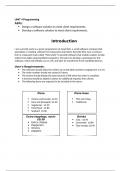
The following items are expected to be included in the menu:
Pizza Pizza base
Cheese and tomato: £3.50 Thin and crispy.
Ham and pineapple :£4.20 Traditional.
Vegetarian: £5.20
Meat feast: £5.80
Seafood: £5.60
Extra toppings, each: Drinks
£0.50 Cola : £0.90
Extra cheese Lemonade: £0.80
Pepperoni Fizzy orange: £0.90
Onions
peppers
, Software development Life cycle
What is the software development life cycle ?
The process of organising, creating, altering, and maintaining software is known as the
software development life cycle(SDLC).This methodology is used by developers to design and
produce modern software for a variety of platform, including computers, mobile devices,
video games , cloud deployment, and more. It is possible for developers to maximise the
quality of their software by following to SDLC methodology.
What makes the SDL important?
SDLC is important because it makes sure the right people are doing the right tasks at the
right time. Making software with an organised process increases the likelihood that a project
will succeed. Some advantages of SDL are:
Understanding the client’s needs and software objectives.
Recognising the risks at early stages.
Creating a phased delivery plan that includes tasks like creating functional
requirements or creating prototypes.
It makes sure everything is moving forward by comparing the project progress with
clients’ objectives.
, 7 stages in software development life
cycle
1. Planning: Planning is the initial phase in the software development process.
Here, the team comes together to exchange ideas, establish objectives, and
recognise possible risks. At this stage the team collaborates to define a set of
objectives, requirements, and high-level risks that might compromise the project’s
success. planning is very important as it establishes a structure for the entire
development process, and it makes sure that everyone agrees and helps the team to
prioritise their task and align their efforts.
2. Understanding and analysing the client’s
requirements: Comprehending the client’s requirements is very important,
as refusing to do so makes it difficult to satisfy them with our final product. In order
to figure out their expectation and the tasks that need to be completed we must
have regular interviews with them. After we have a few concepts and an accurate
understanding of their requirements, it is time to put everything into an organised
structure and design. To make sure that our final product meets the client’s
requirements, we need to plan everything carefully and do our research in advance.
The next important step is to create an accurate breakdown structure and project
plan document that includes a list of every requirement. An example of this could be
where the clients want to automate their ordering system so once their
requirements are clear I can decide how to begin my task.
3. Designing the mockups: Once we have identified the
requirements of our clients and know what design we need to
implement, it is time to run the design mockups. This stage builds
upon the planning phase and this breakdown the tasks we need to
do and organise them in a structured manner. Design mockups are
visual representation of how a software application or website will
look. They are usually created during the design phase to give
stakeholders, designers, and developers a clear idea of the user-
interface and functionality. This allows stakeholders to provide
feedback and make design decisions before actual development
work begins, it also reduces the risk of misunderstandings or costly
changes later on. There are plenty of tools available such as: Adobe
XD or invision, that make creating design mockups much easier.
Once we have run our design mockup for the pizza shed ordering
system, we can use it as a reference to start implementing the
software and run our design.
4.Developent of code: During the development phase, we will
figure out which programming language is going to be the best fit for
running our codes. This is where all the real coding and software
implementation happens. In this stage the client’s requirements will be
translated into a functional product. In this phase, we will write the codes,
creating databases using different components and testing the software’s
functionality. The developer, designer, and all the other stakeholders work
AIMs:
Design a software solution to meet client requirements.
Develop a software solution to meet client requirements.
Introduction
I am currently work as a junior programmer at Food-Tech, a small software company that
specialises in creating software for restaurants and hotels. Recently they won a contract
from a restaurant chain called “Pizza shed” to provide software that enables waiters to take
orders from table using handheld computers. My task is to develop a prototype for this
software, which will initially run on a PC and later be transferred To the handheld devices.
User’s Requirements:
The software should allow the waiters to record table numbers ranging from 1 to 25.
The order number should not exceed 10 items.
The system should display the total amount of bill when the order is complete.
A text box should be added to allows for additional requests from clients.
The following items are expected to be included in the menu:
Pizza Pizza base
Cheese and tomato: £3.50 Thin and crispy.
Ham and pineapple :£4.20 Traditional.
Vegetarian: £5.20
Meat feast: £5.80
Seafood: £5.60
Extra toppings, each: Drinks
£0.50 Cola : £0.90
Extra cheese Lemonade: £0.80
Pepperoni Fizzy orange: £0.90
Onions
peppers
, Software development Life cycle
What is the software development life cycle ?
The process of organising, creating, altering, and maintaining software is known as the
software development life cycle(SDLC).This methodology is used by developers to design and
produce modern software for a variety of platform, including computers, mobile devices,
video games , cloud deployment, and more. It is possible for developers to maximise the
quality of their software by following to SDLC methodology.
What makes the SDL important?
SDLC is important because it makes sure the right people are doing the right tasks at the
right time. Making software with an organised process increases the likelihood that a project
will succeed. Some advantages of SDL are:
Understanding the client’s needs and software objectives.
Recognising the risks at early stages.
Creating a phased delivery plan that includes tasks like creating functional
requirements or creating prototypes.
It makes sure everything is moving forward by comparing the project progress with
clients’ objectives.
, 7 stages in software development life
cycle
1. Planning: Planning is the initial phase in the software development process.
Here, the team comes together to exchange ideas, establish objectives, and
recognise possible risks. At this stage the team collaborates to define a set of
objectives, requirements, and high-level risks that might compromise the project’s
success. planning is very important as it establishes a structure for the entire
development process, and it makes sure that everyone agrees and helps the team to
prioritise their task and align their efforts.
2. Understanding and analysing the client’s
requirements: Comprehending the client’s requirements is very important,
as refusing to do so makes it difficult to satisfy them with our final product. In order
to figure out their expectation and the tasks that need to be completed we must
have regular interviews with them. After we have a few concepts and an accurate
understanding of their requirements, it is time to put everything into an organised
structure and design. To make sure that our final product meets the client’s
requirements, we need to plan everything carefully and do our research in advance.
The next important step is to create an accurate breakdown structure and project
plan document that includes a list of every requirement. An example of this could be
where the clients want to automate their ordering system so once their
requirements are clear I can decide how to begin my task.
3. Designing the mockups: Once we have identified the
requirements of our clients and know what design we need to
implement, it is time to run the design mockups. This stage builds
upon the planning phase and this breakdown the tasks we need to
do and organise them in a structured manner. Design mockups are
visual representation of how a software application or website will
look. They are usually created during the design phase to give
stakeholders, designers, and developers a clear idea of the user-
interface and functionality. This allows stakeholders to provide
feedback and make design decisions before actual development
work begins, it also reduces the risk of misunderstandings or costly
changes later on. There are plenty of tools available such as: Adobe
XD or invision, that make creating design mockups much easier.
Once we have run our design mockup for the pizza shed ordering
system, we can use it as a reference to start implementing the
software and run our design.
4.Developent of code: During the development phase, we will
figure out which programming language is going to be the best fit for
running our codes. This is where all the real coding and software
implementation happens. In this stage the client’s requirements will be
translated into a functional product. In this phase, we will write the codes,
creating databases using different components and testing the software’s
functionality. The developer, designer, and all the other stakeholders work