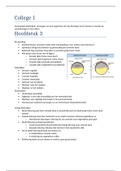
Chapter 1
Cognition variety of higher
: mental processes
Cognitive neuroscience :
bridge between cognitive science and cognitive psychology
Mind-body problem : how can a
physical substance rise to our sensations , thoughts ,
etc.?
-
dualism : mind & body are
different substances ->
pijnappelklier
-
dual-aspect theory : mind & body are two levels
of expl on the same thing
.
reductionism mind terms of biological terms
:
eventually explained solely in
-
individual
phrenology :
differences in
cognition can be mapped onto differences in skull shape
·
different regions have different functions and thus different behaviors
·
size of the regions produces distortions of the skull >
-
different personalities
phrenology not true but , different regions do have different functions >
-
functional
to
have
determine specialization >
-
neurons some
degree of specialization
>
1. Empirical observations
.
2 Models that do not make direct reference to the brain
Functional specialization
-
Broca : no speech production 2 , cognitive neuropsychology luse of brain damaged
speech comprehension ~
Wernicke
patients)
: no
-
Information-processing models : behavior is described in terms of a sequence of cognitive stages
·
no reference to the brain
·
mind as a series of routines >
-
like computersystems /serial processes
Modularity : certain processes are restricted in the type of information they process
modules : one particular type of information > domain specifity
· -
Central
systems non-specific information
: domain independent
·
>
-
,Interactivity : later stages of processing can begin before earlier
stages are complete
·
top-down processing :
influence later stages on
processing of earlier ones
·
bottom-up processing information from :
simple to more complex
·
parallel processing :
information processed at the same time
Methods
recording
·
·
stimulation
Method dimensions
↑
temporal resolution when is an event occuring ? physiological changes
·
:
spatial resolutions where is an event
occuring ?
·
:
·
invasiveness : in -
or outside the body ?
Challenges
to the mind without the brain ?
1.
possible study
2 .
functional imaging tells us where ,
not how
.
3
cognitive neuroscience is a new form of phrenology
networks become more popular instead of modules
· connectome :
map of neural connections in the brain ("wiring diagram")
,Chapter 2
Structure neurons :
·
Cell body /soma)
nucleus genetic code protein synthesis
-
:
,
·
Dendrites :
receive information from neurons
·
Axon : sends information to neurons /only one axon )
!
Synapse : small
gap between neurons in which neurotransmitters are released -+
signals
between neurons
·
presynaptic (before synapse) the direction
axon
postsynaptic /aftersynapse) reflecting
-dendrite
of information flow
·
action potential
I
Active presynaptic neuron > -
action potential > axon
-
terminal
neurotransmitters released into synaptic deft
>
are
-
Action potential change in the electrical properties of the membrane in an axon
·
:
a
Neurotransmitters
·
: chemical signals that bind to receptors on the dendrites or cell body of
the postsynaptic neuron >
-
synaptic potential (passive)
>
-
basis EEC
14 generated at different dendritic sites)
passive currents summed together > threshold
-
>
-
active electrical current +> comminucation
Electrical signaling and the action potential
Generation actionpotential :
1. Passive current ? Nat comes in
1 .
Potential inside the cell goes up >
-
depolarization
+
.K
3 goes out
>
-
repolarization (Natgate closes)
4
. Brief period inside more negative > hyperpolarization prevents
-
:
another depolarization straight away and a action
potential travelling backwards.
, depolarization +
repolarization = action potential
hyperpolarization prevents backwards movement (not able to depolarize) >
-
refractaire periode
Myelin fatty substance
: that is deposited around the axon
of some neurons > -
speeds conduction
<
nodes of Ranvier : where myelin is absent
Receptors : bind to neurotransmitters in
postsynaptic membrane >
-
transmitter-gated ion channels
1 GABA :
making the postsynaptic neuron less likely to fire (inside more
negative >
-
less likely to fire)
.
2 Glutamate :
making the postsynaptic neuron more likely to fire (passively conducted
Amplitude of action potential does not
vary but the number of potentials does >
spiking rate > info code
- -
,
Type of information that a neuron carries is related to in -
and output >
-
selective response
Behaviorisme (1900-1960)
-
Thorndike/Watson/Pavlov/Skinner
*
-
stimulus >
-
"blackbox - response
-
wat er in dat brein gebeurd zonder het echt te weten
-
classic conditioning : het leren associeren van 2 dingen
~
operant conditioning : het leven van
gedrag door het te associeren met de gevolgen
Cognitivisme
-
hoe?
manipuleren symbolische representaties
-
-
architectuur cognitie
-
the mind zonder the brain
Glia cells :
formation myclin + tissue repair
Cognition variety of higher
: mental processes
Cognitive neuroscience :
bridge between cognitive science and cognitive psychology
Mind-body problem : how can a
physical substance rise to our sensations , thoughts ,
etc.?
-
dualism : mind & body are
different substances ->
pijnappelklier
-
dual-aspect theory : mind & body are two levels
of expl on the same thing
.
reductionism mind terms of biological terms
:
eventually explained solely in
-
individual
phrenology :
differences in
cognition can be mapped onto differences in skull shape
·
different regions have different functions and thus different behaviors
·
size of the regions produces distortions of the skull >
-
different personalities
phrenology not true but , different regions do have different functions >
-
functional
to
have
determine specialization >
-
neurons some
degree of specialization
>
1. Empirical observations
.
2 Models that do not make direct reference to the brain
Functional specialization
-
Broca : no speech production 2 , cognitive neuropsychology luse of brain damaged
speech comprehension ~
Wernicke
patients)
: no
-
Information-processing models : behavior is described in terms of a sequence of cognitive stages
·
no reference to the brain
·
mind as a series of routines >
-
like computersystems /serial processes
Modularity : certain processes are restricted in the type of information they process
modules : one particular type of information > domain specifity
· -
Central
systems non-specific information
: domain independent
·
>
-
,Interactivity : later stages of processing can begin before earlier
stages are complete
·
top-down processing :
influence later stages on
processing of earlier ones
·
bottom-up processing information from :
simple to more complex
·
parallel processing :
information processed at the same time
Methods
recording
·
·
stimulation
Method dimensions
↑
temporal resolution when is an event occuring ? physiological changes
·
:
spatial resolutions where is an event
occuring ?
·
:
·
invasiveness : in -
or outside the body ?
Challenges
to the mind without the brain ?
1.
possible study
2 .
functional imaging tells us where ,
not how
.
3
cognitive neuroscience is a new form of phrenology
networks become more popular instead of modules
· connectome :
map of neural connections in the brain ("wiring diagram")
,Chapter 2
Structure neurons :
·
Cell body /soma)
nucleus genetic code protein synthesis
-
:
,
·
Dendrites :
receive information from neurons
·
Axon : sends information to neurons /only one axon )
!
Synapse : small
gap between neurons in which neurotransmitters are released -+
signals
between neurons
·
presynaptic (before synapse) the direction
axon
postsynaptic /aftersynapse) reflecting
-dendrite
of information flow
·
action potential
I
Active presynaptic neuron > -
action potential > axon
-
terminal
neurotransmitters released into synaptic deft
>
are
-
Action potential change in the electrical properties of the membrane in an axon
·
:
a
Neurotransmitters
·
: chemical signals that bind to receptors on the dendrites or cell body of
the postsynaptic neuron >
-
synaptic potential (passive)
>
-
basis EEC
14 generated at different dendritic sites)
passive currents summed together > threshold
-
>
-
active electrical current +> comminucation
Electrical signaling and the action potential
Generation actionpotential :
1. Passive current ? Nat comes in
1 .
Potential inside the cell goes up >
-
depolarization
+
.K
3 goes out
>
-
repolarization (Natgate closes)
4
. Brief period inside more negative > hyperpolarization prevents
-
:
another depolarization straight away and a action
potential travelling backwards.
, depolarization +
repolarization = action potential
hyperpolarization prevents backwards movement (not able to depolarize) >
-
refractaire periode
Myelin fatty substance
: that is deposited around the axon
of some neurons > -
speeds conduction
<
nodes of Ranvier : where myelin is absent
Receptors : bind to neurotransmitters in
postsynaptic membrane >
-
transmitter-gated ion channels
1 GABA :
making the postsynaptic neuron less likely to fire (inside more
negative >
-
less likely to fire)
.
2 Glutamate :
making the postsynaptic neuron more likely to fire (passively conducted
Amplitude of action potential does not
vary but the number of potentials does >
spiking rate > info code
- -
,
Type of information that a neuron carries is related to in -
and output >
-
selective response
Behaviorisme (1900-1960)
-
Thorndike/Watson/Pavlov/Skinner
*
-
stimulus >
-
"blackbox - response
-
wat er in dat brein gebeurd zonder het echt te weten
-
classic conditioning : het leren associeren van 2 dingen
~
operant conditioning : het leven van
gedrag door het te associeren met de gevolgen
Cognitivisme
-
hoe?
manipuleren symbolische representaties
-
-
architectuur cognitie
-
the mind zonder the brain
Glia cells :
formation myclin + tissue repair