ALGORITHMIC PERSSUASION
WEEK 1
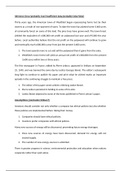
Algorithms
encoded procedures for transforming input data into a desired output, based on specific calculations
(comparable to cake recipe)
Algorithmic power (desired output) four main functions of algorithms algorithms can
Prioritization making an ordered list
- Emphasize or bring attention to certain things at the expense of others (es google page rank)
- Make a list of the most important things while disregarding other things
Classification algo. Can easily pick a category
- Categorize a particular entity to given class by looking at any number of the entity’s features (es inappropriate
YT content)
- Classify based on two categories (good to go or not good to go)
Association finding links
- Association decisions mark relationships between entities (es dating match, “if you like this, u’ll like this)
- Finding certain patterns or links between two different people and partnering people up
Filtering isolating what’s important
- Including/excluding information according to various rules/criteria. Inputs to filtering algorithms often take
prioritizing, classification, or association decision into account (es insta feed)
Two broad categories
Rule-based algorithms Based on a set of rules you need to identify in advance
- Typically “IF – Then” statement “IF” condition, “THEN” result if a person like this content, give them
more of this content
- Pro easy to follow/understand/formulate
- Con only applicable to the specified conditions
Machine learning algorithms (supervised and unsupervised) Algorithms that “learn” by themselves based
on statistical models rather than deterministic rules/set of specific instructions
- The algorithms are “trained” based on a corpus od data from which they may “learn” to make certain kinds of
decision without hum oversight (es algorithm that get the sentiment..)
- Pro flexible and amenable to adaptions
- Cons needs to be trained in order to perform well and black-box at some point you won’t understand the
output of the algorithms cause it trained itself)
- Most social media use machine learning algorithms big corpus of data
Es facebook’s deep face algorithm
- Facial recognition system that identifies human faces in digital images
- Trained on a large identity label data set of four million facial images
- Not always being used for good reasons to monitor people
- has 97% accuracy
Types of MLA
Supervised algorithms the algorithms learn from labeled data which means the input data is paired with the
correct output
es classify emails in spam or not spam based on features such as key words, sender information…
, Classify news articles as fake or real based on fact-checking websites, expert judgment, or sources
characteristics
Unsupervised learning deals with unlabeled data the algorithms tries to find a patterns or structure in the data
without any guidance to what to look for
Es Clustering similar news articles together based on their content, without any prior labels e.g. to identify
topics discussed around AI
Clustering travel images related to destinations, landscapes and travel experiences ; Cluster fashion images
related to ….
Semi-supervised learning combination of supervised and unsupervised learning
es: Training a model to classify customer reviews as positive or negative using a small labeled dataset and a
large amount of unlabeled text data.
Semi-unsupervised learning involves an agent learning to make decisions by interacting with an environment
Es Teaching a chatbot to interact with users, where positive user responses (e.g., ‘thank you’) are rewarded
with points, encouraging the bot to learn better responses over time.
Learning a virtual influencer to generate personalized recommendations to the user based on engagment
metrics (e.g., likes)
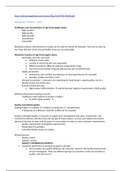
Recommender systems provide suggestions for content that is most likely of interest to a particular user
important kinds of algorithms we see online
- They decide which content to display to whom based on certain criteria
- Users are thus receiving distinct streams of online content
- Es FB news feed, Netflix movie, Spotify songs
Reasons why recommender system are used:
1. Prevent choice overloadreduce pressure on users to choose something
2. Maximize user relevence make sure content aligns best with user’s interest
3. Increase work efficacy if u let the system recommend certain things, it is not necessary for people to figure
out what users want
Techniques (types of rec. systems)
Content based filtering learn to recommend items that are similar to the ones users liked in the past (based on
similarity of items)
- If u like horror movies Netflix will recommend you more of them
Collaborative filtering suggest recommendations to users based on items other users with similar interests liked
in the past
- People with the same gender, age range, people in your location
- Used very often when you start using a platform since it doesn’t have enough data on you to do content-based
filtering
Hybrid filtering combine features from content based and collaborative systems while adding other elements
(es demographics)
- Most used on most platforms
How do people perceive algorithms range of perspectives on algorithms: appreciation < -- > aversion
Algorithmic appreciation people rely more on algorithms than on people despite the fact that they don’t
understand algorithms people prefer algorithmic decision over human
- Blind faith in automation tourists trust maps too much that bike in a car tunnel blindly following
technology without using your own human decision
- Humans are imperfect, whereas computers are objective, rational, reliable..
algorithmic aversion Prefer human decision over algorithmic decision even when the human decisions are
clearly inferior
, - People are averse because they don’t understand the algorithmic process they think humans are easier to
understand
- Less tolerance for errors from algorithms than from humans (e.g.,GPS leads you to traffic jam→you get
angrier than if a human led you to a traffic jam)
Algorithmic anxiety lack of control and uncertainty over algorithms
Whether you appreciate algorithms depends on many other factors
Type of task and level of subjectivity in decisions
- Mechanical, objective task algorithm preferred (es. financial decision, rational decision making)
- More subjective task Human (es. Relationships or hiring someone)
Individual differences
- knowledge, privacy concerns, belief in equality (es young, highly educated woman perceive algorithms most
useful, old man less)
- The more technical knowledge and the less privacy concerns you have, the more useful and fairer u’ll find it
Do people know how algorithms curate content?
Algorithmic awareness (Zarouali, Boerman, & de Vreese, 2020)
- People have a very low algorithmic awareness
- Algorithms should be seen as tools that can support rather than replace humans in decision-making The
power of veto remains important: humans should always have the power to interfere.
When asked, people come up with their own theories about how algorithms work on Facebook:
- The Theory of Loud and Quiet Friends loud friends that post a lot are more often in my feed than shy friends
that post very often
- The Global Popularity Theory he more friends someone has, the more likely their posts will be in my feed
because they are more popular
- The Fresh Blood Theory recently added friends’ content is more often on your feed
- The OC Theory people that post original content (instead of sharing other people’s
content) are more often in your feed
- The Randomness Theory D the algorithm randomly shows you content
Algorithmic persuasion any deliberate attempt by a persuader to influence the beliefs, attitudes and behaviors
of people through online communication that is mediated by algorithms
Persuasion is intentional and deliberate
A persuader can be a person, brand, political and commercial actor
Influence is important, impact should be generated through using algorithms, whether that be weak/strong,
short/long term, it varies
Through online communication algorithms always occur online through media, web
Mediated by algorithms communication should be driven by algorithmic technology
Algorithmic persuasion is circular (feedback loop)
Accounts for feedback loops new data we provide will always be used as new input, so the cycle continues
WEEK 1
Algorithms
encoded procedures for transforming input data into a desired output, based on specific calculations
(comparable to cake recipe)
Algorithmic power (desired output) four main functions of algorithms algorithms can
Prioritization making an ordered list
- Emphasize or bring attention to certain things at the expense of others (es google page rank)
- Make a list of the most important things while disregarding other things
Classification algo. Can easily pick a category
- Categorize a particular entity to given class by looking at any number of the entity’s features (es inappropriate
YT content)
- Classify based on two categories (good to go or not good to go)
Association finding links
- Association decisions mark relationships between entities (es dating match, “if you like this, u’ll like this)
- Finding certain patterns or links between two different people and partnering people up
Filtering isolating what’s important
- Including/excluding information according to various rules/criteria. Inputs to filtering algorithms often take
prioritizing, classification, or association decision into account (es insta feed)
Two broad categories
Rule-based algorithms Based on a set of rules you need to identify in advance
- Typically “IF – Then” statement “IF” condition, “THEN” result if a person like this content, give them
more of this content
- Pro easy to follow/understand/formulate
- Con only applicable to the specified conditions
Machine learning algorithms (supervised and unsupervised) Algorithms that “learn” by themselves based
on statistical models rather than deterministic rules/set of specific instructions
- The algorithms are “trained” based on a corpus od data from which they may “learn” to make certain kinds of
decision without hum oversight (es algorithm that get the sentiment..)
- Pro flexible and amenable to adaptions
- Cons needs to be trained in order to perform well and black-box at some point you won’t understand the
output of the algorithms cause it trained itself)
- Most social media use machine learning algorithms big corpus of data
Es facebook’s deep face algorithm
- Facial recognition system that identifies human faces in digital images
- Trained on a large identity label data set of four million facial images
- Not always being used for good reasons to monitor people
- has 97% accuracy
Types of MLA
Supervised algorithms the algorithms learn from labeled data which means the input data is paired with the
correct output
es classify emails in spam or not spam based on features such as key words, sender information…
, Classify news articles as fake or real based on fact-checking websites, expert judgment, or sources
characteristics
Unsupervised learning deals with unlabeled data the algorithms tries to find a patterns or structure in the data
without any guidance to what to look for
Es Clustering similar news articles together based on their content, without any prior labels e.g. to identify
topics discussed around AI
Clustering travel images related to destinations, landscapes and travel experiences ; Cluster fashion images
related to ….
Semi-supervised learning combination of supervised and unsupervised learning
es: Training a model to classify customer reviews as positive or negative using a small labeled dataset and a
large amount of unlabeled text data.
Semi-unsupervised learning involves an agent learning to make decisions by interacting with an environment
Es Teaching a chatbot to interact with users, where positive user responses (e.g., ‘thank you’) are rewarded
with points, encouraging the bot to learn better responses over time.
Learning a virtual influencer to generate personalized recommendations to the user based on engagment
metrics (e.g., likes)
Recommender systems provide suggestions for content that is most likely of interest to a particular user
important kinds of algorithms we see online
- They decide which content to display to whom based on certain criteria
- Users are thus receiving distinct streams of online content
- Es FB news feed, Netflix movie, Spotify songs
Reasons why recommender system are used:
1. Prevent choice overloadreduce pressure on users to choose something
2. Maximize user relevence make sure content aligns best with user’s interest
3. Increase work efficacy if u let the system recommend certain things, it is not necessary for people to figure
out what users want
Techniques (types of rec. systems)
Content based filtering learn to recommend items that are similar to the ones users liked in the past (based on
similarity of items)
- If u like horror movies Netflix will recommend you more of them
Collaborative filtering suggest recommendations to users based on items other users with similar interests liked
in the past
- People with the same gender, age range, people in your location
- Used very often when you start using a platform since it doesn’t have enough data on you to do content-based
filtering
Hybrid filtering combine features from content based and collaborative systems while adding other elements
(es demographics)
- Most used on most platforms
How do people perceive algorithms range of perspectives on algorithms: appreciation < -- > aversion
Algorithmic appreciation people rely more on algorithms than on people despite the fact that they don’t
understand algorithms people prefer algorithmic decision over human
- Blind faith in automation tourists trust maps too much that bike in a car tunnel blindly following
technology without using your own human decision
- Humans are imperfect, whereas computers are objective, rational, reliable..
algorithmic aversion Prefer human decision over algorithmic decision even when the human decisions are
clearly inferior
, - People are averse because they don’t understand the algorithmic process they think humans are easier to
understand
- Less tolerance for errors from algorithms than from humans (e.g.,GPS leads you to traffic jam→you get
angrier than if a human led you to a traffic jam)
Algorithmic anxiety lack of control and uncertainty over algorithms
Whether you appreciate algorithms depends on many other factors
Type of task and level of subjectivity in decisions
- Mechanical, objective task algorithm preferred (es. financial decision, rational decision making)
- More subjective task Human (es. Relationships or hiring someone)
Individual differences
- knowledge, privacy concerns, belief in equality (es young, highly educated woman perceive algorithms most
useful, old man less)
- The more technical knowledge and the less privacy concerns you have, the more useful and fairer u’ll find it
Do people know how algorithms curate content?
Algorithmic awareness (Zarouali, Boerman, & de Vreese, 2020)
- People have a very low algorithmic awareness
- Algorithms should be seen as tools that can support rather than replace humans in decision-making The
power of veto remains important: humans should always have the power to interfere.
When asked, people come up with their own theories about how algorithms work on Facebook:
- The Theory of Loud and Quiet Friends loud friends that post a lot are more often in my feed than shy friends
that post very often
- The Global Popularity Theory he more friends someone has, the more likely their posts will be in my feed
because they are more popular
- The Fresh Blood Theory recently added friends’ content is more often on your feed
- The OC Theory people that post original content (instead of sharing other people’s
content) are more often in your feed
- The Randomness Theory D the algorithm randomly shows you content
Algorithmic persuasion any deliberate attempt by a persuader to influence the beliefs, attitudes and behaviors
of people through online communication that is mediated by algorithms
Persuasion is intentional and deliberate
A persuader can be a person, brand, political and commercial actor
Influence is important, impact should be generated through using algorithms, whether that be weak/strong,
short/long term, it varies
Through online communication algorithms always occur online through media, web
Mediated by algorithms communication should be driven by algorithmic technology
Algorithmic persuasion is circular (feedback loop)
Accounts for feedback loops new data we provide will always be used as new input, so the cycle continues