CHAPTER 1: WHAT IS A BRAND AND WHY DO BRANDS MATTER?
Defining brands
Origins of branding
• Comes from ‘branding’ of cattle where they were burn-marked aka branded
Product-centered definition
• trade mark may consist of any signs capable of being represented graphically, particularly words, including
personal names, designs, letters, numerals, the shape of goods or of their packaging, provided that such signs
are capable of distinguishing the goods or services of one undertaking from those of other undertakings
• trade mark is sign used to identify goods/services
• It identifies one seller’s goods or services as distinct from those of other sellers
Trade marks
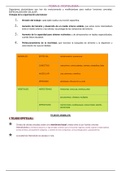
Types of trade marks that can be registered
Characteristics
• trade mark of brand can be protected by registration (then no one else can use the trade mark and you can sue
them otherwise BUT only for brands in the same sector, eg an investment company could call themselves
adidas bc there not in the same indus/sector)
• they must be distinctive (customer should be able to recognize your sign & it should distinguish you from other
companies so you can protect & build brand id & value)& not describe what is sold (eg putting ‘wine’ as trade
mark one wine bottle is not allowed, it also has to be sufficiently different eg ‘wyne’ instead also wouldn’t be
allowed bc it too similar to the real product, eg eDOCation was also not allowed)
Threats
, Harley (moterbikes) en
Harley roads
Copying/pretending you are
the brand
Generic brand
= brand names that people use to refer to the product category
• negative effect: genericide= when a firm loses right to use the trade mark bc people use brand name as
product label (eg asprin, corn flakes, bic, tipex…)
• ways to protect against genericide
o emphasize trade mark status
o use category advertising (eg diamonds by De Beers)
Customer-centered definition of brands
=Associations that consumers have with something that can be managed professionally (e.g. product, service, person,
name, term, design, symbol, …)
• A brand resides in consumers’ minds (what they have heard and learned about it) and hearts (what they feel)
• Brands identify products/services of one seller and differentiate them from products/services of competitors
Brand vs product
• Product: Anything that can be offered to a market and that satisfies a certain need
• Brand: Creates competitive advantage by differentiating a product from competing products that satisfy the
same need
• added value that brand endows to a product based on past marketing activities for that brand
• Competitive advantage can be related to product performance or to non-product-related means (i.e., buying
Chiquita bananas instead of nrml bananas bc of the brand, also in a blind test people preferred the taste of
pepsi ict cola but with the brand info more people prefer cola)
• Brand placebo effect: just bc there is a brand on a product people believe its better and sometimes even
perform better when using a branded product
Just bc people thought they were using a nike
putter they though they were going to perform
better which they also did, so just bc it said nike
they believed and performed better than people
who played with the unbranded putter
Brand functions
Consumer benefits
1. Reduction of consumption risk (aka risk that product isn’t good)
, a. Assessing product quality in advance is error-prone if experience and credence qualities are involved,
which results in consumption risk
i. Search qualities (you can look at the different products and see which one is better)
ii. Experience qualities (you need to have experience with the products to know which one is
better)
iii. Credence qualities (even after you have tried it you don’t know if it is better, eg medicine or
doctor)
b. Brands proxy this and reduce risk
2. Reduction of search cost
a. Considering all alternatives for specific need causes search costs
b. Brands provide guidance and reduce set of alternatives considered relevant
3. Serving as a symbolic device
a. Brands can represent intrinsic or extrinsic values (e.g., self-expression or prestige)
b. Help consumers communicate their self-concept (id, actual or ideal) & differentiate themselves from
Brand functions/for the company
According to Srivastava et al. Cash flow 0= cash flow
current year, the first term
=1 so; 1+ cashflow1/…
1. Acceleration of cash flows (has most to do with T)
a. aka having more and more cashflows with shorter intervals of time
b. the sooner/faster cash flows are generated the higher the net present value
c. Faster response to marketing efforts
i. Brands increase the responsiveness of the market to marketing activities
ii. Eg. Earlier product trails, earlier referrals (that people recommend ur brand, eg people where
camping outside apple store to buy new product)
2. Increase in the level of cash flows (to do with cash flow)
a. Premiums
i. Price premium
1. Identical product can be sold for higher price
2. If more dominant (than sales prem): high price is part of brands id & is strongly
linked with social benefits (premium brands, Porsche/hermes)
ii. Sales premium
1. Identical product can be sold more often
2. If more dominant (than price prem): low price is part of brands id & care benefit
(lidl/aldi)
iii. Balancing price and sales premium (both dominant)
1. If brand is positioned as being of higher uality but price is not core brand attribute
2. Eg Nutella/nivea (people will not make compromises to buy a cheaper chocolate
spread than Nutella)
b. Lowering costs
i. Strong brands have customer base that is more responsive to advertising and promotions and
that might be less service-intensive (e.g., lower complaints)
c. Brand extensions, co-branding
i. Brand extensions use the company’s accumulated investments in the brand; cash flows of the
brand’s other products serve as “bond” for the extension’s quality (eg nike started out as only
a shoe brand and then extended their business to also include clothes)
ii. Easier access to cooperative ventures (aka co-branding: make collabs with other strong brand
(apple x nike watch))
3. Reduction in risk associated with cash flows
, a. this is included in discount factor in the formula, the higher the risk the higher the discount factor bc it
could be that your company and therefore also cash flow doesn’t exist anymore
b. 2 types of firm-level risk
i. Vulnerability of future cash flows (ie bankruptcy)
ii. Variability/ volatility of future cash flows (cash flows are unpredictable which
makes making predictions/planning more difficult)
iii. →strong brands decrease both risks leading to lower discount factor
c. How to lower risks?
i. Facilitating repeat purchase behavior, cross selling, and brand loyalty (reduces cash flow
volatility)
ii. Higher quality perceptions are associated with lower price sensitivity by consumers (if you
increase prices while youre a strong brand people don’t care as much, secures future cash
flows)
iii. Corporate reputation effect as investors have higher awareness levels and stronger and more
+ quality associations (more resistant to negative developments)
iv. Brands serve as elementary security (eg machines, capital) for debt holders in case of a firm’s
financial distress or even bankruptcy (debt holders prefer strong brands bc they have mor
securities which can lead to lower interest rates)
Research by Rego et al. empirical findings on firm-risks effects of brands
• Measured vulnerability risk and variability in return in 252 different firms from 2000-2006
• Dependent variables are ‘credit ranking’ (= how high is your credit rating among investors) & ‘unsystematic risk’
(=how strongly your stock correlates independent of the overall stock market, everything that is not
explainable by the overall stock market, it’s a measure of the variability of the return of the stock ><systematic
risk = does stock correlate with stock market (if stock market goes up yours too?)
• Results: the higher the CBBE (consumer-based brand equity aka brand rating) the higher the credit ranking (so
vulnerability risk goes down), the higher the CBBE the lower the variability in return (so also if you have a
strong brand your stock is less risky & low systematic risk)
Brand relevance in category concept (BRiC)
=Overall role brands play in customers’ decision making in a specific category (eg think of toilet paper and what is
important for the purchase decision/what criteria, eg quality/price/duarbilty/brand)
• General decision weight that puts expected brand benefits in relation to other product benefits (e.g., the
benefit derived from a lower price)
• Category-level measure i.e. it doesn’t vary across brands but only categories
• Prelaunch diagnostic: unlike a brand-level measure, BRiC can be measured before an existing or new brand has
been introduced into a new market
o eg if company wants to move to a new product category, then its good to know how important it is to
have a strong brand for that product; so if BRiC is high you could invest in the brand before the launch
of the product
→
Based on study
Defining brands
Origins of branding
• Comes from ‘branding’ of cattle where they were burn-marked aka branded
Product-centered definition
• trade mark may consist of any signs capable of being represented graphically, particularly words, including
personal names, designs, letters, numerals, the shape of goods or of their packaging, provided that such signs
are capable of distinguishing the goods or services of one undertaking from those of other undertakings
• trade mark is sign used to identify goods/services
• It identifies one seller’s goods or services as distinct from those of other sellers
Trade marks
Types of trade marks that can be registered
Characteristics
• trade mark of brand can be protected by registration (then no one else can use the trade mark and you can sue
them otherwise BUT only for brands in the same sector, eg an investment company could call themselves
adidas bc there not in the same indus/sector)
• they must be distinctive (customer should be able to recognize your sign & it should distinguish you from other
companies so you can protect & build brand id & value)& not describe what is sold (eg putting ‘wine’ as trade
mark one wine bottle is not allowed, it also has to be sufficiently different eg ‘wyne’ instead also wouldn’t be
allowed bc it too similar to the real product, eg eDOCation was also not allowed)
Threats
, Harley (moterbikes) en
Harley roads
Copying/pretending you are
the brand
Generic brand
= brand names that people use to refer to the product category
• negative effect: genericide= when a firm loses right to use the trade mark bc people use brand name as
product label (eg asprin, corn flakes, bic, tipex…)
• ways to protect against genericide
o emphasize trade mark status
o use category advertising (eg diamonds by De Beers)
Customer-centered definition of brands
=Associations that consumers have with something that can be managed professionally (e.g. product, service, person,
name, term, design, symbol, …)
• A brand resides in consumers’ minds (what they have heard and learned about it) and hearts (what they feel)
• Brands identify products/services of one seller and differentiate them from products/services of competitors
Brand vs product
• Product: Anything that can be offered to a market and that satisfies a certain need
• Brand: Creates competitive advantage by differentiating a product from competing products that satisfy the
same need
• added value that brand endows to a product based on past marketing activities for that brand
• Competitive advantage can be related to product performance or to non-product-related means (i.e., buying
Chiquita bananas instead of nrml bananas bc of the brand, also in a blind test people preferred the taste of
pepsi ict cola but with the brand info more people prefer cola)
• Brand placebo effect: just bc there is a brand on a product people believe its better and sometimes even
perform better when using a branded product
Just bc people thought they were using a nike
putter they though they were going to perform
better which they also did, so just bc it said nike
they believed and performed better than people
who played with the unbranded putter
Brand functions
Consumer benefits
1. Reduction of consumption risk (aka risk that product isn’t good)
, a. Assessing product quality in advance is error-prone if experience and credence qualities are involved,
which results in consumption risk
i. Search qualities (you can look at the different products and see which one is better)
ii. Experience qualities (you need to have experience with the products to know which one is
better)
iii. Credence qualities (even after you have tried it you don’t know if it is better, eg medicine or
doctor)
b. Brands proxy this and reduce risk
2. Reduction of search cost
a. Considering all alternatives for specific need causes search costs
b. Brands provide guidance and reduce set of alternatives considered relevant
3. Serving as a symbolic device
a. Brands can represent intrinsic or extrinsic values (e.g., self-expression or prestige)
b. Help consumers communicate their self-concept (id, actual or ideal) & differentiate themselves from
Brand functions/for the company
According to Srivastava et al. Cash flow 0= cash flow
current year, the first term
=1 so; 1+ cashflow1/…
1. Acceleration of cash flows (has most to do with T)
a. aka having more and more cashflows with shorter intervals of time
b. the sooner/faster cash flows are generated the higher the net present value
c. Faster response to marketing efforts
i. Brands increase the responsiveness of the market to marketing activities
ii. Eg. Earlier product trails, earlier referrals (that people recommend ur brand, eg people where
camping outside apple store to buy new product)
2. Increase in the level of cash flows (to do with cash flow)
a. Premiums
i. Price premium
1. Identical product can be sold for higher price
2. If more dominant (than sales prem): high price is part of brands id & is strongly
linked with social benefits (premium brands, Porsche/hermes)
ii. Sales premium
1. Identical product can be sold more often
2. If more dominant (than price prem): low price is part of brands id & care benefit
(lidl/aldi)
iii. Balancing price and sales premium (both dominant)
1. If brand is positioned as being of higher uality but price is not core brand attribute
2. Eg Nutella/nivea (people will not make compromises to buy a cheaper chocolate
spread than Nutella)
b. Lowering costs
i. Strong brands have customer base that is more responsive to advertising and promotions and
that might be less service-intensive (e.g., lower complaints)
c. Brand extensions, co-branding
i. Brand extensions use the company’s accumulated investments in the brand; cash flows of the
brand’s other products serve as “bond” for the extension’s quality (eg nike started out as only
a shoe brand and then extended their business to also include clothes)
ii. Easier access to cooperative ventures (aka co-branding: make collabs with other strong brand
(apple x nike watch))
3. Reduction in risk associated with cash flows
, a. this is included in discount factor in the formula, the higher the risk the higher the discount factor bc it
could be that your company and therefore also cash flow doesn’t exist anymore
b. 2 types of firm-level risk
i. Vulnerability of future cash flows (ie bankruptcy)
ii. Variability/ volatility of future cash flows (cash flows are unpredictable which
makes making predictions/planning more difficult)
iii. →strong brands decrease both risks leading to lower discount factor
c. How to lower risks?
i. Facilitating repeat purchase behavior, cross selling, and brand loyalty (reduces cash flow
volatility)
ii. Higher quality perceptions are associated with lower price sensitivity by consumers (if you
increase prices while youre a strong brand people don’t care as much, secures future cash
flows)
iii. Corporate reputation effect as investors have higher awareness levels and stronger and more
+ quality associations (more resistant to negative developments)
iv. Brands serve as elementary security (eg machines, capital) for debt holders in case of a firm’s
financial distress or even bankruptcy (debt holders prefer strong brands bc they have mor
securities which can lead to lower interest rates)
Research by Rego et al. empirical findings on firm-risks effects of brands
• Measured vulnerability risk and variability in return in 252 different firms from 2000-2006
• Dependent variables are ‘credit ranking’ (= how high is your credit rating among investors) & ‘unsystematic risk’
(=how strongly your stock correlates independent of the overall stock market, everything that is not
explainable by the overall stock market, it’s a measure of the variability of the return of the stock ><systematic
risk = does stock correlate with stock market (if stock market goes up yours too?)
• Results: the higher the CBBE (consumer-based brand equity aka brand rating) the higher the credit ranking (so
vulnerability risk goes down), the higher the CBBE the lower the variability in return (so also if you have a
strong brand your stock is less risky & low systematic risk)
Brand relevance in category concept (BRiC)
=Overall role brands play in customers’ decision making in a specific category (eg think of toilet paper and what is
important for the purchase decision/what criteria, eg quality/price/duarbilty/brand)
• General decision weight that puts expected brand benefits in relation to other product benefits (e.g., the
benefit derived from a lower price)
• Category-level measure i.e. it doesn’t vary across brands but only categories
• Prelaunch diagnostic: unlike a brand-level measure, BRiC can be measured before an existing or new brand has
been introduced into a new market
o eg if company wants to move to a new product category, then its good to know how important it is to
have a strong brand for that product; so if BRiC is high you could invest in the brand before the launch
of the product
→
Based on study