International Bachelor of LAW Program 2019-2020
Page 1 of
Introduction to EU Law Course Notes by 18024580
32
Course Notes
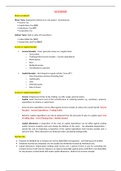
Lecture 1: Introduction of EU Law – the origins of the EU, its development and
current challenges
▪ From Berlin to the first European Community
The US and Canada were instrumental after WWII by helping to lay a foundation to create a number of
global institutions (politically, military and economically) where the old enemies meet each other to work
more constructively in the future together.
1945: UN (United Nations)
: IMF (International Monetary Fund)
1947: GATT (General Agreement on Tariffs and Trade) Treaty
: Marshall Plan: US funded European Recovery Program, channelled through the OEEC
1948: OEEC (Organisation for European Economic Co-operation)
in 1960 changed into OECD (Organisation for Economic Co-operation and Development)
1949: NATO (North Atlantic Treaty Organisation)
(1954): Treaty of Brussels (WEU – Western European Union)
: Council of Europe (not an institution of the EU)
1953 European Convention on Human Rights and Social Rights
▪ The first European Community: European Coal and Steel Community
- 1950 Shuman Plan: French and German coal and steel industries linking together under the control of
a supernatural body (: an international group in which the power and influence of member states transcend
national boundaries or interests to share in decision making and vote on issues concerning the collective body).
- 1952 ESCS consist of six Member States (MS).
Four institutions
- High Authority (executive): Body of nine independent appointees of the six MS, able to adopt binding decision
– the supernatural factor.
- Assembly (parliament)
- Council of Ministers (the intergovernmental institution): States could represent their national interests.
Commissions draft legislations and the Council and European Council adopt them.
- Court of Justice
▪ Forms of international cooperation between States
Intergovernmentalism
This form has the States as key actors that focus on protection of State power and national interests.
- Decision require unanimity (agreement by all people involved) and rarely enforceable, if so only
between States, not its citizens.
Supranationalism
This form has supranational institutions as the key actors and have no focus on national interests
- States have transferred (some of) their powers in the areas concerned to a higher level
- Decision-making at a higher level than State level overriding national rules
- Decision do not require unanimity and is enforceable
, International Bachelor of LAW Program 2019-2020
Page 2 of
Introduction to EU Law Course Notes by 18024580
32
Functionalism
Economic prosperity: collective pursuit of mutually beneficial
- Initial focus on discrete, non-sensitive, non-controversial economic sectors, that can be managed
efficiently and technocratically by supranational institutions.
Neofunctionalism
Economic prosperity: collective pursuit of mutually beneficial
- Initial integration in a non-controversial sector should result in a ‘spill over’ to other sectors, with a
possibly higher political profile.
- This process will involve a gradual reduction of national power and an increasing ability of
supranational institutions to deal with sensitive, politically more controversial sectors.
Federalism
Form of political integration, beyond mere economic integration, whereby States transfer certain
sovereign powers to the federation.
Multilevel governance: the sort of integration reflecting the reality of the EU that evolves over time.
• Dynamic mix: neither supranationalism, intergovernmentalism or federalism.
• Dependent on the policy area: national and regional authorities, parliaments, states and EU institutions are
involved in the EU’s policies that are decided and executed.
▪ European Economic Community (EEC) and European Atomic Energy Community (Euratom) Treaties
1957 Rome Treaties
1. EEC → common market: a full open competition market where the people benefit from it.
2. Euratom
Sub-objectives
- Customs union
o Abolition of customs duties
o Common external customs tariff
- Four freedoms: goods, workers, services and capital
- Competition policy against private market barriers/cartels: The industry and companies should not
create joint corporations which do not help the free functioning of a common market e.g. joint forces to
have a cartel of keeping high prices for oil.
- Close regulation as regards state intervention: States shouldn’t help their own States but equally and
fairly help the Member States.
- Preventing discrimination: Regulation of MS’ fiscal regimes on goods
- Common commercial policy as regards trade relations with third states
- Co-ordination national economic and monetary policies
More general and political objectives
- More stability and closer relations between the MS; and
- Higher standard of living
Institutions
- Parliamentary Assembly (from the start together with ECSC)
- Court of Justice (from the start together with ECSC)
- Commission (till the 1965 Merger Treaty, separate from High Authority ECSC)
- Council of Ministers (till 1965, separate from Council of Ministers ECSC)
Page 1 of
Introduction to EU Law Course Notes by 18024580
32
Course Notes
Lecture 1: Introduction of EU Law – the origins of the EU, its development and
current challenges
▪ From Berlin to the first European Community
The US and Canada were instrumental after WWII by helping to lay a foundation to create a number of
global institutions (politically, military and economically) where the old enemies meet each other to work
more constructively in the future together.
1945: UN (United Nations)
: IMF (International Monetary Fund)
1947: GATT (General Agreement on Tariffs and Trade) Treaty
: Marshall Plan: US funded European Recovery Program, channelled through the OEEC
1948: OEEC (Organisation for European Economic Co-operation)
in 1960 changed into OECD (Organisation for Economic Co-operation and Development)
1949: NATO (North Atlantic Treaty Organisation)
(1954): Treaty of Brussels (WEU – Western European Union)
: Council of Europe (not an institution of the EU)
1953 European Convention on Human Rights and Social Rights
▪ The first European Community: European Coal and Steel Community
- 1950 Shuman Plan: French and German coal and steel industries linking together under the control of
a supernatural body (: an international group in which the power and influence of member states transcend
national boundaries or interests to share in decision making and vote on issues concerning the collective body).
- 1952 ESCS consist of six Member States (MS).
Four institutions
- High Authority (executive): Body of nine independent appointees of the six MS, able to adopt binding decision
– the supernatural factor.
- Assembly (parliament)
- Council of Ministers (the intergovernmental institution): States could represent their national interests.
Commissions draft legislations and the Council and European Council adopt them.
- Court of Justice
▪ Forms of international cooperation between States
Intergovernmentalism
This form has the States as key actors that focus on protection of State power and national interests.
- Decision require unanimity (agreement by all people involved) and rarely enforceable, if so only
between States, not its citizens.
Supranationalism
This form has supranational institutions as the key actors and have no focus on national interests
- States have transferred (some of) their powers in the areas concerned to a higher level
- Decision-making at a higher level than State level overriding national rules
- Decision do not require unanimity and is enforceable
, International Bachelor of LAW Program 2019-2020
Page 2 of
Introduction to EU Law Course Notes by 18024580
32
Functionalism
Economic prosperity: collective pursuit of mutually beneficial
- Initial focus on discrete, non-sensitive, non-controversial economic sectors, that can be managed
efficiently and technocratically by supranational institutions.
Neofunctionalism
Economic prosperity: collective pursuit of mutually beneficial
- Initial integration in a non-controversial sector should result in a ‘spill over’ to other sectors, with a
possibly higher political profile.
- This process will involve a gradual reduction of national power and an increasing ability of
supranational institutions to deal with sensitive, politically more controversial sectors.
Federalism
Form of political integration, beyond mere economic integration, whereby States transfer certain
sovereign powers to the federation.
Multilevel governance: the sort of integration reflecting the reality of the EU that evolves over time.
• Dynamic mix: neither supranationalism, intergovernmentalism or federalism.
• Dependent on the policy area: national and regional authorities, parliaments, states and EU institutions are
involved in the EU’s policies that are decided and executed.
▪ European Economic Community (EEC) and European Atomic Energy Community (Euratom) Treaties
1957 Rome Treaties
1. EEC → common market: a full open competition market where the people benefit from it.
2. Euratom
Sub-objectives
- Customs union
o Abolition of customs duties
o Common external customs tariff
- Four freedoms: goods, workers, services and capital
- Competition policy against private market barriers/cartels: The industry and companies should not
create joint corporations which do not help the free functioning of a common market e.g. joint forces to
have a cartel of keeping high prices for oil.
- Close regulation as regards state intervention: States shouldn’t help their own States but equally and
fairly help the Member States.
- Preventing discrimination: Regulation of MS’ fiscal regimes on goods
- Common commercial policy as regards trade relations with third states
- Co-ordination national economic and monetary policies
More general and political objectives
- More stability and closer relations between the MS; and
- Higher standard of living
Institutions
- Parliamentary Assembly (from the start together with ECSC)
- Court of Justice (from the start together with ECSC)
- Commission (till the 1965 Merger Treaty, separate from High Authority ECSC)
- Council of Ministers (till 1965, separate from Council of Ministers ECSC)