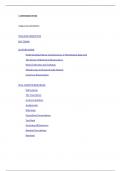
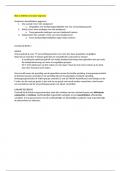
TEST BANK for Human Physiology: From Cells to Systems 9th Edition 9 by Lauralee Sherwood TABLE OF CONTENTS 1. Introduction to Physiology and Homeostasis. 2. Cell Physiology. 3. The Plasma Membrane and Membrane Potential. 4. Principles of Neural and Hormonal Communication. 5. The Central Nervous System. 6. The Peripheral Nervous System: Afferent Division; Special Senses. 7. The Peripheral Nervous System: Efferent Division. 8. Muscle Physiology. 9. Cardiac Physiology. 10. The Blood Vessels and Blood Pressure. 11. The Blood. 12. Body Defenses. 13. The Respiratory System. 14. The Urinary System. 15. Fluid and Acid -Base Balance. 16. The Digestive System. 17. Energy Balance and Temperature Regulation. 18. Principles of Endocrinology; The Central Endocrine Glands. 19. The Peripheral Endocrine Glands. 20. The Reproductive System Page 1 Chapter 01 – Introduction to Physiology and Homeostasis Physiology is best defined as the . a. study of all living things b. study of the bodily functions of living things c. study of human relationships d. maintenance of body temperature e. maintenance of physical fitness ANSWER: b DIFFICULTY: Bloom’s: Remember REFERENCES: 1.1 Introduction to Physiology LEARNING OBJECTIVES: HUPH.SHER.16.1.1 - Describe the physiological approach to explaining an event 2. What are the most basic building blocks of matter? a. tissue b. cells c. atoms d. bones e. amino acids ANSWER: c DIFFICULTY: Bloom’s: Remember REFERENCES: 1.2 Levels of Organization in the Body LEARNING OBJECTIVES: HUPH.SHER.16.1.2 - Explain the structure -function relationship of body parts 3. What are the four most common chemical elements in the human body? a. water, salt, protein, and fat b. iron, carbon, oxygen, and potassium c. blood, muscle, fat, and bone d. collagen, glucosamine, chondroitin, and cartilage e. oxygen, carbon, hydrogen, and nitrogen ANSWER: e DIFFICULTY: Bloom’s: Remember REFERENCES: 1.2 Levels of Organization in the Body LEARNING OBJECTIVES: HUPH.SHER.16.1.2 - Explain the structure -function relationship of body parts 4. Approximately how many red blood cells are replaced per minute in the human body on average? a. 150,000,000 b. 50,000,000 c. 5,000,000 d. 500,000 e. 5,000 ANSWER: a DIFFICULTY: Bloom’s: Remember REFERENCES: 1.2 Levels of Organization in the Body LEARNING OBJECTIVES: HUPH.SHER.16.1.2 - Explain the structure -function relationship of body parts 5. Which structure encloses the cells of the human body? Chapter 01 – Introduction to Physiology and Homeostasis Page 2 a. a carbon shell b. an electron cluster c. microvilli d. a plasma membrane e. a protective protein sheath ANSWER: d DIFFICULTY: Bloom’s: Remember REFERENCES: 1.2 Levels of Organization in the Body LEARNING OBJECTIVES: HUPH.SHER.16.1.2 - Explain the structure -function relationship of body parts 6. The human body is made up of approximately how many specialized cell types? a. 400 b. 200 c. 100 d. 50 e. 25 ANSWER: b DIFFICULTY: Bloom’s: Remember REFERENCES: 1.2 Levels of Organization in the Body LEARNING OBJECTIVES: HUPH.SHER.16.1.2 - Explain the structure -function relationship of body parts 7. What occurs when a cell differentiates? a. It becomes specialized to perform a particular function. b. It stops using nutrients and dies. c. It morphs into a faster dividing cell. d. It divides into other cells that contain a lesser number of chromosomes. e. It becomes physically larger and more complex. ANSWER: a DIFFICULTY: Bloom’s: Understand REFERENCES: 1.2 Levels of Organization in the Body LEARNING OBJECTIVES: HUPH.SHER.16.1.2 - Explain the structure -function relationship of body parts 8. Which progression represents the correct hierarchy of organization, from simpler to more complex? a. atom, cell, tissue, organ, system, organism b. tissue, cell, system, organism, organ, body c. system, atom, cell, organ, tissue, organism d. atom, molecule, compound, cell, body, organism e. chemical, cell, organ, tissue, system, organism ANSWER: a DIFFICULTY: Bloom’s: Remember REFERENCES: 1.2 Levels of Organization in the Body LEARNING OBJECTIVES: HUPH.SHER.16.1.2 - Explain the structure -function relationship of body parts 9. What type of tissue consists of cells specialized for exchanging materials with the environment?
Examen
Human Physiology: From Cells to Systems 9th Edition by Lauralee Sherwood TEST BANK
TEST BANK for Human Physiology: From Cells to Systems 9th Edition by Lauralee Sherwood TABLE OF CONTENTS 1. Introduction to Physiology and Homeostasis. 2. Cell Physiology. 3. The Plasma Membrane and Membrane Potential. 4. Principles of Neural and Hormonal Communication. 5. The Central Nervous System. 6. The Peripheral Nervous System: Afferent Division; Special Senses. 7. The Peripheral Nervous System: Efferent Division. 8. Muscle Physiology. 9. Cardiac Physiology. 10. The Blood Vessels and Blood Pressure. 11. The Blood. 12. Body Defenses. 13. The Respiratory System. 14. The Urinary System. 15. Fluid and Acid-Base Balance. 16. The Digestive System. 17. Energy Balance and Temperature Regulation. 18. Principles of Endocrinology; The Central Endocrine Glands. 19. The Peripheral Endocrine Glands. 20. The Reproductive System
Montrer plus
Lire moins
Établissement
Human Physiology: From Cells To Systems 9th Editio
Cours
Human Physiology: From Cells to Systems 9th Editio
Oups ! Impossible de charger votre document. Réessayez ou contactez le support.
Livre connecté
Human Physiology: From Cells to Systems
- 2015
- 9781305445512
- Inconnu
École, étude et sujet
- Établissement
- Human Physiology: From Cells to Systems 9th Editio
- Cours
- Human Physiology: From Cells to Systems 9th Editio
Infos sur le Document
- Publié le
- 25 avril 2024
- Nombre de pages
- 473
- Écrit en
- 2023/2024
- Type
- Examen
- Contient
- Questions et réponses
Sujets
-
human physiology
-
human physiology from cells to systems 9th editio
-
human physiology from cells to systems
-
test bank for human physiology
-
test bank
Aperçu du contenu
€26,49
Accéder à l'intégralité du document:
Garantie de satisfaction à 100%
Disponible immédiatement après paiement
En ligne et en PDF
Tu n'es attaché à rien
Faites connaissance avec le vendeur

Les scores de réputation sont basés sur le nombre de documents qu'un vendeur a vendus contre paiement ainsi que sur les avis qu'il a reçu pour ces documents. Il y a trois niveaux: Bronze, Argent et Or. Plus la réputation est bonne, plus vous pouvez faire confiance sur la qualité du travail des vendeurs.
AcademiContent