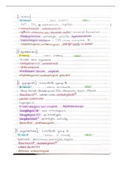
Social, cultural and religious context
Power of fate
- Fate – what will happen as determined by a supernatural power and overseen by Zeus
- Fate in Iliad often refers to a time at which a man is going to die & can be said to predetermine certain
events (like the fall of troy)
- Zeus seems responsible for ensuring that fated events occur
Still toys with idea of saving Sarpedon – to change fate would upset the balance of things so he
has to let his son die
- Deaths of Patroclus and hector are fated – heroes contribute to their fate
Had Patroclus not swayed from Achilles’ orders he would have saved himself from death
- Agamemnon says fate made him take Briseis – sounds like a lame excuse & an attempt to shift
responsibility
- Power of fate felt in its emotional impact
Hecabe lamenting hector in b3
- Thetis knows fate of Achilles – turns story of a warrior’s death into a tragedy
Achilles made the choice to die in troy – seems to have choice in time of death
Focus of decision is of the consequences of his decision and – not inevitability of external destiny
- Achilles earns respect from audience since he is aware of what will happen
Knows he will die young and accepts his destiny
- Impact of fate on Thetis – loves her son but is resigned to his fate
B18 – scene of pathos of a mother admitting her child has a terminal illness and acknowledging
that she is powerless to prevent the death
Thetis being an immortal makes it more unbearable – she will never escape the agony of having
seen her son die
Role of the immortals
- Olympians reside on Olympus where they eat, drink and enjoy sacrifices made to them
- Anthropomorphic – in human form
- Gods take an interest in human affairs – support their favourites by intervening in events
- Olympians who play a part – Aphrodite, apollo, Athene, Hephaestus, Hera, Hermes & Zeus
- Achilles mother Thetis – important nymph & crucial link between Achilles and the gods of Olympus
- Iris – used as a messenger
- Individual gods support particular individual mortals/causes
Immortals intervene in the action
- Gods have power over humans – can take the story anywhere
Paris removed from battle before he gets killed by Aphrodite
Interventions of gods gives Iliad dramatic interest
- Gods change the course of the action in very specific ways at moments of tension
Athene persuading hector to leave the walls and expose himself to the wrath of Achilles
- Gods can provide an effect which colours the whole scene
Athene making a flame burn from Achilles’ head and putting a golden cloud around him
Gods’ relationships with mortals
- Gods display human characteristics & are motivated by some of the same considerations as the mortal
heroes
- Timē of gods is very important to them – god who feels insulted will seek vengeance
Hera and Athene bear a grudge against Paris for his decision in the golden apple contest
- Apollo’s punishment for Agamemnon is a case of divine anger
- Mortal is powerless when faced with the anger of a god – humans live in fear of the gods
, Emphasis of worship is trying to secure the gods’ support & ensure they have no reason to use
their divine wrath
- Mortals communicate with the gods through prayers and oaths & accompanied by libations and
sacrifices
Relationship contractual by nature – sacrificial offerings used as bargaining tools
- Immortals communicate with signs – usually from the sky
Used to affirm their consent or disapproval
B24 – Priam asks Zeus for a bird of omen
- Picture of gods on Olympus is self-indulgence
Zeus
- Most powerful god
- Frequently called upon by heroes – recognise that he knows when they must do
B22 Achilles – ‘I welcome death whenever Zeus wants’
- Has the power to change fate & does intervene at points in action – ultimately he follows fate
- Sometimes hear Zeus’ thoughts when he witnesses the inevitable
Shows concern for Patroclus’ body & rouses the Greeks to defend it
- Zeus’ approval is important – libations poured to try gain it
- The god whom heroes swear solemn oaths
- Dreams are sent by Zeus & heralds are sacred to him
- Power summed up by image of 2 jars in b24 – a one with evils and one with blessings
- Zeus is the supreme power on Olympus – domestic setting displays familiar human doubts and
weaknesses
Aphrodite
- Rarely intervenes in the prescribed books
Rescues Paris from the duel & preserves hector’s body
- Could be held responsible for the war – offered Paris the fatal bribe of Helen for the golden apple
- Responsible for giving Paris his lust for women
- Manipulates Helen and Paris
- Swift to threaten Helen with punishment when she feels challenged by her
Apollo
- Frames the Iliad
- Acts in parallel to Achilles in b1 & b24
B1 – his rage against Agamemnon causes him to deliver a plague to the Greeks
B24 – condemns the gods for their cruelty & argues that hector’s body should be released
- God of prophecy
Warns Patroclus that troy is not destined to be captured by him
- Allows hector to strike the fatal blow on Patroclus – knocks Patroclus’ helmet off & undoes his armour
- Supports the trojans & intervenes on their behalf
Deserts hector when he knows the time for him to die has come
Athene
- Intervenes to support the Greeks
Engineered the breaking of the truce
- Can be counted responsible for the fighting
- Lures hector away from the walls to deliver him to Achilles’ & death
Hephaestus
Power of fate
- Fate – what will happen as determined by a supernatural power and overseen by Zeus
- Fate in Iliad often refers to a time at which a man is going to die & can be said to predetermine certain
events (like the fall of troy)
- Zeus seems responsible for ensuring that fated events occur
Still toys with idea of saving Sarpedon – to change fate would upset the balance of things so he
has to let his son die
- Deaths of Patroclus and hector are fated – heroes contribute to their fate
Had Patroclus not swayed from Achilles’ orders he would have saved himself from death
- Agamemnon says fate made him take Briseis – sounds like a lame excuse & an attempt to shift
responsibility
- Power of fate felt in its emotional impact
Hecabe lamenting hector in b3
- Thetis knows fate of Achilles – turns story of a warrior’s death into a tragedy
Achilles made the choice to die in troy – seems to have choice in time of death
Focus of decision is of the consequences of his decision and – not inevitability of external destiny
- Achilles earns respect from audience since he is aware of what will happen
Knows he will die young and accepts his destiny
- Impact of fate on Thetis – loves her son but is resigned to his fate
B18 – scene of pathos of a mother admitting her child has a terminal illness and acknowledging
that she is powerless to prevent the death
Thetis being an immortal makes it more unbearable – she will never escape the agony of having
seen her son die
Role of the immortals
- Olympians reside on Olympus where they eat, drink and enjoy sacrifices made to them
- Anthropomorphic – in human form
- Gods take an interest in human affairs – support their favourites by intervening in events
- Olympians who play a part – Aphrodite, apollo, Athene, Hephaestus, Hera, Hermes & Zeus
- Achilles mother Thetis – important nymph & crucial link between Achilles and the gods of Olympus
- Iris – used as a messenger
- Individual gods support particular individual mortals/causes
Immortals intervene in the action
- Gods have power over humans – can take the story anywhere
Paris removed from battle before he gets killed by Aphrodite
Interventions of gods gives Iliad dramatic interest
- Gods change the course of the action in very specific ways at moments of tension
Athene persuading hector to leave the walls and expose himself to the wrath of Achilles
- Gods can provide an effect which colours the whole scene
Athene making a flame burn from Achilles’ head and putting a golden cloud around him
Gods’ relationships with mortals
- Gods display human characteristics & are motivated by some of the same considerations as the mortal
heroes
- Timē of gods is very important to them – god who feels insulted will seek vengeance
Hera and Athene bear a grudge against Paris for his decision in the golden apple contest
- Apollo’s punishment for Agamemnon is a case of divine anger
- Mortal is powerless when faced with the anger of a god – humans live in fear of the gods
, Emphasis of worship is trying to secure the gods’ support & ensure they have no reason to use
their divine wrath
- Mortals communicate with the gods through prayers and oaths & accompanied by libations and
sacrifices
Relationship contractual by nature – sacrificial offerings used as bargaining tools
- Immortals communicate with signs – usually from the sky
Used to affirm their consent or disapproval
B24 – Priam asks Zeus for a bird of omen
- Picture of gods on Olympus is self-indulgence
Zeus
- Most powerful god
- Frequently called upon by heroes – recognise that he knows when they must do
B22 Achilles – ‘I welcome death whenever Zeus wants’
- Has the power to change fate & does intervene at points in action – ultimately he follows fate
- Sometimes hear Zeus’ thoughts when he witnesses the inevitable
Shows concern for Patroclus’ body & rouses the Greeks to defend it
- Zeus’ approval is important – libations poured to try gain it
- The god whom heroes swear solemn oaths
- Dreams are sent by Zeus & heralds are sacred to him
- Power summed up by image of 2 jars in b24 – a one with evils and one with blessings
- Zeus is the supreme power on Olympus – domestic setting displays familiar human doubts and
weaknesses
Aphrodite
- Rarely intervenes in the prescribed books
Rescues Paris from the duel & preserves hector’s body
- Could be held responsible for the war – offered Paris the fatal bribe of Helen for the golden apple
- Responsible for giving Paris his lust for women
- Manipulates Helen and Paris
- Swift to threaten Helen with punishment when she feels challenged by her
Apollo
- Frames the Iliad
- Acts in parallel to Achilles in b1 & b24
B1 – his rage against Agamemnon causes him to deliver a plague to the Greeks
B24 – condemns the gods for their cruelty & argues that hector’s body should be released
- God of prophecy
Warns Patroclus that troy is not destined to be captured by him
- Allows hector to strike the fatal blow on Patroclus – knocks Patroclus’ helmet off & undoes his armour
- Supports the trojans & intervenes on their behalf
Deserts hector when he knows the time for him to die has come
Athene
- Intervenes to support the Greeks
Engineered the breaking of the truce
- Can be counted responsible for the fighting
- Lures hector away from the walls to deliver him to Achilles’ & death
Hephaestus