Concepts Description
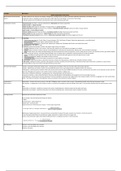
Market organisation and structure
Main functions of the financial 1. Allow entities to save, borrow, issue equity, manage risks, exchange assets and utilise information (identify undervalued / overvalued assets)
system 2. Determine return at equilibrium interest rate (rate at which the amount of lending = the amount of borrowing)
3. Allocate capital to its most efficient uses (maximise return, while maintaining risk level)
Classification of assets ‐ Financial assets (securities, currencies, derivatives) vs. Real assets (real estate, equipment)
‐ Debt securities vs. Equity securities
‐ Public securities (that traded on exchange or through dealers) vs. private securities
‐ Physical derivative contracts (contract on rice, metals) vs. Financial derivative contracts (contract on bond or equity indexes)
‐ Spot market vs. Future delivery market
‐ Primary market (issuance of new securities) vs. Secondary markets (trading of previously issued securities)
‐ Money market (ST debt instruments) vs. Capital market (LT debt instruments and equities)
‐ Traditional investment market (bonds, stocks) vs. Alternative investment market (real estate, hedge fund, fine art)
Major types of assets 1. Securities
‐ Fixed income securities (e.g.: Bonds, Notes, Commercial paper, Bills, Certificates of Deposit, Repurchase agreeements, convertible bonds)
‐ Equity securities (e.g.: Common stocks, Preferred stocks, Warrants)
‐ Pooled investment vehicles (e.g.: Mutual funds, depositories, hedge funds, Exchange‐traded funds, asset‐backed securities)
2. Currencies (e.g.: USD, GBP, JPY, etc.)
3. Contracts: agreements between 2 parties, that require some action in the future
‐ Forward: Agreement to buy / sell an asset in the future @ a specific price. Not traded on exchanges or via dealers
‐ Futures: Similar to forward. Futures contracts are standardised as to amount asset characteristics, delivery time, and are traded on exchange
‐ Swap: include interest rate swap (exchange floating rate interest payments for fixed‐rate payment); currency swap (borrow currency A to purchase currency B, and then deposit
the currency B to gain interest); and equity swap (exchange return on equity index or portfolio for interest payment on a debt instrument)
‐ Option: including Put option (give the owner the right to sell an asset) and Call option (give the owner the right to buy an asset)
‐ Insurance contract (life, liabilitym automobile insurance contract)
‐ Credit default swaps: Insurance that makes a payment if an issuer defaults on its bonds
4. Commodities: agricultural products, industrial and precious metals and energy products, traded in spot, forward and future markets
5. Real assets: inluding real estate, machinery and equipment. Investors could buy real assets directly, or indirectly via Real estate investment trust (REIT) or master limited
partnership (MLP) or buy stock of firms with large ownership of real assets
Financial intermediaries ‐ Brokers / Exchanges / Alternative trading system : connect buyers and sellers of the same security at the same location and time
‐ Dealers : Match buyers and sellers of same security at different points in time, buy buying security or selling from their own inventory
‐ Arbitrageurs : Connect buyers and sellers of the same security at the same time, but in different locations. They also connect buyers and sellers of non‐identical securities with the
same risk. Arbitrageurs buy assets in one market and sell in another market at a higher price.
‐ Securitizers / Depository institutions : package assets into a diversified pool, and sell interest in it
‐ Insurance companies : create a diversified pool of risks (via a diersified pool of policyholders), and manage the risk from providing insurance
‐ Clearinghouses : provide escrow services, guarantee of contract completion, assurance that margin traders have adequate capital, and limits on aggregate net order quantity (Buy
orders ‐ Sell orders) of members. Clearinghouses reduce counterparty risk and promote market integrity
Long position / Long position : Investor who owns an asset, or has right / obligation under a contract to buy an asset. A long position benefits when the asset increases in value
Short position Short position : an agreement to sell or deliver an asset, or results from borrowing an asset and selling it (short sale). A short position benefits when the asset decreas in value
Note:
Long position a call option → profit from increase in the value of underlying asset ; while the party short the op on has losses
Long position a put option → profit from decrease in the value of underlying asset ; while the party short the op on has losses
Leverage position Definition: Borrow funds to purchase an asset
Buy on margin : Buy securities by borrowing from brolers
In which:
Borrowed funds = called margin loan ;
interest rate = call money rate ;
required minimum of initial amount of equity = initial margin requirement
Maintenance margin requirement : to ensure the loan is covered by the value of the asset, investor must maintain a minimum equity %.
In case the equity % falls below the maintenance margin requirement, investor will receive a margin call.
Investor could satisfy the margin call by deposit additional funds / unmargined securities, or sell the position
1
1
Bid / Ask price Bid price = price that dealer buy a security
Ask price = price that dealer sell a security
Bid price < Ask price
, Execution / Validity / Clearing Execution instructions : Specify how to trade. Execution instructions might be:
instruction ‐ Market order : execute the trade immediately, at best possible price. Appropriate when the trader wants to execute a transaction quickly. Might be executed at unfavorable price
‐ Limit order : Places a minimum price on sell orders / maximum price on buy orders. Could avoide price uncertainty, but limit order might not be filled.
+ Limit buy order > best ask; or Limit sell order < best bid → Marketable / Aggressively priced
+ Best ask > Limit order > best bid → Making a new market
+ Limit sell order = best bid; or Limit buy order = best ask → Make the market
+ Limit sell order > best ask ; or Limit buy order < best bid →Behind the market
‐ All‐or‐nothing : Execute when the whole order can be filled
‐ Hidden orders : Only traders and exchange knows the trade size
Validity instructions : Specify when order can be filled
‐ Day orders : expired if unfilled at the end of the trading day
‐ Good‐till‐cancelled : orders last until filled
‐ Immediate‐or‐cancel / Fill‐or‐kill : Cancel, unless could be filled immediately
‐ Good‐on‐close : orders are only filled at the end of the trading day
‐ Good‐on open : orders are only filled at the begining of the trading day
‐ Stop orders : orders that are not executed unless the stop price has been met, in order to prevent loss / protect profit (e.g.: trigger a market order to sell if stock price fall to $45)
Clearing instructions : Specify how to settle a trade
Primary market / Primary markets : sale of newly issued securities, including (1) new shares issued by currently publicly traded firm (seasoned offerings / secondary issues) and (2) First time issues by
Secondary market firms whose share is not currently publicly traded (Initial public offerings ‐ IPOs)
1. Public offerings: Issue with the assistance of an investment bank
‐ Underwritten offering : investment bank guarantees that the issue will be sold at a price that is negotiatd between the issuer and the bank. If the issue is undersubscribed, the
investment bank mus buy the unsold portion
‐ Best efforts offering : bank only acts as a broker
2. Private placement : firm sells securitiess directly to qualified investors, without the disclosures of public offering
3. Shelf registration : firm makes public disclosure, but issues the registered securities over time, when it needs capital and when market is favorable
4. Right offering : give right to existing shareholders to buy new shares at a discount → Dilu on
5. Dividend reinvestment plan : allow existing shareholders to use dividend to buy new shares at discount
Importance of secondary market
‐ Provide liquidity : securities could be sold quickly without incurring a discount from the current price
‐ Provide price and value information
‐ firms could raise external capital in primary market more easily
Market structure Call markets : securities are only traded at specific times
Continuous markets : securities are traded at any time the market is open
Categories of securities markets 1. Quote‐driven market : Traders transact with dealers, who maintain an inventory of securities and post bid and ask price
2. Oder‐driven market : Orders are executed using trading rules
‐ Trade pricing rules : Rules to determine price
+ Uniform pricing rule : all orders trade a same price, which results in highest volume of trading
+ Discriminatory pricing rule : limit price of the order that arrived first as the trading price
+ Derivative pricing rule : Orders are batched together and matched at a fixed point in time, at the average of the bid and ask quotes from the exchange where the stock primarily
trades
3. Brokered markets : brokers find the counterparty to execute the contract
Transparency of market Pre‐trade transparent : investors could obtain pre‐trade information regarding quotes and orders
information Post‐trade transparent : investors could obtain post‐trade information regarding completed price and sizes
Transparency allows investors to better understand securities value and trading costs→ Buy side value transparency ; while dealers prefer opaque market
Characteristics of well‐functioning Characteristics of well‐functioning financial system:
financial system ‐ Complete markets : savers receive a return, borrowers could obtain capital, hedgers could manage risks, and traders could acquire needed assets
‐ Operational efficiency : Low trading costs
‐ Information efficiency : Prices reflec fundamental information quickly
‐ Allocation efficiency : Capital is directed to its highest value use
Objectives of market regulations Objectives of market regulations:
‐ Protect unsophisticated investors → preserve trust in the markets
‐ Establish minimum standard of competency → easier for investors to evaluate performance
‐ Prevent insiders from exploiting other investors
‐ Promote common financial reporting requirement → less expensive informa on gathering
‐ Require minimm levels of capital → market par cipants will be able to honor their commitments, and be more careful about their risks
Market organisation and structure
Main functions of the financial 1. Allow entities to save, borrow, issue equity, manage risks, exchange assets and utilise information (identify undervalued / overvalued assets)
system 2. Determine return at equilibrium interest rate (rate at which the amount of lending = the amount of borrowing)
3. Allocate capital to its most efficient uses (maximise return, while maintaining risk level)
Classification of assets ‐ Financial assets (securities, currencies, derivatives) vs. Real assets (real estate, equipment)
‐ Debt securities vs. Equity securities
‐ Public securities (that traded on exchange or through dealers) vs. private securities
‐ Physical derivative contracts (contract on rice, metals) vs. Financial derivative contracts (contract on bond or equity indexes)
‐ Spot market vs. Future delivery market
‐ Primary market (issuance of new securities) vs. Secondary markets (trading of previously issued securities)
‐ Money market (ST debt instruments) vs. Capital market (LT debt instruments and equities)
‐ Traditional investment market (bonds, stocks) vs. Alternative investment market (real estate, hedge fund, fine art)
Major types of assets 1. Securities
‐ Fixed income securities (e.g.: Bonds, Notes, Commercial paper, Bills, Certificates of Deposit, Repurchase agreeements, convertible bonds)
‐ Equity securities (e.g.: Common stocks, Preferred stocks, Warrants)
‐ Pooled investment vehicles (e.g.: Mutual funds, depositories, hedge funds, Exchange‐traded funds, asset‐backed securities)
2. Currencies (e.g.: USD, GBP, JPY, etc.)
3. Contracts: agreements between 2 parties, that require some action in the future
‐ Forward: Agreement to buy / sell an asset in the future @ a specific price. Not traded on exchanges or via dealers
‐ Futures: Similar to forward. Futures contracts are standardised as to amount asset characteristics, delivery time, and are traded on exchange
‐ Swap: include interest rate swap (exchange floating rate interest payments for fixed‐rate payment); currency swap (borrow currency A to purchase currency B, and then deposit
the currency B to gain interest); and equity swap (exchange return on equity index or portfolio for interest payment on a debt instrument)
‐ Option: including Put option (give the owner the right to sell an asset) and Call option (give the owner the right to buy an asset)
‐ Insurance contract (life, liabilitym automobile insurance contract)
‐ Credit default swaps: Insurance that makes a payment if an issuer defaults on its bonds
4. Commodities: agricultural products, industrial and precious metals and energy products, traded in spot, forward and future markets
5. Real assets: inluding real estate, machinery and equipment. Investors could buy real assets directly, or indirectly via Real estate investment trust (REIT) or master limited
partnership (MLP) or buy stock of firms with large ownership of real assets
Financial intermediaries ‐ Brokers / Exchanges / Alternative trading system : connect buyers and sellers of the same security at the same location and time
‐ Dealers : Match buyers and sellers of same security at different points in time, buy buying security or selling from their own inventory
‐ Arbitrageurs : Connect buyers and sellers of the same security at the same time, but in different locations. They also connect buyers and sellers of non‐identical securities with the
same risk. Arbitrageurs buy assets in one market and sell in another market at a higher price.
‐ Securitizers / Depository institutions : package assets into a diversified pool, and sell interest in it
‐ Insurance companies : create a diversified pool of risks (via a diersified pool of policyholders), and manage the risk from providing insurance
‐ Clearinghouses : provide escrow services, guarantee of contract completion, assurance that margin traders have adequate capital, and limits on aggregate net order quantity (Buy
orders ‐ Sell orders) of members. Clearinghouses reduce counterparty risk and promote market integrity
Long position / Long position : Investor who owns an asset, or has right / obligation under a contract to buy an asset. A long position benefits when the asset increases in value
Short position Short position : an agreement to sell or deliver an asset, or results from borrowing an asset and selling it (short sale). A short position benefits when the asset decreas in value
Note:
Long position a call option → profit from increase in the value of underlying asset ; while the party short the op on has losses
Long position a put option → profit from decrease in the value of underlying asset ; while the party short the op on has losses
Leverage position Definition: Borrow funds to purchase an asset
Buy on margin : Buy securities by borrowing from brolers
In which:
Borrowed funds = called margin loan ;
interest rate = call money rate ;
required minimum of initial amount of equity = initial margin requirement
Maintenance margin requirement : to ensure the loan is covered by the value of the asset, investor must maintain a minimum equity %.
In case the equity % falls below the maintenance margin requirement, investor will receive a margin call.
Investor could satisfy the margin call by deposit additional funds / unmargined securities, or sell the position
1
1
Bid / Ask price Bid price = price that dealer buy a security
Ask price = price that dealer sell a security
Bid price < Ask price
, Execution / Validity / Clearing Execution instructions : Specify how to trade. Execution instructions might be:
instruction ‐ Market order : execute the trade immediately, at best possible price. Appropriate when the trader wants to execute a transaction quickly. Might be executed at unfavorable price
‐ Limit order : Places a minimum price on sell orders / maximum price on buy orders. Could avoide price uncertainty, but limit order might not be filled.
+ Limit buy order > best ask; or Limit sell order < best bid → Marketable / Aggressively priced
+ Best ask > Limit order > best bid → Making a new market
+ Limit sell order = best bid; or Limit buy order = best ask → Make the market
+ Limit sell order > best ask ; or Limit buy order < best bid →Behind the market
‐ All‐or‐nothing : Execute when the whole order can be filled
‐ Hidden orders : Only traders and exchange knows the trade size
Validity instructions : Specify when order can be filled
‐ Day orders : expired if unfilled at the end of the trading day
‐ Good‐till‐cancelled : orders last until filled
‐ Immediate‐or‐cancel / Fill‐or‐kill : Cancel, unless could be filled immediately
‐ Good‐on‐close : orders are only filled at the end of the trading day
‐ Good‐on open : orders are only filled at the begining of the trading day
‐ Stop orders : orders that are not executed unless the stop price has been met, in order to prevent loss / protect profit (e.g.: trigger a market order to sell if stock price fall to $45)
Clearing instructions : Specify how to settle a trade
Primary market / Primary markets : sale of newly issued securities, including (1) new shares issued by currently publicly traded firm (seasoned offerings / secondary issues) and (2) First time issues by
Secondary market firms whose share is not currently publicly traded (Initial public offerings ‐ IPOs)
1. Public offerings: Issue with the assistance of an investment bank
‐ Underwritten offering : investment bank guarantees that the issue will be sold at a price that is negotiatd between the issuer and the bank. If the issue is undersubscribed, the
investment bank mus buy the unsold portion
‐ Best efforts offering : bank only acts as a broker
2. Private placement : firm sells securitiess directly to qualified investors, without the disclosures of public offering
3. Shelf registration : firm makes public disclosure, but issues the registered securities over time, when it needs capital and when market is favorable
4. Right offering : give right to existing shareholders to buy new shares at a discount → Dilu on
5. Dividend reinvestment plan : allow existing shareholders to use dividend to buy new shares at discount
Importance of secondary market
‐ Provide liquidity : securities could be sold quickly without incurring a discount from the current price
‐ Provide price and value information
‐ firms could raise external capital in primary market more easily
Market structure Call markets : securities are only traded at specific times
Continuous markets : securities are traded at any time the market is open
Categories of securities markets 1. Quote‐driven market : Traders transact with dealers, who maintain an inventory of securities and post bid and ask price
2. Oder‐driven market : Orders are executed using trading rules
‐ Trade pricing rules : Rules to determine price
+ Uniform pricing rule : all orders trade a same price, which results in highest volume of trading
+ Discriminatory pricing rule : limit price of the order that arrived first as the trading price
+ Derivative pricing rule : Orders are batched together and matched at a fixed point in time, at the average of the bid and ask quotes from the exchange where the stock primarily
trades
3. Brokered markets : brokers find the counterparty to execute the contract
Transparency of market Pre‐trade transparent : investors could obtain pre‐trade information regarding quotes and orders
information Post‐trade transparent : investors could obtain post‐trade information regarding completed price and sizes
Transparency allows investors to better understand securities value and trading costs→ Buy side value transparency ; while dealers prefer opaque market
Characteristics of well‐functioning Characteristics of well‐functioning financial system:
financial system ‐ Complete markets : savers receive a return, borrowers could obtain capital, hedgers could manage risks, and traders could acquire needed assets
‐ Operational efficiency : Low trading costs
‐ Information efficiency : Prices reflec fundamental information quickly
‐ Allocation efficiency : Capital is directed to its highest value use
Objectives of market regulations Objectives of market regulations:
‐ Protect unsophisticated investors → preserve trust in the markets
‐ Establish minimum standard of competency → easier for investors to evaluate performance
‐ Prevent insiders from exploiting other investors
‐ Promote common financial reporting requirement → less expensive informa on gathering
‐ Require minimm levels of capital → market par cipants will be able to honor their commitments, and be more careful about their risks