Part 1: An Introduction to Consumer Behavior
Chapter 1: Understanding Consumer Behavior
Consumer behavior = the totality of consumers' decisions with respect to the acquisition, consumption, and
disposition of goods, services, activities, experiences, people and ideas by (human) decision-making units [over
time].
Consumer behaviour:
• Involves more than just buying
• Is a dynamic process
• Can involve many people
• Involves many decisions
• Involves emotions and coping
Consumer behaviour involves more than just buying
- Acquisition = the process by which a consumer comes to own an offering
- Usage = the process by which a consumer uses an offering
- Disposition = the process by which a consumer discards an offering
Consumer behaviour is a dynamic process
The sequence of acquisition, consumption and disposition can occur over time in a dynamic order. Changes in
consumer behaviour can occur over time as well.
Consumer behaviour can involve many people
It does not necessarily reflect the action of a single individual. Individuals engaging in consumer behaviour can
take on one or more roles:
- Information gatherer
- Influencer
- Decider
- Purchaser
- User
Consumer behaviour involves many decisions: whether, what, why, why not, how, when, where, how much,
how often and how long to acquire/use/dispose an offering?
- One of the most important reasons why consumption occurs, is when an offering meets someone's
needs, values or goals.
- Sometimes the reasons why we use an offering are filled with conflict: smoking (harmful, but helps in
gaining acceptance)
1
, - Different ways of how we acquire an offering: buying, trading, renting/leasing, bartering (exchanging),
gifting, finding, stealing and sharing.
- Different ways of how we dispose an offering:
o Find a new use for it
o Get rid of it temporarily
o Get rid of it permanently
- Factors influencing when we acquire/use/dispose an offering:
o Timing
o Need for variety
o Transitions (graduation, birth, retirement, marriage)
o Others > going to gym when others are NOT going
o First letter of our name (later in alphabet you buy faster, because you were last in line as a
kid, you've learned to wait and developed a desire not to wait)
Consumer behaviour involves emotions and coping
Positive and negative emotions as well as specific emotions like loneliness, hope, fear, regret, guilt,
embarrassment and general moods can affect how consumers think, how they make their choice, how they
feel after making a decision, what they remember and how much they enjoy an experience. Consumers often
use products to regulate their feelings (ice cream when you score bad on a quiz).
What affects consumer behaviour?
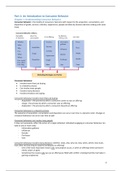
The many factors affecting acquisition, usage and disposition decisions can be classified into four broad
domains, also called a model of consumer behaviour:
1. The psychological core
2. The process of making decisions
3. The consumer's culture
4. Consumer behavior outcomes and issues
The psychological core:
- Motivation, Ability, Opportunity
- Exposure, attention, perception and comprehension
- Memory and knowledge
- Forming and changing attitudes
The process of making decisions:
- Problem recognition and the search for information
- Making judgments and decisions
- Making post-decision evaluations
The consumer’s culture: external processes:
- Reference groups (group where consumers compare
their selves with) and other social influences
- Diversity influences
- Household and social class influences
- Values, personality and lifestyles
Consumer behaviour outcomes and issues:
- Innovativeness, adoption, resistance and diffusion
- Symbolic consumer behaviour (external signs to express behaviour)
- Marketing ethics and social responsibility
Who benefits from the study of consumer behaviour?
• Marketing managers > to see what customers value
• Ethicists and advocates
• Public policy makers and regulators > protect consumers from unfair, unsafe or inappropriate marketing
• Academics
• Consumers and society> tools for decision making
2
,In general, consumer research helps marketers to develop product-specific plans, as well as broader strategies
for market segmentation, targeting and positioning and to make decisions about the components of the
marketing mix.
Making business decisions based on consumer research:
1. Developing and implementing customer-oriented strategy
• Segmenting the market
• Find out how profitable each segment is
• Find out the characteristics of consumers in each segment
• Find out whether consumers are satisfied with existing offerings
2. Selecting the target market
3. Developing products
• Customers' ideas about products
• Which attributes need to be changed / added
• Branding of attributes
• Package and logo
4. Positioning (how an offering should be positioned in consumer minds)
• Positioning of competitive offerings
• Our positioning
• Repositioning
5. Promotion and marketing communications decisions
• Communication objectives
• Marketing communications
• Where to advertise?
• When to advertise?
• Effectiveness of advertising
• Sales promotion objectives and tactics
• Effectiveness of sales promotions
• How can salespeople serve our customers as best?
6. Making price decisions
• Price to be charged (people tend to overestimate how much others will pay for goods > endowment
effect: you should not set a higher price than buyers are willing to pay)
• Sensitivity to price and price changes
• When to use certain price tactics?
7. Making distribution decisions
• Where and when are target customers likely to shop? > time and convenience
• Assortment of stores
• Design of stores
Part 2: The Psychological Core
Chapter 2: Motivation, Ability and Opportunity
3
, Motivation = an inner state of activation that provides energy to achieve a goal. Effects of motivation:
• High-effort behavior
• High-effort information processing and decision-making
• Felt involvement:
High-effort behavior = behavior that brings a goal closer, willingness to spend time and money
High-effort information processing and decision-making = pay attention, think about it, understand it,
evaluate information, remember information.
Motivated reasoning = information processing in a way that allows to reach the conclusion you want to reach
(process information in a biased way so that you can obtain the particular conclusion you want to reach)
Felt involvement = the consumers experience of being motivated with respect to a product or service, or
decisions and actions about these. Types of involvement:
• Enduring involvement
• Situational (temporary) involvement (buying a car)
• Cognitive involvement (interest in learning/thinking about offering)
• Affective involvement (interest in spending emotional energy/evoking deep feelings about offering)
You can experience involvement in … a product or retail category, experience, brand, ads, medium.
Response involvement = interest in certain decisions an behaviors.
Motivation is affected when consumers regard something as:
1. Personal relevant
2. Consistent with self-concept, values, needs, goals and self-control
3. Risky
4. Moderately inconsistent with attitudes
Personal relevance = extent to which it has direct bearing on and significant implications for your life
Self-concept = your view of yourself and the way you think others view you > helps us define who we are,
frequently motivates our behavior. Identifying with a brand and making emotional connection with it
strengthens brand loyalty and makes those consumers less price sensitive to a brand > Harley Davidson
Values = abstract beliefs that guide what people regard as important or good
Need = an internal state of tension experienced when there is a discrepancy between the current and an ideal
or desired physical or psychological state.
Which needs do consumers experience?
Needs according to Maslow:
• Physiological (food, water, sleep)
• Safety
• Social
• Egoistic (prestige, success, self-esteem)
• Self-actualization (self-fulfillment, enriching experiences)
--> lower level needs to be satisfied before higher level can come in.
Maslow's theory is restrictive and incomplete:
• Needs are not always ordered like this > low-order needs do not always need to be fulfilled before
higher-order needs become important
• The ordering of needs may not be consistent across cultures
• The hierarchy ignores the intensity of need and the resulting effect on motivation
4
Chapter 1: Understanding Consumer Behavior
Consumer behavior = the totality of consumers' decisions with respect to the acquisition, consumption, and
disposition of goods, services, activities, experiences, people and ideas by (human) decision-making units [over
time].
Consumer behaviour:
• Involves more than just buying
• Is a dynamic process
• Can involve many people
• Involves many decisions
• Involves emotions and coping
Consumer behaviour involves more than just buying
- Acquisition = the process by which a consumer comes to own an offering
- Usage = the process by which a consumer uses an offering
- Disposition = the process by which a consumer discards an offering
Consumer behaviour is a dynamic process
The sequence of acquisition, consumption and disposition can occur over time in a dynamic order. Changes in
consumer behaviour can occur over time as well.
Consumer behaviour can involve many people
It does not necessarily reflect the action of a single individual. Individuals engaging in consumer behaviour can
take on one or more roles:
- Information gatherer
- Influencer
- Decider
- Purchaser
- User
Consumer behaviour involves many decisions: whether, what, why, why not, how, when, where, how much,
how often and how long to acquire/use/dispose an offering?
- One of the most important reasons why consumption occurs, is when an offering meets someone's
needs, values or goals.
- Sometimes the reasons why we use an offering are filled with conflict: smoking (harmful, but helps in
gaining acceptance)
1
, - Different ways of how we acquire an offering: buying, trading, renting/leasing, bartering (exchanging),
gifting, finding, stealing and sharing.
- Different ways of how we dispose an offering:
o Find a new use for it
o Get rid of it temporarily
o Get rid of it permanently
- Factors influencing when we acquire/use/dispose an offering:
o Timing
o Need for variety
o Transitions (graduation, birth, retirement, marriage)
o Others > going to gym when others are NOT going
o First letter of our name (later in alphabet you buy faster, because you were last in line as a
kid, you've learned to wait and developed a desire not to wait)
Consumer behaviour involves emotions and coping
Positive and negative emotions as well as specific emotions like loneliness, hope, fear, regret, guilt,
embarrassment and general moods can affect how consumers think, how they make their choice, how they
feel after making a decision, what they remember and how much they enjoy an experience. Consumers often
use products to regulate their feelings (ice cream when you score bad on a quiz).
What affects consumer behaviour?
The many factors affecting acquisition, usage and disposition decisions can be classified into four broad
domains, also called a model of consumer behaviour:
1. The psychological core
2. The process of making decisions
3. The consumer's culture
4. Consumer behavior outcomes and issues
The psychological core:
- Motivation, Ability, Opportunity
- Exposure, attention, perception and comprehension
- Memory and knowledge
- Forming and changing attitudes
The process of making decisions:
- Problem recognition and the search for information
- Making judgments and decisions
- Making post-decision evaluations
The consumer’s culture: external processes:
- Reference groups (group where consumers compare
their selves with) and other social influences
- Diversity influences
- Household and social class influences
- Values, personality and lifestyles
Consumer behaviour outcomes and issues:
- Innovativeness, adoption, resistance and diffusion
- Symbolic consumer behaviour (external signs to express behaviour)
- Marketing ethics and social responsibility
Who benefits from the study of consumer behaviour?
• Marketing managers > to see what customers value
• Ethicists and advocates
• Public policy makers and regulators > protect consumers from unfair, unsafe or inappropriate marketing
• Academics
• Consumers and society> tools for decision making
2
,In general, consumer research helps marketers to develop product-specific plans, as well as broader strategies
for market segmentation, targeting and positioning and to make decisions about the components of the
marketing mix.
Making business decisions based on consumer research:
1. Developing and implementing customer-oriented strategy
• Segmenting the market
• Find out how profitable each segment is
• Find out the characteristics of consumers in each segment
• Find out whether consumers are satisfied with existing offerings
2. Selecting the target market
3. Developing products
• Customers' ideas about products
• Which attributes need to be changed / added
• Branding of attributes
• Package and logo
4. Positioning (how an offering should be positioned in consumer minds)
• Positioning of competitive offerings
• Our positioning
• Repositioning
5. Promotion and marketing communications decisions
• Communication objectives
• Marketing communications
• Where to advertise?
• When to advertise?
• Effectiveness of advertising
• Sales promotion objectives and tactics
• Effectiveness of sales promotions
• How can salespeople serve our customers as best?
6. Making price decisions
• Price to be charged (people tend to overestimate how much others will pay for goods > endowment
effect: you should not set a higher price than buyers are willing to pay)
• Sensitivity to price and price changes
• When to use certain price tactics?
7. Making distribution decisions
• Where and when are target customers likely to shop? > time and convenience
• Assortment of stores
• Design of stores
Part 2: The Psychological Core
Chapter 2: Motivation, Ability and Opportunity
3
, Motivation = an inner state of activation that provides energy to achieve a goal. Effects of motivation:
• High-effort behavior
• High-effort information processing and decision-making
• Felt involvement:
High-effort behavior = behavior that brings a goal closer, willingness to spend time and money
High-effort information processing and decision-making = pay attention, think about it, understand it,
evaluate information, remember information.
Motivated reasoning = information processing in a way that allows to reach the conclusion you want to reach
(process information in a biased way so that you can obtain the particular conclusion you want to reach)
Felt involvement = the consumers experience of being motivated with respect to a product or service, or
decisions and actions about these. Types of involvement:
• Enduring involvement
• Situational (temporary) involvement (buying a car)
• Cognitive involvement (interest in learning/thinking about offering)
• Affective involvement (interest in spending emotional energy/evoking deep feelings about offering)
You can experience involvement in … a product or retail category, experience, brand, ads, medium.
Response involvement = interest in certain decisions an behaviors.
Motivation is affected when consumers regard something as:
1. Personal relevant
2. Consistent with self-concept, values, needs, goals and self-control
3. Risky
4. Moderately inconsistent with attitudes
Personal relevance = extent to which it has direct bearing on and significant implications for your life
Self-concept = your view of yourself and the way you think others view you > helps us define who we are,
frequently motivates our behavior. Identifying with a brand and making emotional connection with it
strengthens brand loyalty and makes those consumers less price sensitive to a brand > Harley Davidson
Values = abstract beliefs that guide what people regard as important or good
Need = an internal state of tension experienced when there is a discrepancy between the current and an ideal
or desired physical or psychological state.
Which needs do consumers experience?
Needs according to Maslow:
• Physiological (food, water, sleep)
• Safety
• Social
• Egoistic (prestige, success, self-esteem)
• Self-actualization (self-fulfillment, enriching experiences)
--> lower level needs to be satisfied before higher level can come in.
Maslow's theory is restrictive and incomplete:
• Needs are not always ordered like this > low-order needs do not always need to be fulfilled before
higher-order needs become important
• The ordering of needs may not be consistent across cultures
• The hierarchy ignores the intensity of need and the resulting effect on motivation
4