ServSafe Manager Exam 2024
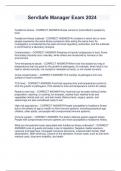
ServSafe Manager Exam 2024 Foodborne illness - CORRECT ANSWER-Illness carried or transmitted to people by food. Foodborne-illness outbreak - CORRECT ANSWER-An incident in which two or more people experience the same illness symptoms after eating the same food. An investigation is conducted by the state and local regulatory authorities, and the outbreak is confirmed by a laboratory analysis. Contamination - CORRECT ANSWER-Presence of harmful substances in food. Some food safety hazards occur naturally, while others are introduced by humans or the environment. Time-temperature abuse: - CORRECT ANSWER-When food has stayed too long at temperatures that are good for the growth of pathogens; for example, when food is not held or stored correctly, not cooked or reheated correctly, or not cooled correctly. Cross-contamination: - CORRECT ANSWER-The transfer of pathogens from one surface of food to another. TCS food: - CORRECT ANSWER-Food that requires time and temperature control to limit the growth of pathogens. TCS stands for time and temperature control for safety. Ready-to-eat food: - CORRECT ANSWER-Any food that can be eaten without further preparation, washing, or cooking; for example, cooked food, washed fruits and vegetables (whole and cut), and deli meats. Bakery items, sugars, spices, and seasonings are also considered ready to eat. High-risk populations: - CORRECT ANSWER-People susceptible to foodborne illness due to the effects of age or health on their immune systems, including preschool-age children, older adults, and people with compromised immune systems. Immune system: - CORRECT ANSWER-The body's defense system against illness. People with compromised immune systems are more susceptible to foodborne illness. What are the potential costs associated with foodborne-illness outbreaks? - CORRECT ANSWER-Loss of guests and sales, Loss of reputation, Negative media exposure, Lawsuits and legal fees, Increased insurance premiums, Lowered staff morale, Staff absenteeism, Staff retraining, Closure of the operation, Human costs, such as lost work, medical costs, long-term disability, and death Why are the elderly at a higher risk for getting foodborne illnesses? - CORRECT ANSWER-As people age, there are changes in their organs. For example, stomach-acid production decreases as people get older. This allows more pathogens to enter the intestines. A change in the stomach and intestinal tract also allows the body to store food for longer periods. This gives toxins more time to form.
École, étude et sujet
- Établissement
- ServSafe Manager
- Cours
- ServSafe Manager
Infos sur le Document
- Publié le
- 14 février 2024
- Nombre de pages
- 3
- Écrit en
- 2023/2024
- Type
- Examen
- Contient
- Questions et réponses
Sujets
-
foodborne illness
-
toxin
-
servsafe manager exam 2024
-
cross contamination can happen when

Document également disponible en groupe