Democracies, autocracies and transition full notes
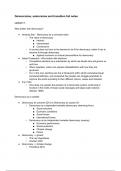
Lecture 1:
Why bother with democracy?
● Amartya Sen - Democracy as a universal value
○ The value of democracy
■ Intrinsic
■ Instrumental
■ Constructive
○ A country does not have to be deemed to be fit for democracy, rather it has to
become fit through democracy
■ Against economic or cultural preconditions for democracy
● Adam Przeworksi - Why bother with elections
○ Competitive elections as a mechanism by which we decide who will govern us
and how
○ When repeated, voters can express dissatisfaction with how they are
governed
○ For, in the end, elections are but a framework within which somewhat equal,
somewhat effective, and somewhat free people can struggle peacefully to
improve the world according to their different visions, values and interests.
● E.g. India
○ How does one explain the paradox of a democratic system continuing to
function in the midst of sharp social cleavages and large-scale violence
(Weiner 1989)
Democracy as a variable
● Democracy as outcome (DV) vs Democracy as cause (IV)
○ Democracy as a dependent variable (democracy stemming from):
■ Social structure
■ Economic conditions
■ Social forces
■ International forces
○ Democracy as an independent variable (democracy causing)
■ Economic performance
■ Social protection
■ Climate change
■ Peace
● Democracy -> growth
○ The Lee Hypothesis
○ Knutsen 2021
● Democracy -> climate change
○ Povetkina 2018
,About DAT
● Democracy as an outcome - constructing answers
○ Concepts
■ Definition
○ Theory
■ Links concepts
■ Simplifies and complicates
■ Clarifies agency
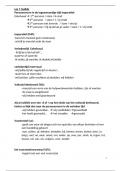
, Lecture 3:
Democracy, then and now
● Etymology
● Democracy as rule by the people
● But who, what, how, when and where?
● Early theoretical treatments
○ Plato, the republic
■ Government as the realm of expert
■ Democracy as a mob rule
○ Aristotle, the politics
■ Regime classification
● Number of rulers
● Exist in good and bad forms
○ Seen as susceptible to class warfare, unstable and dangerous
● Early experiments
○ Athenian democracy
■ Aristotle, constitution of the Athenians, Herodotus, Thucydides,
Xenophon
■ Suffrage for free, adult males
■ Free speech, political equality, direct participation
○ Early democracy
■ Council governance, village governance
● Ali and stasavage 2020, Koelbel and lipuma 2008, Parekh
1992
○ Democracy very different
■ E.g. Election by lot, and/or direct decision-making, and limited in
processes and size
● Shift in mid-19th century
○ French and American revolutions
○ Democracy as representative government
○ Rapid expansion
● Connection with Liberalism (Parekh 1992)
○ Emphasis on individual (one person, one vote)
○ Industrial revolution and expansion of capitalism
● Resistance to expansion of democracy, including from liberals
Lecture 1:
Why bother with democracy?
● Amartya Sen - Democracy as a universal value
○ The value of democracy
■ Intrinsic
■ Instrumental
■ Constructive
○ A country does not have to be deemed to be fit for democracy, rather it has to
become fit through democracy
■ Against economic or cultural preconditions for democracy
● Adam Przeworksi - Why bother with elections
○ Competitive elections as a mechanism by which we decide who will govern us
and how
○ When repeated, voters can express dissatisfaction with how they are
governed
○ For, in the end, elections are but a framework within which somewhat equal,
somewhat effective, and somewhat free people can struggle peacefully to
improve the world according to their different visions, values and interests.
● E.g. India
○ How does one explain the paradox of a democratic system continuing to
function in the midst of sharp social cleavages and large-scale violence
(Weiner 1989)
Democracy as a variable
● Democracy as outcome (DV) vs Democracy as cause (IV)
○ Democracy as a dependent variable (democracy stemming from):
■ Social structure
■ Economic conditions
■ Social forces
■ International forces
○ Democracy as an independent variable (democracy causing)
■ Economic performance
■ Social protection
■ Climate change
■ Peace
● Democracy -> growth
○ The Lee Hypothesis
○ Knutsen 2021
● Democracy -> climate change
○ Povetkina 2018
,About DAT
● Democracy as an outcome - constructing answers
○ Concepts
■ Definition
○ Theory
■ Links concepts
■ Simplifies and complicates
■ Clarifies agency
, Lecture 3:
Democracy, then and now
● Etymology
● Democracy as rule by the people
● But who, what, how, when and where?
● Early theoretical treatments
○ Plato, the republic
■ Government as the realm of expert
■ Democracy as a mob rule
○ Aristotle, the politics
■ Regime classification
● Number of rulers
● Exist in good and bad forms
○ Seen as susceptible to class warfare, unstable and dangerous
● Early experiments
○ Athenian democracy
■ Aristotle, constitution of the Athenians, Herodotus, Thucydides,
Xenophon
■ Suffrage for free, adult males
■ Free speech, political equality, direct participation
○ Early democracy
■ Council governance, village governance
● Ali and stasavage 2020, Koelbel and lipuma 2008, Parekh
1992
○ Democracy very different
■ E.g. Election by lot, and/or direct decision-making, and limited in
processes and size
● Shift in mid-19th century
○ French and American revolutions
○ Democracy as representative government
○ Rapid expansion
● Connection with Liberalism (Parekh 1992)
○ Emphasis on individual (one person, one vote)
○ Industrial revolution and expansion of capitalism
● Resistance to expansion of democracy, including from liberals