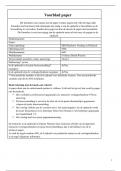
Voorblad paper
Dit formulier moet samen met de paper worden ingeleverd. Met dit ingevulde
formulier heeft de docent alle informatie die nodig is om de opdracht te beoordelen en de
beoordeling te verwerken. Zonder deze gegevens kan de docent de paper niet beoordelen.
Dit formulier is een toevoeging aan de opdracht maar telt niet mee als pagina in de
opdracht.
Studentnummer:
Naam:
Naam opleiding: HBO Bachelor Voeding en Diëtetiek
Opleidingscode: 9266
Modulenummer: 6691
Modulenaam: Evidence Based Practice
Versie (indien meerdere versies aanwezig): Versie 1
Herkansing?: ja/nee
In de opdracht is de juiste bronvermelding* Ja/Nee
toegepast:
In de opdracht zijn de verslagtechnieken toegepast: Ja/Nee
* Voor juridische modules is dit de Leidraad voor Juridische Auteurs. Voor niet-juridische
modules zijn dit de APA-richtlijnen.
Houd rekening met de knock-out criteria!
Je paper dient aan de onderstaande punten te voldoen. Is dit niet het geval, dan wordt je paper
niet beoordeeld.
Het voorblad is professioneel opgemaakt (zie instructie verslagtechnieken NTI) en
aanwezig;
De bronvermelding is zowel in de tekst als in de aparte literatuurlijst opgenomen
volgens de juiste bronvermelding;
Het verslag voldoet aan de vereisten m.b.t. het aantal pagina’s (in de opdracht wordt
dit exact benoemd) en is in lettertype Times New Roman 12 als lettertype opgemaakt
met regelafstand 1,5;
Het verslag heeft een juiste paginanummering.
De instructie in de opdracht is leidend. Wanneer deze instructie afwijkt van de algemene
instructie (verslagtechnieken en juiste bronvermelding), dan is dit leidend voor de te
schrijven paper.
Je vindt de regels rondom APA, de Leidraad voor juridische auteurs en de verslagtechnieken
in de tegel Algemene informatie.
1
,Abstract
Aspartame is an intense sweetener that is two hundred times sweeter than sugar and barely contains
calories. Aspartame is used as a sweetener in products like soda or candy. According to the European
Food Safety Authority, aspartame is considered safe when used in amounts under 40 mg per kg body
weight per day. Within a normal eating pattern, it’s very unlikely to consume more aspartame than this
safe amount. The International Agency on Research and Cancer concluded that aspartame might be
carcinogenic, but the evidence is not sufficient. This publication caused unrest and indistinctness to many
people. According to the World Health Organization, aspartame could higher the risk for developing
diabetes mellitus type 2 and cardiovascular disease. This conclusion might be based on reverse causality,
but this isn’t always explained properly in messages in the media. Because of this conflicting information,
people don’t know if aspartame is safe to use or not.
In my literature research, I found that there is no convincing evidence that aspartame increases the risk for
cancer and diabetes mellitus type 2. Some researches find that aspartame might increases the risk for
cardiovascular disease and brain damage, but further research is needed, and the benefits of using
aspartame still outweigh the possible side effects.
In my qualitive research, I found that all participants are able to mention one product that contains
aspartame and one reason why aspartame is added to products. All participants are able to find
information about aspartame, but the sources they use differ. Because of that, some people find reliable
articles based on scientific information while others find articles that are based on weak evidence or
reverse causality. In conclusion, all participants have knowledge about what products contain aspartame
and why aspartame is added, but not all participants are able to mention at least one benefit of the use of
aspartame. Most participants mention at least one disadvantage of the use of aspartame that is based on
weak evidence or reverse causality what influences their opinion of the sweetener and this might leads to
avoidance.
, Inhoudsopgave
Hoofdstuk 1: Inleiding 3
1.1 Inleiding 3
1.2 Probleemdefinitie 4
Hoofdstuk 2: Literatuuronderzoek 4
Hoofdstuk 3: Methoden van onderzoek 7
3.1 Probleemdefinitie 7
3.2 Uitvoering kwalitatieve onderzoek 7
3.3 Analyseren en uitwerken van uitkomsten 7
Hoofdstuk 4: Resultaten 8
Hoofdstuk 5: Conclusies en discussie 10
5.1 Conclusie 10
5.2 Discussie 12
Hoofdstuk 6: Advies 13
6.1 Korte weergave resultaten literatuur- en kwalitatieve onderzoek 13
6.2 Aanbevelingen 13
Literatuur 15
Bijlage 1 – Overzicht literatuuronderzoek 18
Bijlage 2 – Analyse kwantitatief onderzoek 20
Bijlage 3 – Gespreksvragen 22
Dit formulier moet samen met de paper worden ingeleverd. Met dit ingevulde
formulier heeft de docent alle informatie die nodig is om de opdracht te beoordelen en de
beoordeling te verwerken. Zonder deze gegevens kan de docent de paper niet beoordelen.
Dit formulier is een toevoeging aan de opdracht maar telt niet mee als pagina in de
opdracht.
Studentnummer:
Naam:
Naam opleiding: HBO Bachelor Voeding en Diëtetiek
Opleidingscode: 9266
Modulenummer: 6691
Modulenaam: Evidence Based Practice
Versie (indien meerdere versies aanwezig): Versie 1
Herkansing?: ja/nee
In de opdracht is de juiste bronvermelding* Ja/Nee
toegepast:
In de opdracht zijn de verslagtechnieken toegepast: Ja/Nee
* Voor juridische modules is dit de Leidraad voor Juridische Auteurs. Voor niet-juridische
modules zijn dit de APA-richtlijnen.
Houd rekening met de knock-out criteria!
Je paper dient aan de onderstaande punten te voldoen. Is dit niet het geval, dan wordt je paper
niet beoordeeld.
Het voorblad is professioneel opgemaakt (zie instructie verslagtechnieken NTI) en
aanwezig;
De bronvermelding is zowel in de tekst als in de aparte literatuurlijst opgenomen
volgens de juiste bronvermelding;
Het verslag voldoet aan de vereisten m.b.t. het aantal pagina’s (in de opdracht wordt
dit exact benoemd) en is in lettertype Times New Roman 12 als lettertype opgemaakt
met regelafstand 1,5;
Het verslag heeft een juiste paginanummering.
De instructie in de opdracht is leidend. Wanneer deze instructie afwijkt van de algemene
instructie (verslagtechnieken en juiste bronvermelding), dan is dit leidend voor de te
schrijven paper.
Je vindt de regels rondom APA, de Leidraad voor juridische auteurs en de verslagtechnieken
in de tegel Algemene informatie.
1
,Abstract
Aspartame is an intense sweetener that is two hundred times sweeter than sugar and barely contains
calories. Aspartame is used as a sweetener in products like soda or candy. According to the European
Food Safety Authority, aspartame is considered safe when used in amounts under 40 mg per kg body
weight per day. Within a normal eating pattern, it’s very unlikely to consume more aspartame than this
safe amount. The International Agency on Research and Cancer concluded that aspartame might be
carcinogenic, but the evidence is not sufficient. This publication caused unrest and indistinctness to many
people. According to the World Health Organization, aspartame could higher the risk for developing
diabetes mellitus type 2 and cardiovascular disease. This conclusion might be based on reverse causality,
but this isn’t always explained properly in messages in the media. Because of this conflicting information,
people don’t know if aspartame is safe to use or not.
In my literature research, I found that there is no convincing evidence that aspartame increases the risk for
cancer and diabetes mellitus type 2. Some researches find that aspartame might increases the risk for
cardiovascular disease and brain damage, but further research is needed, and the benefits of using
aspartame still outweigh the possible side effects.
In my qualitive research, I found that all participants are able to mention one product that contains
aspartame and one reason why aspartame is added to products. All participants are able to find
information about aspartame, but the sources they use differ. Because of that, some people find reliable
articles based on scientific information while others find articles that are based on weak evidence or
reverse causality. In conclusion, all participants have knowledge about what products contain aspartame
and why aspartame is added, but not all participants are able to mention at least one benefit of the use of
aspartame. Most participants mention at least one disadvantage of the use of aspartame that is based on
weak evidence or reverse causality what influences their opinion of the sweetener and this might leads to
avoidance.
, Inhoudsopgave
Hoofdstuk 1: Inleiding 3
1.1 Inleiding 3
1.2 Probleemdefinitie 4
Hoofdstuk 2: Literatuuronderzoek 4
Hoofdstuk 3: Methoden van onderzoek 7
3.1 Probleemdefinitie 7
3.2 Uitvoering kwalitatieve onderzoek 7
3.3 Analyseren en uitwerken van uitkomsten 7
Hoofdstuk 4: Resultaten 8
Hoofdstuk 5: Conclusies en discussie 10
5.1 Conclusie 10
5.2 Discussie 12
Hoofdstuk 6: Advies 13
6.1 Korte weergave resultaten literatuur- en kwalitatieve onderzoek 13
6.2 Aanbevelingen 13
Literatuur 15
Bijlage 1 – Overzicht literatuuronderzoek 18
Bijlage 2 – Analyse kwantitatief onderzoek 20
Bijlage 3 – Gespreksvragen 22