Enforcement of money judgments
SUMMARY, ENFORCEMENT
A judgment creditor can ask for the court’s assistance in discovering the assets
available for enforcement by applying to obtain information from the judgment
debtor.
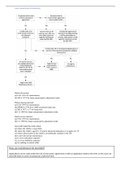
A money judgment can be enforced by:
1. writ/warrant of control against the judgment debtor’s goods;
2. by third party debt order against eg a bank account;
3. by attachment of earnings against the judgment debtor’s salary;
4. secured by obtaining a charging order (normally on land)
Each type has its own enforcement procedure (land, goods, injunctions etc)
Most enforcement procedures are dealt with administratively by the court,
EXCEPT, (court orders required for):
o Third party debt orders;
o Charging orders;
o Committal
(NB: re writ/warrant of control normally no permission required,
except in the situations listed in r83.2, eg 6+ years since judgment;
one party died since judgment etc)
(a) Third Party Debt Orders and (b) Charging Orders have a 2-stage process:
o Interim orders are sought without notice;
o Final orders are sought at a final hearing.
[[so all the 4 types of enforcement mechanism are initially applied for without
notice (but then for 3rd party debt orders and charging orders need orders for second
stage of final orders)]
PD40B (Judgments & Orders), para 4, Correction of errors in judgments & Orders
Where a judgment/order contains an accidental slip or omission a party may
apply for it to be corrected.
The application notice (which may be an informal doc such as a letter) should
describe the error, and set out the correction required .
An application may be dealt with without a hearing if:
o (1) where the applicant so requests;
o (2) with the consent of the parties; or
o (3) where the court does not consider that a hearing would be appropriate.
The judge may deal with the application without notice IF: the slip/omission is
obvious; or may direct notice of the application to be given to the party/parties.
, If the application is opposed it should, if practicable, be listed for hearing before
the judge who gave the judgment/made the order.
The court has an inherent power to vary its own orders, to make the meaning &
intention clear.
PD40B, para 8, Orders requiring an act to be done
(1) An order which requires an act to be done (other than a judgment/order for
the payment of an amount of money) MUST specify the time within which the
act should be done.
(2) the consequences of failure to do an act within the specified time may be set
out in the order. The wording of the following examples suitably adapted must be
used:
o (1) Unless the [claimant][defendant] serves his list of documents by 4.00pm
on Friday, January 22, 1999, his [claim][defence] will be struck out and
judgment entered for the [defendant][claimant]; OR
o (2) Unless the [claimant][defendant] serves his list of docs within 14 days of
service of this order his [claimant][defence] will be struck out and judgment
entered for the [defendant][claimant].
o The first example should be used wherever possible (i.e. specifies the date
and time more precisely)
CPR PART 70: general rules about enforcement of judgments & orders
CPR 70.1, Scope of this part & interpretation
(1) This Part contains general rules about enforcement of judgments and orders
o (Rules about specific methods of enforcement are contained in Parts 71-73,
81, 83, 84, 89)
(2) In this part and in parts 71-73:
o “judgment creditor” = a person who has obtained or is entitled to enforce a
judgment or order;
o “judgment debtor” = a person against whom a judgment/order was given or
made;
o “judgment or order” includes an award which the court has:
(i) registered for enforcement;
(ii) ordered to be enforced; or
(iii) given permission to enforce
As if it were a judgement or order of the court; and in relation to
such an award, “the court which made the judgment or order” means
the court which registered the award or made such an order;
o “Judgment or order for the payment of money”:
includes a judgment/order for the payment of costs;
, but does NOT include a judgment/order for the payment of money
into court.
CPR 70.2, Methods of enforcing judgments/orders
(1) PD70 sets out methods of enforcing judgments/orders for the payment of
money.
(2) a judgment creditor MAY, except where an enactment/rule/PD provides
otherwise:
o (a) use any method of enforcement which is available; and
o (b) use more than one method of enforcement, either at the same time or
one after another (sequentially or sequentially).
PD70, para 1.1, Methods of Enforcing MONEY judgments, r70.2
1.1, a judgment creditor may enforce a judgment/order for the payment of money,
by any of the following methods:
1.1, a judgment creditor may enforce a judgment/order for the payment of money,
by any of the following methods:
1) a writ of control (High Court); or warrant of control (County Court) (see
Parts 83-84)
[for seizure and sale of the debtor’s goods and chattels to satisfy the
judgment debt see Pt 83 re writs & warrants; Pt 84 re taking
control of goods];
Advantages: quick; cheap; easy
Disadvantages: only likely to satisfy a small debt; might not be able
to sell the goods; goods are sold at auction (often get less than an
open market)
2) a third party debt order (see Part 72), eg against a bank account;
Where a 3rd party owes money to the judgment debtor
Direct payment from 3rd party to the judgment creditor
Advantage: reputable 3rd party (bank/building society), likely to pay
money direct to judgment creditor
Disadvantage: cannot get 3rd party debt orders over joint accounts
3) a charging order, stop order or stop notice (see Part 73)
[a charging order: imposes on property of the debtor a charge for
securing the payment of money due];
Advantage: a lot of cash
Disadvantages: can be hard to get the money; have to order a sale;
could be hard if the property is jointly owned;
Any prior charges on the land (eg mortgages) will take priority, the
equity on the land might be small
SUMMARY, ENFORCEMENT
A judgment creditor can ask for the court’s assistance in discovering the assets
available for enforcement by applying to obtain information from the judgment
debtor.
A money judgment can be enforced by:
1. writ/warrant of control against the judgment debtor’s goods;
2. by third party debt order against eg a bank account;
3. by attachment of earnings against the judgment debtor’s salary;
4. secured by obtaining a charging order (normally on land)
Each type has its own enforcement procedure (land, goods, injunctions etc)
Most enforcement procedures are dealt with administratively by the court,
EXCEPT, (court orders required for):
o Third party debt orders;
o Charging orders;
o Committal
(NB: re writ/warrant of control normally no permission required,
except in the situations listed in r83.2, eg 6+ years since judgment;
one party died since judgment etc)
(a) Third Party Debt Orders and (b) Charging Orders have a 2-stage process:
o Interim orders are sought without notice;
o Final orders are sought at a final hearing.
[[so all the 4 types of enforcement mechanism are initially applied for without
notice (but then for 3rd party debt orders and charging orders need orders for second
stage of final orders)]
PD40B (Judgments & Orders), para 4, Correction of errors in judgments & Orders
Where a judgment/order contains an accidental slip or omission a party may
apply for it to be corrected.
The application notice (which may be an informal doc such as a letter) should
describe the error, and set out the correction required .
An application may be dealt with without a hearing if:
o (1) where the applicant so requests;
o (2) with the consent of the parties; or
o (3) where the court does not consider that a hearing would be appropriate.
The judge may deal with the application without notice IF: the slip/omission is
obvious; or may direct notice of the application to be given to the party/parties.
, If the application is opposed it should, if practicable, be listed for hearing before
the judge who gave the judgment/made the order.
The court has an inherent power to vary its own orders, to make the meaning &
intention clear.
PD40B, para 8, Orders requiring an act to be done
(1) An order which requires an act to be done (other than a judgment/order for
the payment of an amount of money) MUST specify the time within which the
act should be done.
(2) the consequences of failure to do an act within the specified time may be set
out in the order. The wording of the following examples suitably adapted must be
used:
o (1) Unless the [claimant][defendant] serves his list of documents by 4.00pm
on Friday, January 22, 1999, his [claim][defence] will be struck out and
judgment entered for the [defendant][claimant]; OR
o (2) Unless the [claimant][defendant] serves his list of docs within 14 days of
service of this order his [claimant][defence] will be struck out and judgment
entered for the [defendant][claimant].
o The first example should be used wherever possible (i.e. specifies the date
and time more precisely)
CPR PART 70: general rules about enforcement of judgments & orders
CPR 70.1, Scope of this part & interpretation
(1) This Part contains general rules about enforcement of judgments and orders
o (Rules about specific methods of enforcement are contained in Parts 71-73,
81, 83, 84, 89)
(2) In this part and in parts 71-73:
o “judgment creditor” = a person who has obtained or is entitled to enforce a
judgment or order;
o “judgment debtor” = a person against whom a judgment/order was given or
made;
o “judgment or order” includes an award which the court has:
(i) registered for enforcement;
(ii) ordered to be enforced; or
(iii) given permission to enforce
As if it were a judgement or order of the court; and in relation to
such an award, “the court which made the judgment or order” means
the court which registered the award or made such an order;
o “Judgment or order for the payment of money”:
includes a judgment/order for the payment of costs;
, but does NOT include a judgment/order for the payment of money
into court.
CPR 70.2, Methods of enforcing judgments/orders
(1) PD70 sets out methods of enforcing judgments/orders for the payment of
money.
(2) a judgment creditor MAY, except where an enactment/rule/PD provides
otherwise:
o (a) use any method of enforcement which is available; and
o (b) use more than one method of enforcement, either at the same time or
one after another (sequentially or sequentially).
PD70, para 1.1, Methods of Enforcing MONEY judgments, r70.2
1.1, a judgment creditor may enforce a judgment/order for the payment of money,
by any of the following methods:
1.1, a judgment creditor may enforce a judgment/order for the payment of money,
by any of the following methods:
1) a writ of control (High Court); or warrant of control (County Court) (see
Parts 83-84)
[for seizure and sale of the debtor’s goods and chattels to satisfy the
judgment debt see Pt 83 re writs & warrants; Pt 84 re taking
control of goods];
Advantages: quick; cheap; easy
Disadvantages: only likely to satisfy a small debt; might not be able
to sell the goods; goods are sold at auction (often get less than an
open market)
2) a third party debt order (see Part 72), eg against a bank account;
Where a 3rd party owes money to the judgment debtor
Direct payment from 3rd party to the judgment creditor
Advantage: reputable 3rd party (bank/building society), likely to pay
money direct to judgment creditor
Disadvantage: cannot get 3rd party debt orders over joint accounts
3) a charging order, stop order or stop notice (see Part 73)
[a charging order: imposes on property of the debtor a charge for
securing the payment of money due];
Advantage: a lot of cash
Disadvantages: can be hard to get the money; have to order a sale;
could be hard if the property is jointly owned;
Any prior charges on the land (eg mortgages) will take priority, the
equity on the land might be small