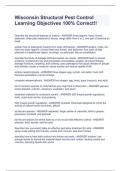
Wisconsin Structural Pest Control Learning Objectives 100% Correct!!
Describe the structural features of insects - ANSWER three regions: head, thorax, abdomen. three pairs attached to thorax. wings differ from 0 to 2. one pair of antenna on head explain how to distinguish insects from other arthropods - ANSWER spiders, mites, etc. have two body regions: a fused head and thorax, and abdomen; four pairs of legs attached to head/thorax region; no wings; no antennae; has an exoskeleton describe the kinds of damage arthropod pests can cause - ANSWER feed on stored products; contaminate raw and processed commodities; weaken structural timbers; damage furniture, carpeting, and clothing; carry pathogens that cause disease in people and animals; create a nuisance; cause anxiety and reduce quality of life simple metamorphosis - ANSWER three stages: egg, nymph, and adult. must molt because exoskeleton cannot enlarge complete metamorphosis - ANSWER four stages: egg, larva, pupa (cocoon), and adult list of common species of cockroaches you might find in Wisconsin - ANSWER german, brown-banded, oriental , american, australian, and wood treatment methods for cockroach control - ANSWER IGR (insect growth regulators), baits, crack-and-crevice, and spraying IGR (insect growth regulators) - ANSWER synthetic chemicals designed to mimic the activity of natural insect hormones. affects list the ant species - ANSWER carpenter, larger yellow or citronella, thief or grease, pavement, cornfield, and pharoah list the ant species for which baits do or do not provide effective control - ANSWER pharaoh, thief, worker, and fire ants describe how you would make an effective perimeter treatment for ants - ANSWER spray under sliding door frames, cracks and crevices. seal door frames describe how to treat both outdoor and indoor ant nests - ANSWER outdoor: use enough liquids to drench the material down into the nest. indoor: dusting cracks and crevices, spraying liquids also works carpenter ant control - ANSWER find the main nesting colony and kill the queen. use perimeter treatment to keep the ants outside specify where to concentrate flea control efforts in the animal's environment - ANSWER eat and sleep areas, wash animal. focus on where the pet spends most of its time, vacuum and cleaning up their area. check chimneys, attics, and crawl spaces if no animal is a pet list the advantages of IGRs and describe how they fit into a flea management program - ANSWER IGRs prevent fleas from developing and hatching, they also have low human and animal toxicity describe the limitations of aerosols, flea "bombs," ultrasonic devices, and flea traps - ANSWER these materials can cause explosions or fires if access fumes build up in enclosed areas, they won't penetrate through furniture or other items outline the key to effective control of flies and food pests - ANSWER find and eliminate food source, short term bomb describe the options for controlling powder post beetle infestations - ANSWER surface-treat the infested wood with pesticide. spray or paint borates onto exposed surfaces describe what can make perimeter treatments for occasional invaders especially effective and why some treatments fail - ANSWER treating cracks and openings around windows, plumbing, doors, spaces between the foundation and siding are effective. Some treatments may fail because some insects might have gotten past the perimeter treatment before you applied it describe the life cycle of bed bugs and the importance of proper inspection - ANSWER individual bed bugs can lay 200 to 250 eggs in her lifetime. The eggs hatch in about 6 to 10 days. Adults live for about 2 to 4 months. If you don't properly inspect for bed bugs, then the infestation will not be controlled describe some control methods for bed bugs including limitations of chemical control - ANSWER temperature below freezing or heat treatments. non-repellant products are primarily used list physical differences between the Norway rat - ANSWER weighs 7-17 ounces, 12-18 inches long, tail is 5-8 inches, ears are close set, short, thick with short fine hairs, hind foot over an inch, 12 teats on female, grayish belly fur physical differences of the house mouse - ANSWER weighs 0.5-1 ounce, 5-8 inches long, tail is 2-4 inches, ears are large relative to head with some hairs, hind foot is under 3/4 inch, 10 teats on females, brownish belly fur distinguish the physical differences of a deer or white-footed mice - ANSWER weighs 0.4-1.25 ounces, 5-8.5 inches long, tail is 2-4 inches, ears are equal to body length and sharply bi-colored: darker above, paler below, larger ears and eyes than house mouse, females have 6 teats, whitish belly fur, white feet explain how rodent signs can provide clues to the species, size, and vitality of a rodent population - ANSWER droppings can show you what kind of rodent it is, marks along the wall can help identify the relative size of populations and activity level, tracks can help identify the species of rodents present, burrows can show recent activity, and gnawing marks can also help identify the species outline the range and limitations of rodents' senses and how they can influence management practices - ANSWER rodents have an acute sense of smell, rodents have highly developed taste, because they are nocturnal their sense of touch is important, rodents have good hearing and react to sound, rodents are very sensitive to light and have poor vision describe some of the physical abilities of rodents - ANSWER walk horizontal wires and pipes, climb vines, shrubs, trees, brick, or other rough exterior walls, climb inside vertical pipes with inside diameter, climb outside vertical pipes with outside diameter up to 3 inches, reach up to 18 inches, jump vertically 3 feet from a flat surface explain the effect that neophobia, or "new-object reaction" can have on rodent management - ANSWER rats, more so than mice, quickly detect and tend to avoid anything new in a familiar environment, this makes it so they might avoid some baits describe the feeding preferences of rodents - ANSWER rats are omnivorous, once it is familiar to them they will eat it describe the causes, and possible outcomes, associated with bait shyness - ANSWER rats normally sample small amounts of new food fir
École, étude et sujet
- Établissement
- Wisconsin Structural Pest Control
- Cours
- Wisconsin Structural Pest Control
Infos sur le Document
- Publié le
- 16 décembre 2023
- Nombre de pages
- 20
- Écrit en
- 2023/2024
- Type
- Examen
- Contient
- Questions et réponses
Sujets
-
wisconsin structural pest control learning objecti
-
wisconsin structural pest control styuvia 2023
-
describe the structural features of insects answ
-
explain how to distinguish insects from other arth

Document également disponible en groupe