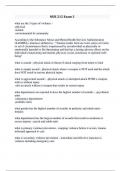
NUR 212 Exam 3
what are the 3 types of violence – -physical -mental -environmental & community According to the Substance Abuse and Mental Health Services Administration (SAMHSA), trauma is defined as - "Trauma results from an event, series of events, or set of circumstances that is experienced by an individual as physically or emotionally harmful or life threatening and that has a lasting adverse effects on the individual's functioning and mental, physical, social, emotional, or spiritual wellbeing" what is assault - physical attack or threat of attack ranging from minor to fatal what is simple assault - physical attack where a weapon is NOT used and the attack does NOT result in serious physical injury what is aggravated assault - -physical attack or attempted attack WITH a weapon, with or without injury -also an attack without a weapon that results in serious injury what departments are reported to have the highest number of assaults - -psychiatric units -emergency departments -pediatric units what gender has the highest number of assaults in pediatric and rehab units - females what departments has the largest number of assaults that result in moderate or severe injuries - psych and rehab units what is primary violence prevention - stopping violence before it occurs, trauma informed approach to care what is secondary violence prevention - immediate and effective repsonse to violence including emergency carewhat is tertiary violence prevention - long term responses to violence, reduce the long term and rehabilitation consequences of workplace violence what is CUS - -Concern -Uncomfortable -Safe what is the 2-challenge rule - voice a concern for a second time in the event that the concern is not acknowledged or addressed when first expressed what are 4 strategies to de-escalate a situation - 1. ensure safety of the client, staff, and others 2. help the client manage their emotions and maintain or regain control of their behaviors 3. avoid the use of restraints when at all possible 4. avoid coercive interventions that escalate agitation what are the 10 domains of de-escalation - 1. respect the patient's and your personal space 2. do not be provocative in posture or humiliating in tone 3. only 1 person verbally interacts with the patient, establish verbal contact 4. be concise and keep it simple, repetition is essential 5. identify wants and feelings, use "free information" to help identify these 6. use active listening, repeat back, ask for clarification and assume what they are saying could be true 7. find something to agree with the facts/truth, the principle, or the odds for the distress 8. explain basic, "working conditions" for ongoing discussions, set limits respectfully, coach the patient on how to stay in control 9. offer choices, including acts of kindness, and provide optimism/hope 10. debrief the patient and staff what is the LARA method - L-listen with the intent to understand, not respond A-affirm to acknowledge what is shared by repeating and rephrasing R-respond to the issues raised and ask questions A-add information to the conversation and continue to ask questions what is a SAECK - sexual assault evidence collection kit
École, étude et sujet
- Établissement
- Chamberlain College Of Nursing
- Cours
- (NUR212)
Infos sur le Document
- Publié le
- 8 décembre 2023
- Nombre de pages
- 12
- Écrit en
- 2023/2024
- Type
- Examen
- Contient
- Questions et réponses
Sujets
-
nur 212 exam 3
-
nur 212

Document également disponible en groupe