Adulthood & Ageing: Chances and Risks
Week 2 Lecture 1
Introduction (Chapter 1 & 8)
At what age does development stop? Development stops when we die. You will always develop yourself (it stops
around 80 years).
What is old?
▪ Childhood: 0 – 15 years.
▪ Young adulthood: 15 – 30 years, relatively few responsibilities for others. This phase consists of studying,
getting first job, developing first relationships, and moving out.
▪ Midlife: 30 – 60 years, this phase consists of family, work, and caring for others.
▪ Active old age: 60 – 80 years, period of freedom in relatively good health.
▪ Intense care: 80+ years, period of (often) physical and/or mental decline and increasing dependency on others.
Continuity theory (Atchley, 1989): the majority of older adults show relative consistency in personality traits,
attachment and relationships, and in beliefs, traditions, interests, and activities, despite their changing physical,
mental, and social status.
Sources of change (influences on adult development):
the changes can be divided in three sources of change.
1. Normative age-graded influences.
2. Normative history related influences.
3. Non-normative life influences/life events.
Two important approaches on adult development:
1. Life-span developmental psychology approach: development is a lifelong process with a combination of gains
and losses.
▪ Developmental stages (Erikson).
▪ SOC model.
2. Bioecological model of development: crucial role of the environment.
▪ Bronfenbrenner’s’ model of ecological systems.
▪ Self-Determination Theory.
Developmental stages (Erikson): life contains different stages in which you
have certain dilemmas to go through. In middle adulthood this is generativity
versus stagnation, and in maturity it is ego integrity versus despair. There
needs to be a balance between the two in order to go to the next stage.
,SOC model (Baltes): this is about selection, optimization, and compensation. When we become older, we are unable
to do everything we did as before (therefore select what you can and cannot do anymore). Most people choose what
they love to do, and then optimize this (e.g., take more time to do the things you love to do). When it is not possible to
optimize performance, people compensate (i.e., adapting skills via help from others, aid, and creativity).
▪ For example: pianist Arthur Rubinstein
continued to play with enormous skill into his
80’s. He picked smaller sets of pieces
(selection), he took more time to study them
(optimization) and learned techniques to mask
that he became less fast (compensation).
Development in the context of the environment
(Bronfenbrenner’s model of ecological systems): see handbook.
Self-Determination Theory (Deci & Ryan, 2008): suggests that all
humans have three basic psychological needs (autonomy, competence,
and relatedness) that underlie growth and development. They state that
this theory is universal (across all ages).
▪ Lifespan psychology theories: certain needs more closely linked
to well-being at some ages compared to others due to a shift in
goals associated with life stages.
Lataster et al. (2021): explored age distribution of satisfaction of the three needs and whether this satisfaction is
associated with well-being across all ages.
▪ Methods: 1709 (18 – 97) from the Netherlands and Belgium.
▪ Measures of basic psychological need satisfaction and frustration scale:
1. Autonomy: I feel a sense of choice and freedom in the thins I undertake.
2. Competence: I feel can successfully complete difficult tasks.
3. Relatedness: I feel close and connected with other people who are important to me.
▪ Measures of well-being:
1. Emotional well-being: balance between positive and negative feelings, absence of depressive
feelings, and satisfaction with life.
2. Psychological well-being: self-acceptance, goal in life, and personal growth.
3. Social well-being: social contribution and acceptance, contribution to society, and integration.
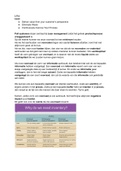
Results: the feeling of autonomy rises when we age,
relatedness rises after 70, and competence stays consistent
during ageing (people still have the feeling of competence
when you become older you may adapt your expectation).
, ▪ A is raw data, and B is more nuanced (i.e., individual
differences are taken into account).
▪ Older adults in general experience: more emotional
well-being (paradox of ageing), less psychological
well-being, and equal amount of social well-being.
Paradox of ageing: the view that, despite physical and
cognitive decline, ageing is associated with an increase in
emotional well-being. This is because they have better coping.
Explanation for the rise in relatedness and autonomy is the socioemotional selectivity theory (Carstensen, 1992):
social goals change from knowledge related to emotion related. As time horizons shrink, people become more
selective, investing greater resources in emotionally meaningful goals, activities, and relationships. Selective
narrowing of social interaction maximizes positive emotional experiences. Quality over quantity of relationships.
Associations between Need Satisfaction and Well-being:
▪ Autonomy, competence, and relatedness are all three related to emotional, psychological, and social well-
being across all age groups.
▪ In general, no age specific associations.
▪ Exception for relatedness, which is associated with social well-being (age specific).
Meaning of ageing: experience of (own) ageing is important for individual development. The effect of stereotypes of
“ageism”. Ageing is very diverse; ageing has many different components which makes it an individual developmental
process.
Week 2 Lecture 2
Emerging Adulthood (Chapter 5 & 12, p. 372 – 378)
Social roles: the expected behaviors and attitudes that come with one’s position in society.
▪ Adulthood is studied by examining the succession of social roles that adults typically occupy over the years.
▪ Early days of social role theory: the number of roles an individual occupied at different stages of life. It states
that people acquired many roles in the early years of adulthood and then began shedding them in the later
years.
Successful aging: how many roles an older person had relinquished and how willingly they had been relinquished.
Role transition: roles are neither gained nor lost; they change as the life circumstances of the individual change.
Studying role transition involves finding out how people adjust when they change from one role to another and how
the transition affects their other roles.
Gender roles: what men and women actually do in a given culture during a given historical era.
, Gender stereotypes: sets of shared beliefs or generalizations about what men and women in a society have in common,
often extending to what member of each gender ought to do and how they should behave.
Emerging adulthood is after adolescents and before adulthood begins.
What makes someone an adult?
▪ Objective: entering the workforce, getting married, having children, etc.
▪ Subjective: accepting responsibility for oneself and making independent decisions.
There is a change in characteristics for being an adult:
1970: age of first marriage is 21 for women and 23 for men.
2019: age of first marriage is 30 for women and 32 for men.
1940: percent of higher education is 14%.
2019: percentage of higher education over 60%
1970: percent of 30-year-olds who have never married is 25%.
2019: percent of 30-year-olds who have never married is 44%.
What is the stage of emerging adulthood about (Arnett, 2000)?
▪ An age of exploration: love, work, and world views.
▪ An age of instability: moving in and out of homes, jobs, and relationships.
▪ An age of self-focus: time to explore before committing.
▪ An age of feeling in-between: not adolescence, but not adulthood.
▪ An age of possibilities: trying on different versions of the self.
Life stage or cultural phenomenon?
▪ Culture: an age of exploration is more common in some cultures than others.
▪ S.E.S.: not everyone has the financial resources to support an age of exploration.
Social relationships in emerging adulthood:
▪ Parents: parents to provide a lot of support still during emerging adulthood.
1. Contact: age of technology and have contact weekly from 52% in 1982 to 62% in 2008.
2. Support: financial support increased from 34% in 1980s to 82% in 2008, but also non-tangible support
(e.g., emotional support).
3. Co-residence: the emerging adult lives with his or her parents, moving in and out of parents’ home.
▪ Peer relationships: friendships are very important in this stage (because they spend more times with
peers/housemates/colleagues/study buddy’s).
▪ Romantic relationships:
1. Hook-up culture: sexual and casual relationships, as many as 80% of college students.
Week 2 Lecture 1
Introduction (Chapter 1 & 8)
At what age does development stop? Development stops when we die. You will always develop yourself (it stops
around 80 years).
What is old?
▪ Childhood: 0 – 15 years.
▪ Young adulthood: 15 – 30 years, relatively few responsibilities for others. This phase consists of studying,
getting first job, developing first relationships, and moving out.
▪ Midlife: 30 – 60 years, this phase consists of family, work, and caring for others.
▪ Active old age: 60 – 80 years, period of freedom in relatively good health.
▪ Intense care: 80+ years, period of (often) physical and/or mental decline and increasing dependency on others.
Continuity theory (Atchley, 1989): the majority of older adults show relative consistency in personality traits,
attachment and relationships, and in beliefs, traditions, interests, and activities, despite their changing physical,
mental, and social status.
Sources of change (influences on adult development):
the changes can be divided in three sources of change.
1. Normative age-graded influences.
2. Normative history related influences.
3. Non-normative life influences/life events.
Two important approaches on adult development:
1. Life-span developmental psychology approach: development is a lifelong process with a combination of gains
and losses.
▪ Developmental stages (Erikson).
▪ SOC model.
2. Bioecological model of development: crucial role of the environment.
▪ Bronfenbrenner’s’ model of ecological systems.
▪ Self-Determination Theory.
Developmental stages (Erikson): life contains different stages in which you
have certain dilemmas to go through. In middle adulthood this is generativity
versus stagnation, and in maturity it is ego integrity versus despair. There
needs to be a balance between the two in order to go to the next stage.
,SOC model (Baltes): this is about selection, optimization, and compensation. When we become older, we are unable
to do everything we did as before (therefore select what you can and cannot do anymore). Most people choose what
they love to do, and then optimize this (e.g., take more time to do the things you love to do). When it is not possible to
optimize performance, people compensate (i.e., adapting skills via help from others, aid, and creativity).
▪ For example: pianist Arthur Rubinstein
continued to play with enormous skill into his
80’s. He picked smaller sets of pieces
(selection), he took more time to study them
(optimization) and learned techniques to mask
that he became less fast (compensation).
Development in the context of the environment
(Bronfenbrenner’s model of ecological systems): see handbook.
Self-Determination Theory (Deci & Ryan, 2008): suggests that all
humans have three basic psychological needs (autonomy, competence,
and relatedness) that underlie growth and development. They state that
this theory is universal (across all ages).
▪ Lifespan psychology theories: certain needs more closely linked
to well-being at some ages compared to others due to a shift in
goals associated with life stages.
Lataster et al. (2021): explored age distribution of satisfaction of the three needs and whether this satisfaction is
associated with well-being across all ages.
▪ Methods: 1709 (18 – 97) from the Netherlands and Belgium.
▪ Measures of basic psychological need satisfaction and frustration scale:
1. Autonomy: I feel a sense of choice and freedom in the thins I undertake.
2. Competence: I feel can successfully complete difficult tasks.
3. Relatedness: I feel close and connected with other people who are important to me.
▪ Measures of well-being:
1. Emotional well-being: balance between positive and negative feelings, absence of depressive
feelings, and satisfaction with life.
2. Psychological well-being: self-acceptance, goal in life, and personal growth.
3. Social well-being: social contribution and acceptance, contribution to society, and integration.
Results: the feeling of autonomy rises when we age,
relatedness rises after 70, and competence stays consistent
during ageing (people still have the feeling of competence
when you become older you may adapt your expectation).
, ▪ A is raw data, and B is more nuanced (i.e., individual
differences are taken into account).
▪ Older adults in general experience: more emotional
well-being (paradox of ageing), less psychological
well-being, and equal amount of social well-being.
Paradox of ageing: the view that, despite physical and
cognitive decline, ageing is associated with an increase in
emotional well-being. This is because they have better coping.
Explanation for the rise in relatedness and autonomy is the socioemotional selectivity theory (Carstensen, 1992):
social goals change from knowledge related to emotion related. As time horizons shrink, people become more
selective, investing greater resources in emotionally meaningful goals, activities, and relationships. Selective
narrowing of social interaction maximizes positive emotional experiences. Quality over quantity of relationships.
Associations between Need Satisfaction and Well-being:
▪ Autonomy, competence, and relatedness are all three related to emotional, psychological, and social well-
being across all age groups.
▪ In general, no age specific associations.
▪ Exception for relatedness, which is associated with social well-being (age specific).
Meaning of ageing: experience of (own) ageing is important for individual development. The effect of stereotypes of
“ageism”. Ageing is very diverse; ageing has many different components which makes it an individual developmental
process.
Week 2 Lecture 2
Emerging Adulthood (Chapter 5 & 12, p. 372 – 378)
Social roles: the expected behaviors and attitudes that come with one’s position in society.
▪ Adulthood is studied by examining the succession of social roles that adults typically occupy over the years.
▪ Early days of social role theory: the number of roles an individual occupied at different stages of life. It states
that people acquired many roles in the early years of adulthood and then began shedding them in the later
years.
Successful aging: how many roles an older person had relinquished and how willingly they had been relinquished.
Role transition: roles are neither gained nor lost; they change as the life circumstances of the individual change.
Studying role transition involves finding out how people adjust when they change from one role to another and how
the transition affects their other roles.
Gender roles: what men and women actually do in a given culture during a given historical era.
, Gender stereotypes: sets of shared beliefs or generalizations about what men and women in a society have in common,
often extending to what member of each gender ought to do and how they should behave.
Emerging adulthood is after adolescents and before adulthood begins.
What makes someone an adult?
▪ Objective: entering the workforce, getting married, having children, etc.
▪ Subjective: accepting responsibility for oneself and making independent decisions.
There is a change in characteristics for being an adult:
1970: age of first marriage is 21 for women and 23 for men.
2019: age of first marriage is 30 for women and 32 for men.
1940: percent of higher education is 14%.
2019: percentage of higher education over 60%
1970: percent of 30-year-olds who have never married is 25%.
2019: percent of 30-year-olds who have never married is 44%.
What is the stage of emerging adulthood about (Arnett, 2000)?
▪ An age of exploration: love, work, and world views.
▪ An age of instability: moving in and out of homes, jobs, and relationships.
▪ An age of self-focus: time to explore before committing.
▪ An age of feeling in-between: not adolescence, but not adulthood.
▪ An age of possibilities: trying on different versions of the self.
Life stage or cultural phenomenon?
▪ Culture: an age of exploration is more common in some cultures than others.
▪ S.E.S.: not everyone has the financial resources to support an age of exploration.
Social relationships in emerging adulthood:
▪ Parents: parents to provide a lot of support still during emerging adulthood.
1. Contact: age of technology and have contact weekly from 52% in 1982 to 62% in 2008.
2. Support: financial support increased from 34% in 1980s to 82% in 2008, but also non-tangible support
(e.g., emotional support).
3. Co-residence: the emerging adult lives with his or her parents, moving in and out of parents’ home.
▪ Peer relationships: friendships are very important in this stage (because they spend more times with
peers/housemates/colleagues/study buddy’s).
▪ Romantic relationships:
1. Hook-up culture: sexual and casual relationships, as many as 80% of college students.