Lord of the Flies
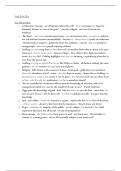
Key Themes/Ideas:
1. Civilisation v Savergy - are all humans inherently evil? - there’s no longer any hope for
humanity because we are too far gone? - criticises religion - not even God can save
mankind
2. ‘The Beast’ - represents societal expectations - our environment tries + to make us conform -
our evil instincts become uncontrollable - fascism etc - always have to justify our behaviour
- British made an empire to justify the desire for ambition + control - war was justified as
saving people, rather than people enjoying violence
3. Golding uses the young boys to show how evil can manifest from what we deem to be pure
innocence - they’re meant to be a beacon of hope - Navy officers have high expectations -
ironic that they fail - Golding highlights how they are imitating + reproducing what they’ve
seen from the ‘grown-ups’
4. Golding is trying to explain that we are like Hitler or Stalin - all humans embody the same
qualities - we see ourselves through rose-tinted glasses
5. Religion - kills Simon as the construct of Jesus - both good + godly but were murdered -
shows the abundance of evil - ironic - they had hope in society - Simon dies so Golding can
demonstrate to readers that society is too far gone + that not even God can save those loyal
to him - which is why he’s ambivalent - he then contradicts himself
6. “We are reminded of a Redeemer offered men the knowledge of salvation, only to be
scourged and nailed to a cross by the people he’d come to save” - David Anderson
7. Piggy gains the knowledge of good + bad - like Eve when she eats the fruit - taints him - he
can’t recover from it - why he has to die - it reflects Golding’s own life - war gave him this
knowledge
8. Jack - anti-villain - thinks the situation is a game - exploits the fear in the boys of the Beast
- reflects society - doesn’t realize how dire the situation is - doesn’t know any better
9. Roger - embodies the majority of the public - quickly adapts - for survival + then finds
enjoyment but hasn’t lost all morals - victim of manipulation
10. Main message - the book is about how power is used - not democracy + dictatorship but
reasons for wanting power - do we all eventually subject to our innate evil?
Key Themes/Ideas:
1. Civilisation v Savergy - are all humans inherently evil? - there’s no longer any hope for
humanity because we are too far gone? - criticises religion - not even God can save
mankind
2. ‘The Beast’ - represents societal expectations - our environment tries + to make us conform -
our evil instincts become uncontrollable - fascism etc - always have to justify our behaviour
- British made an empire to justify the desire for ambition + control - war was justified as
saving people, rather than people enjoying violence
3. Golding uses the young boys to show how evil can manifest from what we deem to be pure
innocence - they’re meant to be a beacon of hope - Navy officers have high expectations -
ironic that they fail - Golding highlights how they are imitating + reproducing what they’ve
seen from the ‘grown-ups’
4. Golding is trying to explain that we are like Hitler or Stalin - all humans embody the same
qualities - we see ourselves through rose-tinted glasses
5. Religion - kills Simon as the construct of Jesus - both good + godly but were murdered -
shows the abundance of evil - ironic - they had hope in society - Simon dies so Golding can
demonstrate to readers that society is too far gone + that not even God can save those loyal
to him - which is why he’s ambivalent - he then contradicts himself
6. “We are reminded of a Redeemer offered men the knowledge of salvation, only to be
scourged and nailed to a cross by the people he’d come to save” - David Anderson
7. Piggy gains the knowledge of good + bad - like Eve when she eats the fruit - taints him - he
can’t recover from it - why he has to die - it reflects Golding’s own life - war gave him this
knowledge
8. Jack - anti-villain - thinks the situation is a game - exploits the fear in the boys of the Beast
- reflects society - doesn’t realize how dire the situation is - doesn’t know any better
9. Roger - embodies the majority of the public - quickly adapts - for survival + then finds
enjoyment but hasn’t lost all morals - victim of manipulation
10. Main message - the book is about how power is used - not democracy + dictatorship but
reasons for wanting power - do we all eventually subject to our innate evil?