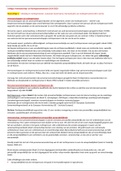
The journey of the 1843 novella follows the transformation of Ebeneezer Scrooge from a
“covetous old sinner” in Stave One to a man “glowing with good intentions” in Stave Five.
The reader follows Scrooge on a journey which is often expressed by Dickens
metaphorically from darkness to light. The novella was written soon after the Industrial
Revolution, when the poor became poorer, and the rich became richer. Therefore, the
allegorical novel began for Dickens, as an idea for a political pamphlet to draw the rich’s
attention to the plight of the poor (“may it haunt their houses pleasantly” – written in the
preface). His intentions were successful as soon after the novella was published, factory
owners improved the conditions of their to their workers and some workers were even given
extra gifts at Christmas time.
This scene in the extract occurs in Stave 2, where the ghost of Christmas Past takes
Scrooge on a journey through his memories. It is worth noting that although the ghost of
Christmas past is the least frightening looking, this stave is arguably the most difficult
journey for Scrooge as it is the moment where Scrooge is forced to realise what his true self
is like. This is perhaps why the ghost’s appearance is a flame, as it symbolically represents
shining a light on Scrooge’s truths. In this stave Dickens introduces the joyful character
Fezziwig, his playful name representing his fun and jolly manner. He is the perfect example
of a man who is both rich and happy. The asyndetic list “comfortable, oily, rich, fat, jovial” of
“covetous old sinner” in Stave One to a man “glowing with good intentions” in Stave Five.
The reader follows Scrooge on a journey which is often expressed by Dickens
metaphorically from darkness to light. The novella was written soon after the Industrial
Revolution, when the poor became poorer, and the rich became richer. Therefore, the
allegorical novel began for Dickens, as an idea for a political pamphlet to draw the rich’s
attention to the plight of the poor (“may it haunt their houses pleasantly” – written in the
preface). His intentions were successful as soon after the novella was published, factory
owners improved the conditions of their to their workers and some workers were even given
extra gifts at Christmas time.
This scene in the extract occurs in Stave 2, where the ghost of Christmas Past takes
Scrooge on a journey through his memories. It is worth noting that although the ghost of
Christmas past is the least frightening looking, this stave is arguably the most difficult
journey for Scrooge as it is the moment where Scrooge is forced to realise what his true self
is like. This is perhaps why the ghost’s appearance is a flame, as it symbolically represents
shining a light on Scrooge’s truths. In this stave Dickens introduces the joyful character
Fezziwig, his playful name representing his fun and jolly manner. He is the perfect example
of a man who is both rich and happy. The asyndetic list “comfortable, oily, rich, fat, jovial” of