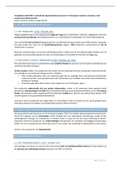
ATI MEDSURG 2023 FUNDAMENTAL-FINAL EXAM
Fundamental - Final exam (Study Guide)
Med Calculation
o 1tsp/5ml
o 1000mg/1g
o 1mg/1000mcg
o 1kg/2.2lbs
o 1000mcg/1mg
Chapter 15: Critical Thinking in Nursing Practice
o What considerations are important when determining the best option? Whatever
decisions is best for the patient.
o When should the nurse delegate vs not delegate?
Delegation: “transferring responsibility for a performance of an activity or task
while retaining accountability for an outcome”
assigning tasks to other healthcare professionals (vitals, labs)
UAP (unlicensed assistive personnel), LPN
Not delegate: “to do on your own or not share the tasks”
give meds, change in status, receive new meds, new admission, teaching
Chapter 16: Nursing Assessment
o Assessment: gather all subjective and objective data
Chapter 17: Nursing Diagnosis
o Diagnosis: NANDA, nursing diagnosis for actual problems, Potential problems, or risk for
problems.
Chapter 18: Planning Nursing Care
o Outcome identification: SMART goals for pt (patient)
o Planning: nurse/pt make a plan to achieve the goal
Chapter 19: Implementing Nursing Care
o Implementation: how the nurse will put the plan into action & Interventions
Chapter 21: Managing Patient Care
o Delegation to LPN
monitoring findings (as input to the RN’s ongoing assessment)
Reinforcing client teaching from a standard care plan
Performing tracheostomy care
Suctioning
, Checking NG tube patency
Administering enteral feedings
Inserting a urinary catheter
Administering medication (excluding IV medication in some states)
o Delegation to AP
Activities of daily living (ADLs)
Bathing
Grooming
Dressing
Toileting Ambulating
Feeding (without swallowing precautions)
Positioning
Routine tasks
Bed making
Specimen collection
Intake and output
vital signs (for stable clients)
o Delegation Guidelines
Right task – task to delegate
Right circumstances – under what circumstances, are they stable
Right person – to whom
Right direction and communication in writing, orally or both – what information to
communicate
Right Supervision and evaluation – how to oversee and appraise
Chapter 22: Ethics and Values
o Accountability: ability for one’s own actions.
o Confidentiality: ensure that patient information is kept confidential and to give patients
more control over their personal healthcare information and who has access to it
o Advocacy: the support of a particular cause. Works on behalf of the patient.
o Responsibility: willingness to respect obligations + to follow through on promises
o Autonomy
the right to make one’s own personal decisions, even when those decisions might
not be in that person’s own best interest.
o Maleficence: Intentional conduct that’s wrongful/ unlawful
o Ethical Principles: Set of guidelines for the expectations of a profession and the
standards of behavior for its members
o 6 Ethical Principles
Non maleficence: Avoidance of harm or hurt
Autonomy: involve patients in making decisions for themselves.
, Fidelity: Agreement to keep a promise
Beneficence: Do what is in the best interest for pts, taking positive actions to help
others
Justice: Fairness
Veracity: Telling the truth
o What is an ethical dilemma? Give an example Ethical Dilemma:
Dilemma existing when the right thing to do is not clear. Resolution requires the
negotiation of differing values among those involved in the dilemma.
o How do you maintain confidentiality and privacy during a patient care assignment?
You cannot share information about a patient’s medical condition or personal
information with anyone who is not involved in the care of the patient.
Chapter 23: Legal Implications in Nursing Practice
o Intentional Torts
ASSAULT
The conduct of one person makes another person fearful and apprehensive
A nurse threatens to place an NG tube in a client who is refusing to eat.
BATTERY
Intentional and wrongful physical contact with a person that involves an injury
or offensive contact
A nurse restrains a client and administers an injection against their wishes.
FALSE IMPRISONMENT
A person is confined or restrained against their will
A nurse uses restraints on a competent client to prevent their leaving the health
care facility.
Quasi‐intentional torts
BREACH OF CONFIDENTIALITY
o A nurse releases a client’s medical diagnosis to a member of the press.
DEFAMATION OF CHARACTER
o A nurse tells a coworker that they believe the client has been unfaithful to
their partner.
o Unintentional Torts
NEGLIGENCE
A nurse fails to implement safety measures for a client at risk for falls.
MALPRACTICE (PROFESSIONAL NEGLIGENCE)
A nurse administers a large dose of medication due to a calculation error. The
client has a cardiac arrest and dies.
Fundamental - Final exam (Study Guide)
Med Calculation
o 1tsp/5ml
o 1000mg/1g
o 1mg/1000mcg
o 1kg/2.2lbs
o 1000mcg/1mg
Chapter 15: Critical Thinking in Nursing Practice
o What considerations are important when determining the best option? Whatever
decisions is best for the patient.
o When should the nurse delegate vs not delegate?
Delegation: “transferring responsibility for a performance of an activity or task
while retaining accountability for an outcome”
assigning tasks to other healthcare professionals (vitals, labs)
UAP (unlicensed assistive personnel), LPN
Not delegate: “to do on your own or not share the tasks”
give meds, change in status, receive new meds, new admission, teaching
Chapter 16: Nursing Assessment
o Assessment: gather all subjective and objective data
Chapter 17: Nursing Diagnosis
o Diagnosis: NANDA, nursing diagnosis for actual problems, Potential problems, or risk for
problems.
Chapter 18: Planning Nursing Care
o Outcome identification: SMART goals for pt (patient)
o Planning: nurse/pt make a plan to achieve the goal
Chapter 19: Implementing Nursing Care
o Implementation: how the nurse will put the plan into action & Interventions
Chapter 21: Managing Patient Care
o Delegation to LPN
monitoring findings (as input to the RN’s ongoing assessment)
Reinforcing client teaching from a standard care plan
Performing tracheostomy care
Suctioning
, Checking NG tube patency
Administering enteral feedings
Inserting a urinary catheter
Administering medication (excluding IV medication in some states)
o Delegation to AP
Activities of daily living (ADLs)
Bathing
Grooming
Dressing
Toileting Ambulating
Feeding (without swallowing precautions)
Positioning
Routine tasks
Bed making
Specimen collection
Intake and output
vital signs (for stable clients)
o Delegation Guidelines
Right task – task to delegate
Right circumstances – under what circumstances, are they stable
Right person – to whom
Right direction and communication in writing, orally or both – what information to
communicate
Right Supervision and evaluation – how to oversee and appraise
Chapter 22: Ethics and Values
o Accountability: ability for one’s own actions.
o Confidentiality: ensure that patient information is kept confidential and to give patients
more control over their personal healthcare information and who has access to it
o Advocacy: the support of a particular cause. Works on behalf of the patient.
o Responsibility: willingness to respect obligations + to follow through on promises
o Autonomy
the right to make one’s own personal decisions, even when those decisions might
not be in that person’s own best interest.
o Maleficence: Intentional conduct that’s wrongful/ unlawful
o Ethical Principles: Set of guidelines for the expectations of a profession and the
standards of behavior for its members
o 6 Ethical Principles
Non maleficence: Avoidance of harm or hurt
Autonomy: involve patients in making decisions for themselves.
, Fidelity: Agreement to keep a promise
Beneficence: Do what is in the best interest for pts, taking positive actions to help
others
Justice: Fairness
Veracity: Telling the truth
o What is an ethical dilemma? Give an example Ethical Dilemma:
Dilemma existing when the right thing to do is not clear. Resolution requires the
negotiation of differing values among those involved in the dilemma.
o How do you maintain confidentiality and privacy during a patient care assignment?
You cannot share information about a patient’s medical condition or personal
information with anyone who is not involved in the care of the patient.
Chapter 23: Legal Implications in Nursing Practice
o Intentional Torts
ASSAULT
The conduct of one person makes another person fearful and apprehensive
A nurse threatens to place an NG tube in a client who is refusing to eat.
BATTERY
Intentional and wrongful physical contact with a person that involves an injury
or offensive contact
A nurse restrains a client and administers an injection against their wishes.
FALSE IMPRISONMENT
A person is confined or restrained against their will
A nurse uses restraints on a competent client to prevent their leaving the health
care facility.
Quasi‐intentional torts
BREACH OF CONFIDENTIALITY
o A nurse releases a client’s medical diagnosis to a member of the press.
DEFAMATION OF CHARACTER
o A nurse tells a coworker that they believe the client has been unfaithful to
their partner.
o Unintentional Torts
NEGLIGENCE
A nurse fails to implement safety measures for a client at risk for falls.
MALPRACTICE (PROFESSIONAL NEGLIGENCE)
A nurse administers a large dose of medication due to a calculation error. The
client has a cardiac arrest and dies.