The new governance: governing without government (article 1)
Sammy Finer defines government as:
1. “The activity or process of governing” or “governance”
2. A condition of ordered rule
3. Those people charged with the duty of governing or “governors
4. The manner, method or system by which a particular society is governed
Current use does not treat governance as a synonym for government. Rather governance
signifies a change in the meaning of government, referring to a new process of governing.
There are at least 6 separate uses of governance:
1. as the minimal state (defined as the extent and form of public intervention and the
use of markets and quasi-markets to deliver public services)
2. as corporate governance (defined as the system by which organizations are
directed and controlled)
3. as the new public management (initially NPM had two meanings: managerialism
and the new institutional economics -> less government (or less rowing) but more
governance (or more steering))
4. as good governance (defined by the world bank as “an efficient public service, an
independent judicial system and legal framework to enforce contracts; the
accountable administration of public funds; an independent public auditor,
responsible to a representative legislator; respect for the law and human rights at all
levels of government; a pluralistic institutional structure, and a free press)
5. as a socio-cybernetic system (Policy outcomes are not the product of actions by
the central government. A distinction can be made between the process of governing
(or goal-directed interventions) and governance which is the result (or the total
effects) of social-political-administrative interventions and interactions. The
socio-cybernetic approach highlights the limits to governing by a central actor,
claiming there is no longer a single sovereign authority. In its place, there is the
multiplicity of actors specific to each policy area)
6. as self-organizing networks (transformation from a system of local government into
a system of local governance involving complex sets of organizations drawn form the
public and private sectors)
The author makes his own list of characteristics of governance:
1. Interdependence between organizations. Governance is broader than government,
covering non-state actors. Changing the boundaries of the state meant the
boundaries between public, private and voluntary sectors became shifting and
opaque.
2. Continuing interactions between network members, caused by the need to exchange
resources and negotiate shared purpose.
3. Game-like interactions, rooted in trust and regulated by rules of the game negotiated
and agreed by network participants.
, 4. A significant degree of autonomy from the state. Networks are not accountable to the
state; they are self-organizing. Although the state does not occupy a privileged,
sovereign position, it can indirectly and imperfectly steer networks.
Hollowing out the State:
(1) Privatization and limiting the scope and forms of public intervention.
(2) The loss of functions by central and local government departments to alternative
delivery systems (such as agencies).
(3) The loss of functions by national governments to the EU institutions.
(4) Limits set to the discretion of public servants through the NPM, with its emphasis on
managerial accountability, and clearer political control through a sharper distinction
between politics and administration.
Three immediate problems of the hollowing out of the State: Problems with (1)
fragmentation, (2) steering, and (3) accountability.
The rise of Intergovernmental management (IGM): Steering (the process of setting norms)
is separated from directedness (the outcome of that process). IGM has 3 distinct features:
(1) problem-solving, (2) intergovernmental games, and (3) networking. It is about coping with
several jurisdictions to solve particular problems and building networks of communication to
produce such useful results.
Public Value Governance: Moving beyond Traditional Public
Administration and the New Public Management (article 2)
A new public administration movement is emerging to move beyond traditional public
administration and New Public Management. The new movement is a response to the
challenges of a networked, multi-sector, no-one-wholly-in-charge world and to the
shortcomings of previous public administration approaches. In the new approach values
beyond efficiency and effectiveness—and especially democratic values—are prominent.
Government has a special role to play as a guarantor of public values, but citizens as well as
businesses and nonprofit organizations also are important as active public problem solvers.
The new approach highlights four important stances that together represent a response to
current challenges and old shortcomings. These include: an emphasis on public value and
public values; recognition that government has a special role as a guarantor of public values;
a belief in the importance of public management broadly conceived, and of service to and for
the public; and a heightened emphasis on citizenship and democratic and collaborative
governance.
See the table below for a summary of the traditional public administration, New public
management and the emerging approach to public administration.
, In the new approach, government agencies can be a convener, catalyst, and
collaborator—sometimes steering, sometimes rowing, sometimes partnering, and
sometimes staying out of the way. In addition, the way government’s key objectives are set
changes. In traditional public administration, elected officials set goals and implementation is
up to public servants, overseen by elected officials’ and senior administrators. In New Public
Management elected officials still set goals. Managers then manage inputs and outputs in a
way that ensures economy and responsiveness to customers. In contrast, in the new
approach both elected officials and public managers are charged with creating public value
so that what the public most cares about is addressed effectively and what is good for the
public is pursued.
Sammy Finer defines government as:
1. “The activity or process of governing” or “governance”
2. A condition of ordered rule
3. Those people charged with the duty of governing or “governors
4. The manner, method or system by which a particular society is governed
Current use does not treat governance as a synonym for government. Rather governance
signifies a change in the meaning of government, referring to a new process of governing.
There are at least 6 separate uses of governance:
1. as the minimal state (defined as the extent and form of public intervention and the
use of markets and quasi-markets to deliver public services)
2. as corporate governance (defined as the system by which organizations are
directed and controlled)
3. as the new public management (initially NPM had two meanings: managerialism
and the new institutional economics -> less government (or less rowing) but more
governance (or more steering))
4. as good governance (defined by the world bank as “an efficient public service, an
independent judicial system and legal framework to enforce contracts; the
accountable administration of public funds; an independent public auditor,
responsible to a representative legislator; respect for the law and human rights at all
levels of government; a pluralistic institutional structure, and a free press)
5. as a socio-cybernetic system (Policy outcomes are not the product of actions by
the central government. A distinction can be made between the process of governing
(or goal-directed interventions) and governance which is the result (or the total
effects) of social-political-administrative interventions and interactions. The
socio-cybernetic approach highlights the limits to governing by a central actor,
claiming there is no longer a single sovereign authority. In its place, there is the
multiplicity of actors specific to each policy area)
6. as self-organizing networks (transformation from a system of local government into
a system of local governance involving complex sets of organizations drawn form the
public and private sectors)
The author makes his own list of characteristics of governance:
1. Interdependence between organizations. Governance is broader than government,
covering non-state actors. Changing the boundaries of the state meant the
boundaries between public, private and voluntary sectors became shifting and
opaque.
2. Continuing interactions between network members, caused by the need to exchange
resources and negotiate shared purpose.
3. Game-like interactions, rooted in trust and regulated by rules of the game negotiated
and agreed by network participants.
, 4. A significant degree of autonomy from the state. Networks are not accountable to the
state; they are self-organizing. Although the state does not occupy a privileged,
sovereign position, it can indirectly and imperfectly steer networks.
Hollowing out the State:
(1) Privatization and limiting the scope and forms of public intervention.
(2) The loss of functions by central and local government departments to alternative
delivery systems (such as agencies).
(3) The loss of functions by national governments to the EU institutions.
(4) Limits set to the discretion of public servants through the NPM, with its emphasis on
managerial accountability, and clearer political control through a sharper distinction
between politics and administration.
Three immediate problems of the hollowing out of the State: Problems with (1)
fragmentation, (2) steering, and (3) accountability.
The rise of Intergovernmental management (IGM): Steering (the process of setting norms)
is separated from directedness (the outcome of that process). IGM has 3 distinct features:
(1) problem-solving, (2) intergovernmental games, and (3) networking. It is about coping with
several jurisdictions to solve particular problems and building networks of communication to
produce such useful results.
Public Value Governance: Moving beyond Traditional Public
Administration and the New Public Management (article 2)
A new public administration movement is emerging to move beyond traditional public
administration and New Public Management. The new movement is a response to the
challenges of a networked, multi-sector, no-one-wholly-in-charge world and to the
shortcomings of previous public administration approaches. In the new approach values
beyond efficiency and effectiveness—and especially democratic values—are prominent.
Government has a special role to play as a guarantor of public values, but citizens as well as
businesses and nonprofit organizations also are important as active public problem solvers.
The new approach highlights four important stances that together represent a response to
current challenges and old shortcomings. These include: an emphasis on public value and
public values; recognition that government has a special role as a guarantor of public values;
a belief in the importance of public management broadly conceived, and of service to and for
the public; and a heightened emphasis on citizenship and democratic and collaborative
governance.
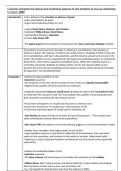
See the table below for a summary of the traditional public administration, New public
management and the emerging approach to public administration.
, In the new approach, government agencies can be a convener, catalyst, and
collaborator—sometimes steering, sometimes rowing, sometimes partnering, and
sometimes staying out of the way. In addition, the way government’s key objectives are set
changes. In traditional public administration, elected officials set goals and implementation is
up to public servants, overseen by elected officials’ and senior administrators. In New Public
Management elected officials still set goals. Managers then manage inputs and outputs in a
way that ensures economy and responsiveness to customers. In contrast, in the new
approach both elected officials and public managers are charged with creating public value
so that what the public most cares about is addressed effectively and what is good for the
public is pursued.