Garantie de satisfaction à 100% Disponible immédiatement après paiement En ligne et en PDF Tu n'es attaché à rien 4.2 TrustPilot
logo-home
Examen

FAC1601 EXAM PACK 2023

Vendu
5
Pages
117
Grade
A+
Publié le
10-02-2023
Écrit en
2022/2023

FAC1601-Exam-Pack - Exam pack Financial Accounting and Reporting (University of South Africa) lOMoARcPSD| Financial Accounting 1B Study & Exam Pack for FAC1601 © 2014 This is prepared for UNISA undergraduate students undertaking the module FAC1601. The past exam papers used as a way of practicing the concept emphasized in the study guide for this module Compiled by Levison Kamanga (check his profile on ), for and on behalf of “Inspired to impact with a difference” All the questions in this pack were taken from previous exam papers. We hope it will help you in preparing for your exams. May God grant you the Spirit of understanding; we wish you all the best. Amen. lOMoARcPSD| 2 Contents Study & Exam Pack for FAC1601 © 2014 ...................................................................................................... 1 CHAPTER 1: INTRODUCTION ......................................................................................................................... 4 FINANCIAL STATEMENTS OF A PARTNERSHIP .............................................................................................. 7 STATEMENT OF PROFIT OR LOSS AND OTHER COMPREHENSIVE INCOME .............................................. 7 OCTOBER-NOVEMBER 2011.................................................................................................................... 11 B. PARTNERSHIPS ........................................................................................................................................ 18 STATEMENT OF CHANGES IN EQUITY ......................................................................................................... 18 OCTOBER-NOVEMBER 2010.................................................................................................................... 18 MAY-JUNE 2012 ...................................................................................................................................... 22 MAY-JUNE 2011 ...................................................................................................................................... 28 Classification of Components ................................................................................................................. 29 Rationale - Why the balance sheet always balances? ............................................................................ 30 Purpose & Importance ............................................................................................................................ 31 MAY- JUNE 2011 ..................................................................................................................................... 32 OCTOBER-NOVEMBER 2012.................................................................................................................... 39 CHAPTER THREE : PARTNERSHIP CHANGES AND LIQUIDATION ................................................................. 45 MAY-JUNE 2011 ...................................................................................................................................... 49 OCTOBER TO NOVEMBER 2012 .............................................................................................................. 51 NOVEMBER 2010 .................................................................................................................................... 56 CHAPTER 4: FINAL ACCOUNTS OF A CLOSE CORPORATION ....................................................................... 62 MAY –JUNE 2011 QUESTION 3 ................................................................................................................ 68 OCTOBER-NOVEMBER 2011 QUESTION 3............................................................................................... 70 OCTOBER – NOVEMBER 2011 ................................................................................................................ 72 OCTOBER-NOVEMBER 2012.................................................................................................................... 78 CHAPTER 4 .................................................................................................................................................. 82 STATEMENT OF CASH FLOWS ..................................................................................................................... 82 MAY-JUNE 2010 ...................................................................................................................................... 82 MAY JUNE 2010 ....................................................................................................................................... 84 OCTOBER-NOVEMBER 2010.................................................................................................................... 86 lOMoARcPSD| 3 OCTOBER- NOVEMBER 2010 ................................................................................................................... 87 MAY-JUNE 2011 ...................................................................................................................................... 89 OCTOBER- NOVEMBER 2011 ................................................................................................................... 91 OCTOBER-NOVEMBER 2012.................................................................................................................... 94 MAY-JUNE 2012 ...................................................................................................................................... 98 CHAPTER 6 INTRODUCTION TO COMPANY ACCOUNTS............................................................................ 100 MAY-JUNE 2010 .................................................................................................................................... 100 MAY – JUNE 2010 .................................................................................................................................. 101 CHAPTER 7: BRANCH ACCOUNTS .............................................................................................................. 104 MAY-JUNE 2010 .................................................................................................................................... 104 OCTOBER-NOVEMBER 2012.................................................................................................................. 107 CHAPTER 8: INTERPRETATION OF FINAL ACCOUNTS ................................................................................ 110 OCTOBER-NOVEMBER 2010 QUESTION 5............................................................................................. 110 OCTOBER – NOVEMBER 2010 ............................................................................................................... 111 OCTOBER-NOVEMBER 2012.................................................................................................................. 112 CHAPTER 8: TIME VALUE OF MONEY ........................................................................................................ 114 OCTOBER-NOVEMBER 2011.................................................................................................................. 114 SOLUTION .................................................................................................................................................. 115 OCTOBER – NOVEMBER 2011 ................................................................................................................... 115 lOMoARcPSD| 4 CHAPTER 1: INTRODUCTION This study guide provides brief notes on the topics covered in FAC1601. The topics covered include the following:  Preparation of Financial Statements of Partnerships;  Changes in the ownership structure of Partnerships;  Liquidation of Partnerships;  Financial Statements of Close Corporations;  Introduction to Company Accounts;  Statement of Cash Flows;  Analysis and Interpretation of Financial Statements;  Branches;  Time value of money. Financial Accounting This course mainly covers the Financial Accounting side of broad Accounting. The two main branches of Accounting are Financial Accounting and Management Accounting. Management Accounting is mainly used for internal purposes whilst Financial Accounting is mainly produced for external purposes. Users of Financial Statements In this course, focus will mainly be based on the preparation of Financial Statements. These are supposed to be prepared in terms of International Financial Reporting Standards (IFRSs) as set out by the International Accounting Standards Board (IASB), of which the South African Institute of Chartered Accountancy is a member. IFRs are the generally accepted accounting practices by Accountants throughout the whole world. The final accounts which shall be the main focus are prepared in terms of International Accounting Standards (IAS) 1. These accounts are prepared for various users who have differing needs. Examples of users and their needs are as follows: 1. Investors: to assess the profitability of the entity in order to make a decision on whether to invest or divest from the entity. 2. Management: to evaluate their performance as guardians of the owners wealth and sometimes to measure their rewards where there are performance based bonuses. 3. Employees: to gauge the security of their jobs and assess the ability of the entity to pay. The profitability of the firm can also be used as a basis for collective bargaining. 4. Government: to assess tax and the general economy and to compile national statistics. 5. Financial analysts: to make informed conclusions on their analysis. 6. Banks: to assess the ability to repay loans and overdrafts and to measure their likely liquidity positions as businesses are the major providers of money to banks through their deposits. lOMoARcPSD| 5 7. Creditors and Loan Financiers: to assess the ability of the entity to repay loans. 8. Media: to make informed reports. 9. Customers: to assess the entity`s ability to provide services and goods. 10. Suppliers: to assess the ability of the firm to pay for goods and services and to assess the continuity of relationships. 11. General Public: to see what the firm is spending on social responsibility. Qualities of Accounting Information Financial information should always meet the following characteristics: 1. Relevance: Financial information should be relevant or required by the intended user to aid him/ her to make the required decision. Unnecessary information should be eliminated. 2. Completeness: the information should be enough in terms of accounting standards and enough to aid the decision at hand to avoid bad decisions being made from incomplete information. 3. Accuracy: information should be accurate enough for it`s purpose to prevent damaging consequences. 4. Timeliness: accounting information should always be made in time, otherwise if provided late, it might not be of any help for the decision at hand. 5. Channel of communication: the appropriate channel of communication should be used when conveying accounting information. 6. Reliability: the information should inspire confidence in the users. There should be no doubt on the truthfulness of the information conveyed. 7. Cost/ benefit analysis: the cost of obtaining the information should be reasonable as compared to the benefit to be derived from the information, otherwise it will be useless to provide the information unless for example, it is a requirement of law or it concerns an issue of social responsibility. Concepts of Accounting Accounts are prepared based on what are known as the concepts of Accounting. Some of them are summarized as follows: 1. Fair presentation: the accounts should as far as possible be presented in a reasonable and reliable manner. 2. Going concern: the accounts are prepared assuming that the entity will continue operating in the foreseeable future, that is, in the short run, the business will not be closed. 3. Accrual basis of accounting/ matching concept: the accounts are periodically prepared, meaning only expenses and incomes for the period under consideration should be included in profit statements. Any accruals should be brought into account or added and prepayments should be eliminated or subtracted when preparing financial statements. 4. Materiality concept: accounting information should only be included or disclosed if their exclusion will impair the decision of users of the financial statements. 5. Frequency of reporting/ periodicity concept: there should be a clear reporting cycle. lOMoARcPSD| 6 6. Comparative information: information should be prepared in a manner which affords comparability of financial information from one period to another and within one accounting period. 7. Consistency: similar items should be treated in a similar manner within one financial period and from one period to another. lOMoARcPSD| 7 FINANCIAL STATEMENTS OF A PARTNERSHIP STATEMENT OF PROFIT OR LOSS AND OTHER COMPREHENSIVE INCOME 1. MAY/JUNE 2010 EXAMINATION QUESTION 1 (25 marks)(30 minutes) Amanda and Sphindile are in a partnership trading as A&S Supermarket. The following information pertains to the partnership: 1. List of balances as at 31 December 2009 Capital: Amanda (1 January 2009).................................................................................. Capital: Sphindile (1 January 2009) ................................................................................ Current account: Amanda (1 January 2009) (cr) ........................................................... Current account: Sphindile (1 January 2009) (dr).......................................................... Land and buildings at cost ............................................................................................ Vehicles at cost............................................................................................................. Accumulated depreciation: Vehicles (1 January 2009) ................................................. Debtors control ........................................................................................................... Creditors control .......................................................................................................... Bank (dr) ........................................................................................................................ Fixed deposit: Third National Bank ............................................................................... Drawings: Amanda.......................................................................................................... Drawings: Sphindile ........................................................................................................ Loan to Sphindile ........................................................................................................... Loan from Amanda ..................................................................................................... Allowance for credit losses.......................................................................................... Sales................................................................................................................................ Purchases........................................................................................................................ Inventory (merchandise) (1 January 2009)..................................................................... Salaries and wages........................................................................................................ Water and electricity .................................................................................................. Interest expense: Loan from Amanda ........................................................................... Settlement discount granted ........................................................................................ Interest income: Fixed deposit ....................................................................................... Stationery consumed .................................................................................................... Telephone expenses..................................................................................................... Insurance on purchases................................................................................................ Freight on sales ............................................................................................................ R 350 000 250 000 60 000 40 000 494 000 198 000 42 000 145 560 106 300 26 582 19 000 64 800 43 200 40 800 170 000 2 500 650 000 304 000 70 800 132 960 4 700 5 400 3 800 1 710 5 000 26 208 4 500 3 200 lOMoARcPSD| 8 QUESTION 1 (continued) 2. Partnership agreement: The partnership agreement stipulates the following: 2.1 The partners Amanda and Sphindile share the profits or losses in the ratio of 3:2 respectively. 2.2 Interest at 10% per annum is allowed on the opening balances of the partners’ capital accounts. 2.3 Amanda is entitled to a 10% commission on sales. 3. Year-end adjustments: 3.1 Inventory on hand at 31 December 2009: R Merchandise 83 000 Stationery (stationery purchased is recorded in the stationery consumed account) 850 3.2 On 30 September 2009, a delivery vehicle was purchased for R85 000 cash. All the necessary entries were made in the books. 3.3 Depreciation must be provided on vehicles at 10% per annum according to the straight-line method. 3.4 The loan from Amanda was obtained on 1 September 2007 at 5% interest per annum. The loan will be repaid in five equal annual installments, starting from 31 December 2010. The interest must be paid to Amanda annually. 3.5 During the financial year Sphindile was granted an interest free loan which she agreed to settle in full on 30 June 2010. 3.6 The water and electricity account of R400 for December 2009 was received on 10 January 2010. 3.7 A debtor owing the business R5 560 has for the past financial year defaulted on his payments and his account must be written off as irrecoverable. The allowance for credit losses must be adjusted to R3 200. 3.8 During the financial year R40 000 was paid to Amanda as commission on sales. These payments were recorded in the salaries and wages account. 3.9 The fixed deposit at Third National Bank was made on 1 January 2008 for a period of 5 years at 9% interest per annum. The interest is receivable at the end of each borrowing year. REQUIRED: lOMoARcPSD| 9 1.1 Prepare the statement of profit or loss and other comprehensive income of A&S Supermarket for the year ended 31 December 2009. Your answer must comply with the requirements of International Financial Reporting Standards (IFRS) appropriate to the business of the partnership (notes and comparative figures are not required). (20) 1.2 Prepare the current account of Amanda in the general ledger of A&S Supermarket for the year ended 31 December 2009. The profit/loss for the year need not be appropriated and do not balance the account. Each entry must disclose the correct contra ledger account. (5) [25] NB: Show all calculations. SOLUTION Question 1 This is the statement in which we calculate the total comprehensive income for the period or the profit or loss for the just ended period. This is presented in accordance to the requirements IAS1. A and S Supermarket Statement of Profit / Loss and other comprehensive Income for the year ended 31 December 20.9 Revenue () 646 200 Less cost of sales (296 300) Opening inventory 70 800 Add: Purchases 304 000 Less: Purchases Returns - Less: Settlement discount received - Add: Carriage on purchases / Insurance on Purchases 4 500 Less: Closing Inventory (83 000) Gross Profit 349 900 Add: Other Income Interest Income 1 710 Total Income 351 610 Expenditure Administrative , distributive & Other expenses () (151 303) Freight on Sales 3 200 Telephone Expenses 26 208 Stationery (5000 - 850) 4 150 Water & electricity (4700+400) 5 100 lOMoARcPSD| 10 Salaries & wages (132 960 – 40000) 92 960 Depreciation: vehicles (Calculation 1) 13 425 Credit losses (5560+700) 5 560 Increase in allowance for credit losses ( 2500 – 3200) 700 Finance costs (8 500) Interest on loan from Amanda (170 000 x 5%) Profit for the year 8 500 191 807 Other comprehensive income for the year - Total comprehensive Income for the year 191 807 Calculation 1 : Depreciation on vehicles R(11 300+2 125) = R13 425 In possession for the whole year R(198 000^ - 85 000^) = R113 000 x 10%^ 11 300 Purchased during the year R(85 000^ x 10%^) x 3/12^ 2 125 Total R13 425 NOTES 1. All costs incurred during the accounting period goods for putting the merchandise or the goods intended for resale into a saleable condition should always be added to the purchases. These costs include carriage on purchases, import duty on purchases, railage on purchases, insurance on purchases, freight on purchases etc. 2. The inventory subtracted on the calculation of cost of sales excludes stationery or any other stores of consumables. It only includes merchandise or goods bought for resale. 3. Interest income: When preparing final accounts, always recalculate the interest even when it’s given in the trial balance. The income in the trial balance normally represents the actual amount received. This can sometimes be different to the actual income. If the recalculation of the income gives a higher figure than the one in the trial balance, then there is an accrued income equal to the difference of the two amounts. If the recalculation gives a lesser figure than the one in the trial balance, then the income was prepaid. In this case the recalculation (9% x 19000) gives the same amount with that in the trial balance, therefore, there is no accrual or prepayment. The amount to be recorded as income is the amount as per calculation. This also applies on the interest expense. 4. As opposite to carriage on purchases, carriage on sales, railage on sales, freight on sales etc are expenses. These should not be adjusted on the sales. 5. The commission to partners is an appropriation expense which is subtracted under the appropriation section and not an expense on the profit statement proper. Downloaded by Thomas Mboya () lOMoARcPSD| 11 6. Interest expense on partner’s loans is a finance charge in the statement and not an appropriation. 1.2 Current Account: Amanda Drawings (64800+40000) Balance b/d 60 000 Interest on capital account (x10% 35000 Commission (x10%) 65000 NOTES (a)Total amounts already paid to partners with respect to salaries, commission and bonuses should always be added to drawings on the debit side of the current account, whilst the total benefits are credited to the current account. OCTOBER-NOVEMBER 2011 QUESTION 1 (24 marks) (29 minutes) Go4Gold Trading is a partnership with Hilda and Gabby as partners. The information below pertains to the business activities of the partnership for the year ended 31 August 2011. GO4GOLD TRADING BALANCES AS AT 31 AUGUST 2011 Downloaded by Thomas Mboya () lOMoARcPSD| 12 R Capital: Hilda ................................................................................................ 282 500 Capital: Gabby .............................................................................................. 144 000 Land and buildings at cost ............................................................................ 180 000 Vehicles at cost............................................................................................. 144 000 Accumulated depreciation: Vehicles (1 September 2010) ............................. 12 000 Equipment at cost ......................................................................................... 130 000 Accumulated depreciation: Equipment (1 September 2010).......................... 24 000 Long-term loan.............................................................................................. 108 000 Bank ............................................................................................................. 94 840 Creditors control ........................................................................................... 47 070 Debtors control ............................................................................................ 59 680 Sales............................................................................................................. Purchases..................................................................................................... 302 530 Salaries and wages....................................................................................... 123 600 Interest on long-term loan ............................................................................. 4 320 General expenses......................................................................................... 38 720 Water and electricity ..................................................................................... 41 160 Depreciation (28 February 2011) .................................................................. 75 Settlement discount received ........................................................................ 2 400 Settlement discount granted ......................................................................... 2 000 Credit losses recovered ................................................................................ 3 000 Telephone expenses..................................................................................... 23 160 Allowance for settlement discount granted .................................................... 1 305 Property rates ............................................................................................... 17 010 QUESTION 1 (continued) Additional information: Abstract from terms of the partnership agreement: 1. Interest on capital is calculated at a rate of 10% per annum on opening balances of the capital accounts. 2. Each partner is entitled to a monthly salary of R5 000 per month. 3. Hilda and Gabby share profits and losses in the ratio of 2:3 respectively. Year-end adjustments: 1. On 31 August 2011, salaries for services rendered according to the partnership agreement were paid to the partners as follows: Hilda: R36 000 Gabby: R38 000 Downloaded by Thomas Mboya () lOMoARcPSD| 13 Both these amounts were debited to the salaries and wages account. 2. The only transaction involving equipment occurred on 28 February 2011 when equipment with a cost price of R15 000 and accumulated depreciation of R14 000 on 1 September 2010, was traded in for a new one. The new machine was purchased at a cost of R25 000 and the supplier thereof allowed R1 500 as a trade-in value on the old equipment and the difference was paid in cash. 3. Depreciation is to be provided for as follows: Vehicles: 20% per annum according to the straight-line method Equipment: 15% per annum according to the diminishing balance method. 4. The long-term loan was obtained from Casha Bank on 1 March 2011 at an interest of 12% per annum, payable on 30 June of every year. The capital amount of the loan must be repaid on 1 September 2012. 6. Included in the amount of water and electricity is R10 400 relating to advertising expenses paid during the year. Advertising expenses are payable in advance in equal amounts and the September 2011 payment is included in this figure. 7. An invoice for an amount of R5 280 relating to delivery expenses in respect of purchases delivered on 31 August 2011 was received on 2 September 2011. 8. On 31 August 2011 the inventory on hand amounted to R28 080. Required: Prepare the statement of profit or loss and other comprehensive income of Go4Gold Trading for the year ended 31 August 2011 to comply with the requirements of International Financial Reporting Standards (IFRS), appropriate comparative figures are NOT required. SOLUTION GO 4 GOLD TRADING Statement of Profit or Loss & other comprehensive income for the year ended 31 August 2011 Revenue (-2000) 534 820 Less: Cost of sales (277 330) Opening inventory - Purchases (-2400) 300 130 Delivery expenses on purchases 5 280 Closing inventory (28 080) Gross profit 257 490 Downloaded by Thomas Mboya () lOMoARcPSD| 14 Other Income 3 575 Credit losses recorded 3 000 Profit on sale of equipment (Calculation 1) 575 Total Income Administrative, Distributive & Other expenses 261 065 (213 850) Salaries & wages (-36000+38000) 49 600 Water & electricity () 30 760 Property rates 17 010 General expenses 38 720 Telephone expenses 23 160 Advertising expenses (10400-(10400÷ 13) 9 600 Depreciation (Calculation2) 45 000 Finance cost Interest on long term loan (108 000x12% x 6 12 (6 480) 6 480 Profit for the year 40 735 Other comprehensive income - Total comprehensive income for the year 40 735 CALCULATIONS Calculation 1: Profit on Sale of Equipment R Cost of equipment sold: 15 000 Accumulated Depreciation of equipment sold at start of year: (14 000) Depreciation for the year (15%*1000*6/12): ( 75) Carrying amount on disposal: 925 Trade in value on disposal: 1 500 Carrying amount on disposal: 925 Profit on disposal 575 Calculation 2: Depreciation Vehicles (20%*144 000) 15 000 Equipment: Existing old 15%*()-() 14 250 Existing new equipment: (25000*15%*6/12) 1 875 Disposed Equipment: 75 Total 45 000 Downloaded by Thomas Mboya () lOMoARcPSD| 15 NOTES 1. Settlement Discount Granted This refers to discounts granted to customers for prompt payment as per agreed credit terms. These are supposed to be deducted from revenue because they reduce the amount recoverable from the initial sales. 2. Settlement Discount Received This refers to discounts granted to the business by its suppliers for prompt payment. This reduces the amount payable on the initial purchases; as a result, these should be deducted from purchases. 3. Inventory  Before preparation of any part of the Statement of Profit or Loss and Other Comprehensive Income, the opening inventory will be the one shown in the trial balance and the closing inventory will be on the adjustments / additional information.  After the preparation of the Statement of Profit or Loss and other Comprehensive Income, the closing inventory will now be the one appearing in the trial balance. 4. Other Income This includes the day to day income of the business from minor activities other than revenue (the income from the main activities of main business of the entity). This includes rent receivable, dividends receivable, commission earned, interest earned, credit losses recovered, profit on sale of non-current assets e.t.c. Credit losses recovered: this refers to customers who have previously been written off as irrecoverable who have now turned up and paid their debts. As they had been deducted as expenses (credit losses) when they were written off, they are now reversed by being recorded under other income. 5. Profit on sale of Non – Current Assets When an asset is sold or disposed at a value that is greater than the carrying amount of the asset, there is a profit on disposal, which is recorded under other income. 6. Loss on Sale of Non- Current Assets When an asset is sold or disposed at a value that is lower than the carrying amount, there is a loss on the disposal, which is then recoded under administrative and other expenses. 7. Depreciation Downloaded by Thomas Mboya () lOMoARcPSD| 16  Depreciation is calculated on a month by month or proportional basis unless told otherwise. Non-current assets existing from beginning up to end of year should have a full year’s depreciation charged on them.  Non – current assets disposed of during the year should only be depreciated up to the date of disposal.  Non – current assets bought during the year should have depreciation charged against them from date of purchase. 8. Accruals and Prepayments.  Financial Statements are always prepared on an accrual basis of accounting (Matching Concept). All accruals should be added when preparing the profit statements as they belong to the current period although not yet settled. Accrued expenses will then be recorded under current liabilities as they are normally due within twelve months whilst accrued incomes are current assets as they also fall due within twelve months.  Prepayments should be subtracted because although they have been paid, they do not belong to this period, they belong to future periods. Prepaid income will only become income of the business in the next financial period whilst prepaid expenses become our expenses in the next financial period. 9. Expenditure (a) Administrative and Other Expenses Expenditure refers to the day to day operating expenditure such as rent, salaries and wages, stationery, water and electricity, insurance, credit losses, depreciation e.t.c. All expenditure is classified under administrative and other expenses except finance charges are classified separately. (b) Finance Charges This refers to interest on all loans for the period, including that on the partners loans, interests on bank loans and interest on other long term and short term borrowings for the current financial period. (10) Other Comprehensive Income Other comprehensive income is those revenues, expenses, gains, and losses under both Generally Accepted Accounting Principles and International Financial Reporting Standards that are excluded from net income on the income statement. This means that they are instead listed after net income on the income statement. Revenues, expenses, gains and losses appear in other comprehensive income when they have not yet been realized. Something has been realized when the underlying transaction has been completed, such as when an investment is sold. Thus, if your company has invested in bonds, and the value of those bonds changes, you recognize the difference as a gain or loss in other comprehensive income. Once you sell the bonds, you have then realized the gain or loss Downloaded by Thomas Mboya () lOMoARcPSD| 17 associated with the bonds, and can then shift the gain or loss out of other comprehensive income and into a line item higher in the income statement, so that it is a part of net income. Examples of items that may be classified in other comprehensive income are: Unrealized holding gains or losses on investments that are classified as available for sale; Foreign currency translation gains or losses; Pension plan gains or losses; Pension prior service costs or credits. It is acceptable to either report components of other comprehensive income net of related tax effects, or before related tax effects with a single aggregate income tax expense or benefit shown that relates to all of the other comprehensive income items. Other comprehensive income is designed to give the reader of a company's financial statements a more comprehensive view of the financial status of the entity, though in practice it is possible that it introduces too much complexity to the income statement. Total comprehensive income is the combination of profit or loss and other comprehensive income. This refers to income earned outside the ordinary day to day operating activities of the business. They are incomes earned from extraordinary items such as profit from disposal of an arm of the business that has been closed. This happen once in a long time. (11) Expenditure previously taken as Drawings If a partner takes out money for personal use and later uses the money to pay business expenses, these amounts should be deducted from drawings and added to expenses. (12) Expenditure incurred on partners Expenditure paid to partners for their services to the business or performance such as salaries, bonus, commission etc, should be subtracted on the appropriation section in the statement of changes in Equity. Expenditure related to the business activities incurred on the partners is included with other administrative expenses e.g. training and education of partners. Interest on loans from partners is included under the finance charges. Downloaded by Thomas Mboya () lOMoARcPSD| 18 B. PARTNERSHIPS STATEMENT OF CHANGES IN EQUITY OCTOBER-NOVEMBER 2010 A statement of changes in equity can be created for sole proprietorships, partnerships or corporations. Sole proprietorships and partnerships follow a similar format for their statements of changes in equity, while the corporation format is slightly different. The purpose of the statement is to summarize the activity in the equity accounts for the period. Downloaded by Thomas Mboya () lOMoARcPSD| 19 Downloaded by Thomas Mboya () lOMoARcPSD| 20 Downloaded by Thomas Mboya () lOMoARcPSD| 21  Benefits to the partners such as interest on capital, bonuses, commission, share of comprehensive income, interest on credit balance current account are added to current account and are subtracted under the changes in equity as they are expenses to the business.  Charges against partners such as interest on drawings, interest on current accounts debit balances are subtracted from current accounts and added to appropriation as they represent income to the business.  Drawings is subtracted together with interest charged on drawings in the current accounts. Drawings, however is subtracted from the total investment and not the appropriation.  A debit balance on the current account means that the partner owes money to the business and this will be a negative under the section of the partner in the current account. Whilst a credit balance is a normal positive balance on the current account and it reflects that the partner has extra funds in the entity.  The interests should be calculated based on the months of the capital amount. Any contributions made partway through the year entitle the partners to interest on a proportional basis. Example Year end 31 December 2013 31 December 2013 Additional Capital Contributed 10 000 Date contributed 30 September 2013 Capital on 01 January Interest on the opening capital 10% p.a Interest on the opening capital is calculated for the whole year, that is :10% x 50 000 = Interest on additional capital will be for only three months – October – December 10%x 10 000 x 3 12 250 Total Interest 5000 + 250 5 250 NB Interest is not realized for September as the contribution was only made on the last day of the period. When the partner’s current account has a credit balance, he will earn interest on drawings whilst a partner with a debit balance will be charged interest on drawings. This means interest Downloaded by Thomas Mboya () lOMoARcPSD| 22 on a debit current account balance a negative or is subtracted from the current account whilst interest on a credit current account balance is a positive or is added to the current account. MAY-JUNE 2012 Downloaded by Thomas Mboya () lOMoARcPSD| 23 Downloaded by Thomas Mboya () lOMoARcPSD| 24 Downloaded by Thomas Mboya () lOMoARcPSD| 25 Profit on sale of Vehicle Cost 60 000 Accumulated Depreciation: 1 March Carrying amount- 1March Depreciation for the year (see calculation above) 6 750 Carrying amount on sale 29 250 Disposal value 30 000 Carrying amount on sale 29 250 Profit on disposal 750 Downloaded by Thomas Mboya () lOMoARcPSD| 26 Interest on loan This is calculated on a month by month or proportional basis. In this case the loan from Bafana was only obtained on the 1st of January 2012 whilst the year end is 29 February 2012. As a result the interest chargeable for this financial period is only for two months (January 2012- February 2012). The fact that the interest is to be paid on the 30 th of June does not affect the expense since the accounts are prepared on an accrual basis. This only has an effect in the Statement of Financial position, where the owing interest should be entered under current liabilities since it will be repaid in less than twelve months. Entertainment Allowance Part of the amount of R12 000 taken by Bafana was used to entertain our customers as a sign of appreciating their allegiance to us. As a result this should be an expense as this was not a personal activity but one directly linked to the business. The amount to be taken as expenses is R8 000 (R2 000*4) only. The other R4 000 which was not used for business issues remains as drawings. Only R8 000 will be deducted from drawings and entered under expenses. Training expenses This is an expense of the business since the training was necessitated in order to ensure continuity and harmony in the running of the business. Transfers to reserves This are not subtracted on the statement of Profit or Loss and other comprehensive income but they are rather deducted under the appropriation section in the Statement of Changes in Equity. Downloaded by Thomas Mboya () lOMoARcPSD| 27 Total Comprehensive income to be shared 000= 259 550 Share of Comprehensive income: Bok : 259 550/2= 129 775 Bafana : 259 550/2= 129 775 Interest on loan This should not be subtracted in the Statement of changes in Equity as this will have already been deducted under the Statement of Profit or Loss and other Comprehensive Income. Drawings The drawings of Bafana should be reduced by the amount of the expenses incurred on issues pertaining to the business such as the entertainment allowance used on the business` clients as a customer care gesture. The drawings of both partners should also be reduced by R10 000 each which was used to undertake a training course to harmonise the business as this was wrongfully included in the salaries paid to partners. Any salaries paid to the partners are normally include as drawings made by the partners in the books of a partnership. Transfer to reserves These should be added under the respective reserves in theStatement of Changes in Equity, in this case Asset Replacement Reserve and the amount will be deducted under the appropriation section as the transfer is made from profits. There will be no effect on the total section since Downloaded by Thomas Mboya () lOMoARcPSD| 28 there was a positive on the reserve and a negative on the appropriation which then cancel each other. Profit Sharing Ratios By profit sharing ratio in a partnership firm, we mean the ratio in which the profits and losses of the firm are to be distributed amongst the partners. The basis for arriving at the ratio is the agreement between the partners. If there is a partnership deed, the ratio should be ascertained from the provisions in the partnership deed. In the absence of a partnership deed and where there is no indication as to the agreement between the partners in this aspect, it should be considered as equal share for all partners. The ratio may be a specified as absolute values or it may be taken as the ratio fo their Capital account balances or it may be based on anything else as agreed upon by the partners. Deriving this ratio (if it is not given) would be one important requirement in problem solving. C. STATEMENT OF FINANCIAL POSITION MAY-JUNE 2011 Downloaded by Thomas Mboya () lOMoARcPSD| 29 Definition Statement of Financial Position, also known as the Balance Sheet, presents the financial position of an entity at a given date. It is comprised of three main components: Assets, liabilities and equity. Statement of Financial Position helps users of financial statements to assess the financial soundness of an entity in terms of liquidity risk, financial risk, credit risk and business risk. A Statement of Financial Position is prepared under the format prescribed by IAS 1 Presentation of Financial Statements. Classification of Components Statement of financial position consists of the following key elements: Assets An asset is something that an entity owns or controls in order to derive economic benefits from its use. Assets must be classified in the balance sheet as current or non-current depending on the duration over which the reporting entity expects to derive economic benefit from its use. Non- current assets: these are assets which will deliver economic benefits to the entity over the long term, usually more than a year such as land and buildings, plant and machinery, office furniture, investments and motor vehicles. Current assets: these are assets that are expected to be realized within one year from the reporting date and examples include inventory, debtors, short term investments, expenses prepaid and cash and cash equivalents. Assets are also classified in the statement of financial position on the basis of their nature:  Tangible & intangible: Non-current assets with physical substance are classified as property, plant and equipment whereas assets without any physical substance are classified as intangible assets. Goodwill is a type of an intangible asset.  Inventories balance includes goods that are held for sale in the ordinary course of the business. Inventories may include raw materials, finished goods and works in progress.  Trade receivables include the amounts that are recoverable from customers upon credit sales. Trade receivables are presented in the statement of financial position after the deduction of allowance for bad debts.  Cash and cash equivalents include cash in hand along with any short term investments that are readily convertible into known amounts of cash. Liabilities A liability is an obligation that a business owes to someone and its settlement involves the transfer of cash or other resources. Liabilities must be classified in the statement of financial position as current or non-current depending on the duration over which the entity intends to settle the liability. Downloaded by Thomas Mboya () lOMoARcPSD| 30 Non-current liability: these are liabilities which will be settled over the long term such as long term borrowings. Current liabilities: these are those liabilities that are expected to be settled within one year from the reporting date such as trade creditors, accrued expenses, non-current portion of long term liabilities, financial liabilities such as a bank overdraft. Liabilities are also classified in the statement of financial position on the basis of their nature:  Trade and other payables primarily include liabilities due to suppliers and contractors for credit purchases. Sundry payables which are too insignificant to be presented separately on the face of the balance sheet are also classified in this category.  Short term borrowings typically include bank overdrafts and short term bank loans with a repayment schedule of less than 12 months.  Long-term borrowings comprise of loans which are to be repaid over a period that exceeds one year. Current portion of long-term borrowings include the installments of long term borrowings that are due within one year of the reporting date.  Current Tax Payable is usually presented as a separate line item in the statement of financial position due to the materiality of the amount. Equity Equity is what the business owes to its owners. Equity is derived by deducting total liabilities from the total assets. It therefore represents the residual interest in the business that belongs to the owners. Equity is usually presented in the statement of financial position under the following categories:  Share capital represents the amount invested by the owners in the entity  Retained Earnings comprises the total net profit or loss retained in the business after distribution to the owners in the form of dividends.  Revaluation Reserve contains the net surplus of any upward revaluation of property, plant and equipment recognized directly in equity. Rationale - Why the balance sheet always balances? The balance sheet is structured in a manner that the total assets of an entity equal to the sum of liabilities and equity. This may lead you to wonder as to why the balance sheet must always be in equilibrium. Assets of an entity may be financed from internal sources (i.e. share capital and profits) or from external credit (e.g. bank loan, trade creditors, etc.). Since the total assets of a business must be equal to the amount of capital invested by the owners (i.e. in the form of share capital and Downloaded by Thomas Mboya () lOMoARcPSD| 31 profits not withdrawn) and any borrowings, the total assets of a business must equal to the sum of equity and liabilities. This leads us to the Accounting Equation: Assets = Liabilities + Equity Purpose & Importance Statement of financial position helps users of financial statements to assess the financial health of an entity. When analyzed over several accounting periods, balance sheets may assist in identifying underlying trends in the financial position of the entity. It is particularly helpful in determining the state of the entity's liquidity risk, financial risk, credit risk and business risk. When used in conjunction with other financial statements of the entity and the financial statements of its competitors, balance sheet may help to identify relationships and trends which are indicative of potential problems or areas for further improvement. Analysis of the statement of financial position could therefore assist the users of financial statements to predict the amount, timing and volatility of entity's future earnings.

Montrer plus Lire moins
Établissement
Cours


Oups ! Impossible de charger votre document. Réessayez ou contactez le support.

Livre connecté

École, étude et sujet

Établissement
Cours

Infos sur le Document

Publié le
10 février 2023
Nombre de pages
117
Écrit en
2022/2023
Type
Examen
Contient
Questions et réponses

Sujets

Aperçu du contenu

FAC1601
EXAM PACK

, lOMoARcPSD|18222662


FAC1601-Exam-Pack - Exam pack


Financial Accounting and Reporting (University of South Africa)

, lOMoARcPSD|18222662


Financial Accounting 1B
Study & Exam Pack for FAC1601 © 2014
This is prepared for UNISA undergraduate students undertaking the module FAC1601. The past exam
papers used as a way of practicing the concept emphasized in the study guide for this module


Compiled by Levison Kamanga (check his profile on www.lucianotutorials.com), for and on behalf of


“Inspired to impact with a difference”


All the questions in this pack were taken from previous exam papers. We hope it will help you in
preparing for your exams. May God grant you the Spirit of understanding; we wish you all the best.
Amen.

, lOMoARcPSD|18222662


2

Contents
Study & Exam Pack for FAC1601 © 2014 ...................................................................................................... 1
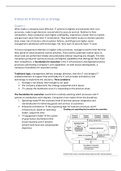
CHAPTER 1: INTRODUCTION ......................................................................................................................... 4
FINANCIAL STATEMENTS OF A PARTNERSHIP .............................................................................................. 7
STATEMENT OF PROFIT OR LOSS AND OTHER COMPREHENSIVE INCOME .............................................. 7
OCTOBER-NOVEMBER 2011.................................................................................................................... 11
B. PARTNERSHIPS ........................................................................................................................................ 18
STATEMENT OF CHANGES IN EQUITY ......................................................................................................... 18
OCTOBER-NOVEMBER 2010.................................................................................................................... 18
MAY-JUNE 2012 ...................................................................................................................................... 22
MAY-JUNE 2011 ...................................................................................................................................... 28
Classification of Components ................................................................................................................. 29
Rationale - Why the balance sheet always balances? ............................................................................ 30
Purpose & Importance ............................................................................................................................ 31
MAY- JUNE 2011 ..................................................................................................................................... 32
OCTOBER-NOVEMBER 2012.................................................................................................................... 39
CHAPTER THREE : PARTNERSHIP CHANGES AND LIQUIDATION ................................................................. 45
MAY-JUNE 2011 ...................................................................................................................................... 49
OCTOBER TO NOVEMBER 2012 .............................................................................................................. 51
NOVEMBER 2010 .................................................................................................................................... 56
CHAPTER 4: FINAL ACCOUNTS OF A CLOSE CORPORATION ....................................................................... 62
MAY –JUNE 2011 QUESTION 3 ................................................................................................................ 68
OCTOBER-NOVEMBER 2011 QUESTION 3............................................................................................... 70
OCTOBER – NOVEMBER 2011 ................................................................................................................ 72
OCTOBER-NOVEMBER 2012.................................................................................................................... 78
CHAPTER 4 .................................................................................................................................................. 82
STATEMENT OF CASH FLOWS ..................................................................................................................... 82
MAY-JUNE 2010 ...................................................................................................................................... 82
MAY JUNE 2010 ....................................................................................................................................... 84
OCTOBER-NOVEMBER 2010.................................................................................................................... 86

€2,42
Accéder à l'intégralité du document:

Garantie de satisfaction à 100%
Disponible immédiatement après paiement
En ligne et en PDF
Tu n'es attaché à rien

Reviews from verified buyers

Affichage de tous les avis
2 année de cela

1,0

1 revues

5
0
4
0
3
0
2
0
1
1
Avis fiables sur Stuvia

Tous les avis sont réalisés par de vrais utilisateurs de Stuvia après des achats vérifiés.

Faites connaissance avec le vendeur

Seller avatar
Les scores de réputation sont basés sur le nombre de documents qu'un vendeur a vendus contre paiement ainsi que sur les avis qu'il a reçu pour ces documents. Il y a trois niveaux: Bronze, Argent et Or. Plus la réputation est bonne, plus vous pouvez faire confiance sur la qualité du travail des vendeurs.
LIBRARYpro University of South Africa (Unisa)
S'abonner Vous devez être connecté afin de suivre les étudiants ou les cours
Vendu
10518
Membre depuis
2 année
Nombre de followers
4904
Documents
4814
Dernière vente
1 semaine de cela
LIBRARY

On this page, you find all documents, Package Deals, and Flashcards offered by seller LIBRARYpro (LIBRARY). Knowledge is Power. #You already got my attention!

3,7

1457 revues

5
683
4
235
3
243
2
78
1
218

Récemment consulté par vous

Pourquoi les étudiants choisissent Stuvia

Créé par d'autres étudiants, vérifié par les avis

Une qualité sur laquelle compter : rédigé par des étudiants qui ont réussi et évalué par d'autres qui ont utilisé ce document.

Le document ne convient pas ? Choisis un autre document

Aucun souci ! Tu peux sélectionner directement un autre document qui correspond mieux à ce que tu cherches.

Paye comme tu veux, apprends aussitôt

Aucun abonnement, aucun engagement. Paye selon tes habitudes par carte de crédit et télécharge ton document PDF instantanément.

Student with book image

“Acheté, téléchargé et réussi. C'est aussi simple que ça.”

Alisha Student

Foire aux questions