OVERVIEW of MEDICARE PROGRAM BASICS: CHOICE, ELIGIBILTY, AND BENEFITS MODULE 1
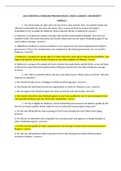
1. Ms. Moore plans to retire when she turns 65 in a few months. She is in excellent health and will have considerable income when she retires. She is concerned that her income will make it impossible for her to qualify for Medicare. What could you tell her to address her concern? a. Medicare is a program for people of all ages with specific mental health disabilities. Since she is in excellent health, she would not qualify, but should instead look into her state’s Medicaid program if she wants further coverage. Incorrect b. Eligibility for Medicare is based on whether or not a person has ever been employed by the federal government. If she or her husband were ever employed by the federal government, she can enroll in Medicare. Incorrect c. Medicare is a program for people age 65 or older and those under age 65 with certain disabilities, endstage renal disease, and Lou Gehrig’s disease so she will be eligible for Medicare. Correct d. Medicare is a program for people who have incomes and assets below specific limits, so you will have to find out her exact financial situation before telling her whether she can obtain Medicare coverage. Incorrect 2. Mrs. Park is an elderly retiree. She has a low, fixed income. What could you tell Mrs. Park that might be of assistance? a. She should not sign up for a Medigap or Medicare Advantage plan. Incorrect b. She should only seek help from private organizations to cover her Medicare costs. Incorrect c. She can apply to the Medicare agency for lower premiums and cost-sharing. Incorrect d. She should contact her state Medicaid agency to see if she qualifies for one of several programs that can help with Medicare costs for which she is responsible. Correct 3. Mr. Wu is eligible for Medicare. He has limited financial resources but failed to qualify for the Part D low-income subsidy. Where might he turn for help with his prescription drug costs? a. Mr. Wu may still qualify for help in paying for Part D costs through the local Office of the Aging. Incorrect b. Mr. Wu has no alternative but to liquidate his remaining assets and apply for coverage through his state’s Medicaid program. Incorrect c. Mr. Wu may still qualify for help in paying Part D costs through his State Pharmaceutical Assistance Program. Correct d. Mr. Wu may still qualify for help in paying for Part D costs through the Federal Pharmaceutical Assistance Program. Incorrect 4. Mr. Schmidt would like to plan for retirement and has asked you what is covered under Original Fee-for-Service (FFS) Medicare? What could you tell him? a. Part A, which covers hospital, skilled nursing facility, hospice, and home health services and Part B, which covers professional services such as those provided by a doctor are covered under Original Medicare. Correct b. Part C, which always covers dental and vision services, is covered under Original Medicare. Incorrect c. Part A, which covers long term custodial care services, is covered under Original Medicare. Incorrect d. Part D, which covers prescription drug services, is covered under Original Medicare. Incorrect 5. Mr. Buck has several family members who died from different cancers. He wants to know if Medicare covers cancer screen
École, étude et sujet
- Établissement
- Chamberlain College Of Nursing
- Cours
- NONE NR602
Infos sur le Document
- Publié le
- 2 février 2023
- Nombre de pages
- 39
- Écrit en
- 2022/2023
- Type
- Examen
- Contient
- Inconnu
Sujets
-
none nr602
-
2019 ahip test review questions

Document également disponible en groupe