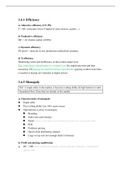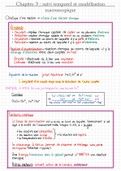
3.4.1 Efficiency
a) Allocative efficiency (CS+PS)
P = MC (consumer lower P higher Q, more choices, quality…)
b) Productive efficiency
MC = AC (better exploit of EOS)
c) Dynamic efficiency
SN profit + innovate in new production method/new products
d) X-efficiency
Minimizing waste and inefficiency at that certain output level
E.g. using factor of prdocution in a wasteful way (by employing more ppl than
necessary) OR paying too much for factors of production (paying workers more than
is needed or buying raw materials at higher prices)
3.4.5 Monopoly
Def: A single seller in the market, it has price setting ability & high barriers to entry
Incumbent firm: firms that are already in the market
a) Characteristics of monopoly
Single seller
Price setting ability (has 100% market share)
High barriers to entry in monopoly
Branding
Sunk costs (advertising)
Patent (patent is a legal right for the development of a product for a certain period of time)
EOS
Predatory pricing
Hard to find distribution channel
Large set up cost (not enough funds to finance)
b) Profit maximizing equilibrium
MC = MR which is before the quantity of Q pc (allocative efficient) = meaning less
quantity sold
, c) First degree PD (PD is like a strategy to raise profit through taking away CS)
Def: Charge the max price that a consumer is willing to pay
Turning all CS + original TR become your rev.
d) Second degree PD
It like normal Price and quantity diagram: pay lower prices can enjoy larger quantity
if goods
e) Third degree price discrimination
Def: Different prices are charged to different customer for the same product not
becoz of costs
necessary conditions
Having some degree of monopoly power
Prevent seepage/able to separate customers
Different PED in different markets
diagrammatic analysis
15, 9, 10
5
40, 60, 100
High price inelastic
Low price elastic AC = MC (horizontal)
Pros:
a) Allocative efficiency (CS+PS)
P = MC (consumer lower P higher Q, more choices, quality…)
b) Productive efficiency
MC = AC (better exploit of EOS)
c) Dynamic efficiency
SN profit + innovate in new production method/new products
d) X-efficiency
Minimizing waste and inefficiency at that certain output level
E.g. using factor of prdocution in a wasteful way (by employing more ppl than
necessary) OR paying too much for factors of production (paying workers more than
is needed or buying raw materials at higher prices)
3.4.5 Monopoly
Def: A single seller in the market, it has price setting ability & high barriers to entry
Incumbent firm: firms that are already in the market
a) Characteristics of monopoly
Single seller
Price setting ability (has 100% market share)
High barriers to entry in monopoly
Branding
Sunk costs (advertising)
Patent (patent is a legal right for the development of a product for a certain period of time)
EOS
Predatory pricing
Hard to find distribution channel
Large set up cost (not enough funds to finance)
b) Profit maximizing equilibrium
MC = MR which is before the quantity of Q pc (allocative efficient) = meaning less
quantity sold
, c) First degree PD (PD is like a strategy to raise profit through taking away CS)
Def: Charge the max price that a consumer is willing to pay
Turning all CS + original TR become your rev.
d) Second degree PD
It like normal Price and quantity diagram: pay lower prices can enjoy larger quantity
if goods
e) Third degree price discrimination
Def: Different prices are charged to different customer for the same product not
becoz of costs
necessary conditions
Having some degree of monopoly power
Prevent seepage/able to separate customers
Different PED in different markets
diagrammatic analysis
15, 9, 10
5
40, 60, 100
High price inelastic
Low price elastic AC = MC (horizontal)
Pros: