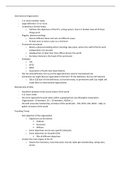
International Organization
- 3 or more member states
- Legal definition is 3 or more
- Created by a formal treaty
o Outlines the objectives of the IO’s, voting system, how is it funded, how all of these
things work
- Regular, plenary meetings
o Discuss different ideas and vote on different issues
o At least once or twice a year as a minimum
- Permanent secretariat
o Means a physical building where meetings take place, where the staff of the IO work,
independent civil servants
o Headquarters in New York, then offices all over the world
o Secretary General is the head of the secretariat
- Examples
o UN
o WTO
o WHO
o Association of South-East Asian Nations
- Not the only definition, this is just the legal definition used in international law
- Sometimes we might discuss organizations that don’t fit this definition, but are still relevant
o G8 or G20 don’t fit the definition, no formal treaty, no permanent staff, but might still
study them as international organizations
Membership of IGOs
- Anywhere between three and all states of the world
- 3 or more states
- IOs more regionally focused states within a geographical area (Shanghai Cooperation
Organization – 8 members, EU – 20 members, ASEAN...)
- IOs with universal membership, all states of the world (UN – 193, WTO, 194, WHO – 164), to
gather all states of the world
Founding Treaty
- Sets objective of the organization
o Objectives can be diverse
▪ Political
▪ Economic
▪ Military
o Some objectives can be very specific (Interpol)
o Some objectives are broader (UN)
▪ Mix of different objectives
- Creates the main organs of the IO
o Details the mechanics, how they work, how do states get membership, voting rules,
access
, - Establishes functions and powers of the organs
o UN: UNSC versus UNGA
Plenary Meetings
- Plenary organ
- UNGA (usually each fall)
- Permanent secretariat: physical building, permanent staff
International Organizations as Political Systems
- Political system:
o Input (different forces and elements blended together)
▪ Demands and resources
• IOs have resources, experts, communities and countries can make
demands
• IOs take everything into account, converted into an output into a
decision or activity
▪ Member states often make a lot of demands on IOs, negotiate and write the
treaties, supply the resources, common for them to make demands, try to make
IOs as responsive as possible to these objectives
▪ Interest groups may also try to influence IOs, climate change activists, steer IOs
to create stronger climate change treaties
▪ Experts and scientists, huge role in activities of IOs, climate change experts,
more recently public health experts
▪ Staff/funding, member states provide staff as international civil servants, annual
funding, each member has to pay its due every year and it is usually the amount
is on a complex formula that has to do with the population and other things
o Conversion
▪ IO
▪ Plenary organs
• Forums where decisions are taken by state representatives
• Most famous is UNGA
• Every September, high level diplomats are invited to give opening
speeches, lots of media attention
• UNGA splits up into 6 different groups
• Work with different voting rules
• How decisions are taken
• Majority decisions (50% +1), or some require super majority (60 or 70%)
IMF if 85%
• Some work in the unanimity
• Weighted voted, each member state has a share of voting power (world
bank or IMF), USA has 70% of the power..
• One vote per state
▪ Secretariat
• Executive power
, • Implement decisions taken by legislative bodies
• Manage different programs
• Bureaucracy of international organizations
• Variations on the size of the secretariat
• WTO is a good example of that
• IOs like UN or EU with larger secretariats (tens of thousands of staff
members)
• Composed of international civil servants
o People, staff members hired by IOs to manage programs and
implement decisions
o Not representatives of their countries
o There to implement decisions and policies to the best of their
abilities without any bias, to be impartial
• Can take a different name, but often take the form of a “secretariat”
• Antonio Gutierrez current SG of the UN
▪ Courts
• Judicial powers
• There for disagreements between states
• States will create courts in IOs that perhaps in a later point there may be
disagreements between, solving disagreements with a third party is
beneficial
• Ex: ICJ
o Main court of the UN system
o Provide dispute resolution, legal advice to UNSC and other
councils, closest to what we have as a universal court
o Lots of treaties include a clause saying the dispute can be
brought to the ICJ
o ICJ is legally binding, has an optional jurisdiction, need the
clause in the treaty about the ICJ, enforcement is pretty weak,
no strong follow-up or sanctions
o US v Nicaragua, US lost to the ICJ but decision wasn’t enforced
o Output
▪ Decisions and activities
▪ Norm-setting
• Up to states to follow
• States adopt different norms
▪ Operational activities
• IOs are provided specific resources and are actively implementing
programs and policies
• Ex: peace operations, states provide funding, staff, military, and UN
manages the resources and run the operation
Is Multilateralism Under Threat?
, - The UK leaving the EU, attitude of Trump administration but US more generally about
multilateral organizations, are we witnessing a backlash of multilateralism, a moment in history
where states are slowly withdrawing time, attention and resources from IOs for their own
individual policies
- Skepticism about the real commitment of great powers like the US, China or India to
multilateralism
- This questions is lurking around a lot of IOs recently
Can IOs Produce Solve Global Problems?
- Big promises made, very little results
- Ex: Paris agreements, SDGs
- Can IOs really deliver?
Can IOs be Reformed to Accommodate Rising Powers?
- To reflect new powers
- Lots of IOs like UN, IMF... created shortly after WWII, great powers are different than they are
today
- France and UK were the winner of WWII, but some of these countries are no longer great
powers, perhaps now middle powers
- How can IOs accommodate the new powers like China or India, make more space for them,
more responsive to their interests
- If they are not, the concern that countries will turn to other IOs or create alternative
organizations
- Western powers staff most IOs
- Rising powers have little weight in terms of staff members in UN or UN Agencies
Why do States Create IOs?
- Theoretical level
- Basic question
- Answer: to achieve goals and objectives valued by states
- But in depth, why is there is much variation in the design of IOs?
- What is the added value of IOs that states cannot do by themselves?
How Autonomous from States are IOs?
- Tension: IO vs state sovereignty
- States create IOs to achieve specific things, and delegate powers to them, but how far can IOs
use this powers?
- Are they puppets? Or can they do things on their own?
- What is the broader impact on world politics?
- How is the power used? Impact on political outcomes
Historical Overview: From the Concert of Europe to the League of Nations
- Everything that came before the UN
- Historical context on IOs and cooperation before the UN in 1945
- 3 or more member states
- Legal definition is 3 or more
- Created by a formal treaty
o Outlines the objectives of the IO’s, voting system, how is it funded, how all of these
things work
- Regular, plenary meetings
o Discuss different ideas and vote on different issues
o At least once or twice a year as a minimum
- Permanent secretariat
o Means a physical building where meetings take place, where the staff of the IO work,
independent civil servants
o Headquarters in New York, then offices all over the world
o Secretary General is the head of the secretariat
- Examples
o UN
o WTO
o WHO
o Association of South-East Asian Nations
- Not the only definition, this is just the legal definition used in international law
- Sometimes we might discuss organizations that don’t fit this definition, but are still relevant
o G8 or G20 don’t fit the definition, no formal treaty, no permanent staff, but might still
study them as international organizations
Membership of IGOs
- Anywhere between three and all states of the world
- 3 or more states
- IOs more regionally focused states within a geographical area (Shanghai Cooperation
Organization – 8 members, EU – 20 members, ASEAN...)
- IOs with universal membership, all states of the world (UN – 193, WTO, 194, WHO – 164), to
gather all states of the world
Founding Treaty
- Sets objective of the organization
o Objectives can be diverse
▪ Political
▪ Economic
▪ Military
o Some objectives can be very specific (Interpol)
o Some objectives are broader (UN)
▪ Mix of different objectives
- Creates the main organs of the IO
o Details the mechanics, how they work, how do states get membership, voting rules,
access
, - Establishes functions and powers of the organs
o UN: UNSC versus UNGA
Plenary Meetings
- Plenary organ
- UNGA (usually each fall)
- Permanent secretariat: physical building, permanent staff
International Organizations as Political Systems
- Political system:
o Input (different forces and elements blended together)
▪ Demands and resources
• IOs have resources, experts, communities and countries can make
demands
• IOs take everything into account, converted into an output into a
decision or activity
▪ Member states often make a lot of demands on IOs, negotiate and write the
treaties, supply the resources, common for them to make demands, try to make
IOs as responsive as possible to these objectives
▪ Interest groups may also try to influence IOs, climate change activists, steer IOs
to create stronger climate change treaties
▪ Experts and scientists, huge role in activities of IOs, climate change experts,
more recently public health experts
▪ Staff/funding, member states provide staff as international civil servants, annual
funding, each member has to pay its due every year and it is usually the amount
is on a complex formula that has to do with the population and other things
o Conversion
▪ IO
▪ Plenary organs
• Forums where decisions are taken by state representatives
• Most famous is UNGA
• Every September, high level diplomats are invited to give opening
speeches, lots of media attention
• UNGA splits up into 6 different groups
• Work with different voting rules
• How decisions are taken
• Majority decisions (50% +1), or some require super majority (60 or 70%)
IMF if 85%
• Some work in the unanimity
• Weighted voted, each member state has a share of voting power (world
bank or IMF), USA has 70% of the power..
• One vote per state
▪ Secretariat
• Executive power
, • Implement decisions taken by legislative bodies
• Manage different programs
• Bureaucracy of international organizations
• Variations on the size of the secretariat
• WTO is a good example of that
• IOs like UN or EU with larger secretariats (tens of thousands of staff
members)
• Composed of international civil servants
o People, staff members hired by IOs to manage programs and
implement decisions
o Not representatives of their countries
o There to implement decisions and policies to the best of their
abilities without any bias, to be impartial
• Can take a different name, but often take the form of a “secretariat”
• Antonio Gutierrez current SG of the UN
▪ Courts
• Judicial powers
• There for disagreements between states
• States will create courts in IOs that perhaps in a later point there may be
disagreements between, solving disagreements with a third party is
beneficial
• Ex: ICJ
o Main court of the UN system
o Provide dispute resolution, legal advice to UNSC and other
councils, closest to what we have as a universal court
o Lots of treaties include a clause saying the dispute can be
brought to the ICJ
o ICJ is legally binding, has an optional jurisdiction, need the
clause in the treaty about the ICJ, enforcement is pretty weak,
no strong follow-up or sanctions
o US v Nicaragua, US lost to the ICJ but decision wasn’t enforced
o Output
▪ Decisions and activities
▪ Norm-setting
• Up to states to follow
• States adopt different norms
▪ Operational activities
• IOs are provided specific resources and are actively implementing
programs and policies
• Ex: peace operations, states provide funding, staff, military, and UN
manages the resources and run the operation
Is Multilateralism Under Threat?
, - The UK leaving the EU, attitude of Trump administration but US more generally about
multilateral organizations, are we witnessing a backlash of multilateralism, a moment in history
where states are slowly withdrawing time, attention and resources from IOs for their own
individual policies
- Skepticism about the real commitment of great powers like the US, China or India to
multilateralism
- This questions is lurking around a lot of IOs recently
Can IOs Produce Solve Global Problems?
- Big promises made, very little results
- Ex: Paris agreements, SDGs
- Can IOs really deliver?
Can IOs be Reformed to Accommodate Rising Powers?
- To reflect new powers
- Lots of IOs like UN, IMF... created shortly after WWII, great powers are different than they are
today
- France and UK were the winner of WWII, but some of these countries are no longer great
powers, perhaps now middle powers
- How can IOs accommodate the new powers like China or India, make more space for them,
more responsive to their interests
- If they are not, the concern that countries will turn to other IOs or create alternative
organizations
- Western powers staff most IOs
- Rising powers have little weight in terms of staff members in UN or UN Agencies
Why do States Create IOs?
- Theoretical level
- Basic question
- Answer: to achieve goals and objectives valued by states
- But in depth, why is there is much variation in the design of IOs?
- What is the added value of IOs that states cannot do by themselves?
How Autonomous from States are IOs?
- Tension: IO vs state sovereignty
- States create IOs to achieve specific things, and delegate powers to them, but how far can IOs
use this powers?
- Are they puppets? Or can they do things on their own?
- What is the broader impact on world politics?
- How is the power used? Impact on political outcomes
Historical Overview: From the Concert of Europe to the League of Nations
- Everything that came before the UN
- Historical context on IOs and cooperation before the UN in 1945