MPBD: ADHD
ADHD symptoms are inattention, In this study, the largest effect is seen in the
hyperactivity, and impulsivity. 80% of ADHD Amygdala, which is involved in emotional
diagnosis are in boys, and the symptoms that regulation problems that are seen in ADHD. They
persist into adulthood is only 30-50%. for example have difficulties in recognition of
emotional stimuli, diminished emotional
Neuroimaging findings reactions to pleasant stimuli, and high levels of
• Prefrontal cortex is involved in impulsivity callous-unemotional traits. Though these
control problems are often present in patients with
• Cerebellum and caudate nucleus are ADHD, these disease characteristics have not yet
involved in motor hyperactivity been included in the official DSM criteria. What
• Corpus callosum is involved in you could also see in the study was that the
communication between the two hemispheres volume differences clustered in children and no
(there is less communication in ADHD) differences at the group level were reported in
adults. The brain maturation in children with
A meta-analysis was done of different parts of ADHD takes longer, therefore they have smaller
the brain, this analysis showed that there are brain parts when they are children, and this
significant differences in structure in the parts normalizes when they become adults. So, this
mentioned above. Though, the studies that study supports the model of ADHD as a disorder
have been done only used about 20 people of brain maturation delay. The findings contain
which makes the results a little bit several important messages, the first one is that
underpowered. the data confirm that patients with ADHD do
have altered brains and therefore that ADHD is a
A meta-analysis was done at 23 different sites disorder of the brain.
of the brain using the same MRI machines and
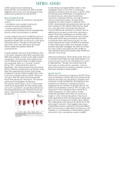
MRI data analysis, so they could make a better After the publication of this study, there was a lot
comparison. In this study, they looked at the of criticism that these are only small effects, it is
size of different brain areas in ADHD people only at the group level, are heterogeneous, and it
and compared them to a “normal” control is stigmatizing. Though, the authors say that
group. The * means that the result is they made no claims about causality. A future
significant. The results showed that the whole goal of the authors is to develop a growth curve of
group (children, adolescents, and adults), that the brain (similar to body weight).
they have significantly smaller brain areas
compared to people without ADHD. The 0 line Genetic factors
is the line of people without ADHD. What you What is the contribution of genes to ADHD? From
can see is that the sizes are becoming less twin and adoption studies they know that several
small when going into adulthood. The smaller behavioural traits and psychiatric diseases have
parts are the Amygdala, the Nucleus moderate or high heritability. Heritability is the
Accumbens which plays a role in reward and proportion of variance in symptoms that is
could be an explanation for why these people explained by the variance in genetic factors. For
are more vulnerable to drug-taking behaviour, ADHD the heritability is about 75%. Though, it is
the Caudate Nucleus and Putamen which are very hard to find risk genes that contribute to
parts of the Basal Ganglia, the Hippocampus ADHD symptoms. So, they used an overly
and the ICV. simplistic paradigm that looks at a model of a
single or a few of these risk genes. They found
weak associations with the dopamine transporter
gene, DAT and a dopamine receptor gene, DRD4.
But, these genes only account for about 3% of the
phenotypic variation. This suggests that many
unidentified common variants with small effects,
gene-environment or gene-gene interactions, rare
variants, or a combination of these factors play a
prominent role in the genetic cause of ADHD.
ADHD symptoms are inattention, In this study, the largest effect is seen in the
hyperactivity, and impulsivity. 80% of ADHD Amygdala, which is involved in emotional
diagnosis are in boys, and the symptoms that regulation problems that are seen in ADHD. They
persist into adulthood is only 30-50%. for example have difficulties in recognition of
emotional stimuli, diminished emotional
Neuroimaging findings reactions to pleasant stimuli, and high levels of
• Prefrontal cortex is involved in impulsivity callous-unemotional traits. Though these
control problems are often present in patients with
• Cerebellum and caudate nucleus are ADHD, these disease characteristics have not yet
involved in motor hyperactivity been included in the official DSM criteria. What
• Corpus callosum is involved in you could also see in the study was that the
communication between the two hemispheres volume differences clustered in children and no
(there is less communication in ADHD) differences at the group level were reported in
adults. The brain maturation in children with
A meta-analysis was done of different parts of ADHD takes longer, therefore they have smaller
the brain, this analysis showed that there are brain parts when they are children, and this
significant differences in structure in the parts normalizes when they become adults. So, this
mentioned above. Though, the studies that study supports the model of ADHD as a disorder
have been done only used about 20 people of brain maturation delay. The findings contain
which makes the results a little bit several important messages, the first one is that
underpowered. the data confirm that patients with ADHD do
have altered brains and therefore that ADHD is a
A meta-analysis was done at 23 different sites disorder of the brain.
of the brain using the same MRI machines and
MRI data analysis, so they could make a better After the publication of this study, there was a lot
comparison. In this study, they looked at the of criticism that these are only small effects, it is
size of different brain areas in ADHD people only at the group level, are heterogeneous, and it
and compared them to a “normal” control is stigmatizing. Though, the authors say that
group. The * means that the result is they made no claims about causality. A future
significant. The results showed that the whole goal of the authors is to develop a growth curve of
group (children, adolescents, and adults), that the brain (similar to body weight).
they have significantly smaller brain areas
compared to people without ADHD. The 0 line Genetic factors
is the line of people without ADHD. What you What is the contribution of genes to ADHD? From
can see is that the sizes are becoming less twin and adoption studies they know that several
small when going into adulthood. The smaller behavioural traits and psychiatric diseases have
parts are the Amygdala, the Nucleus moderate or high heritability. Heritability is the
Accumbens which plays a role in reward and proportion of variance in symptoms that is
could be an explanation for why these people explained by the variance in genetic factors. For
are more vulnerable to drug-taking behaviour, ADHD the heritability is about 75%. Though, it is
the Caudate Nucleus and Putamen which are very hard to find risk genes that contribute to
parts of the Basal Ganglia, the Hippocampus ADHD symptoms. So, they used an overly
and the ICV. simplistic paradigm that looks at a model of a
single or a few of these risk genes. They found
weak associations with the dopamine transporter
gene, DAT and a dopamine receptor gene, DRD4.
But, these genes only account for about 3% of the
phenotypic variation. This suggests that many
unidentified common variants with small effects,
gene-environment or gene-gene interactions, rare
variants, or a combination of these factors play a
prominent role in the genetic cause of ADHD.