Garantie de satisfaction à 100% Disponible immédiatement après paiement En ligne et en PDF Tu n'es attaché à rien 4.2 TrustPilot
logo-home
Examen

Test Bank - Maternal Child Nursing Care by Perry (6th Edition).

Note
-
Vendu
-
Pages
838
Grade
A+
Publié le
18-10-2022
Écrit en
2022/2023

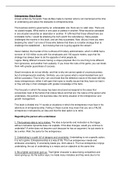
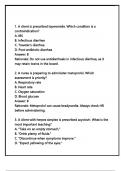
Test Bank - Maternal Child Nursing Care by Perry (6th Edition). Chapter 01: 21st Century Maternity Nursing MULTIPLE CHOICE 1. When providing care for a pregnant woman, the nurse should be aware that one of the most frequently reported maternal medical risk factors is: a. Diabetes mellitus. c. Chronic hypertension. b. Mitral valve prolapse (MVP). d. Anemia. ANS: A The most frequently reported maternal medical risk factors are diabetes and hypertension associated with pregnancy. Both of these conditions are associated with maternal obesity. There are no studies that indicate MVP is among the most frequently reported maternal risk factors. Hypertension associated with pregnancy, not chronic hypertension, is one of the most frequently reported maternal medical risk factors. Although anemia is a concern in pregnancy, it is not one of the most frequently reported maternal medical risk factors in pregnancy. PTS: 1 DIF: Cognitive Level: Knowledge REF: 6 OBJ: Nursing Process: Assessment MSC: Client Needs: Physiologic Integrity 2. To ensure optimal outcomes for the patient, the contemporary maternity nurse must incorporate both teamwork and communication with clinicians into her care delivery, The SBAR technique of communication is an easy-to-remember mechanism for communication. Which of the following correctly defines this acronym? a. Situation, baseline assessment, response b. Situation, background, assessment, recommendation c. Subjective background, assessment, recommendation d. Situation, background, anticipated recommendation ANS: B The situation, background, assessment, recommendation (SBAR) technique provides a specific framework for communication among health care providers. Failure to communicate is one of the major reasons for errors in health care. The SBAR technique has the potential to serve as a means to reduce errors. PTS: 1 DIF: Cognitive Level: Comprehension REF: 14 OBJ: Nursing Process: Assessment, Planning MSC: Client Needs: Safe and Effective Care Environment 3. The role of the professional nurse caring for childbearing families has evolved to emphasize: a. Providing care to patients directly at the bedside. b. Primarily hospital care of maternity patients. c. Practice using an evidence-based approach. d. Planning patient care to cover longer hospital stays. ANS: C Professional nurses are part of the team of health care providers who collaboratively care for patients throughout the childbearing cycle. Providing care to patients directly at the bedside is one of the nurses tasks; however, it does not encompass the concept of the evolved professional nurse. Throughout the prenatal period, nurses care for women in clinics and physicians offices and teach classes to help families prepare for childbirth. Nurses also care for childbearing families in birthing centers and in the home. Nurses have been critically important in developing strategies to improve the well-being of women and their infants and have led the efforts to implement clinical practice guidelines using an evidence-based approach. Maternity patients have experienced a decreased, rather than an increased, length of stay over the past 2 decades. PTS: 1 DIF: Cognitive Level: Comprehension REF: 1 OBJ: Nursing Process: Implementation MSC: Client Needs: Safe and Effective Care Environment 4. A 23-year-old African-American woman is pregnant with her first child. Based on the statistics for infant mortality, which plan is most important for the nurse to implement? a. Perform a nutrition assessment. b. Refer the woman to a social worker. c. Advise the woman to see an obstetrician, not a midwife. d. Explain to the woman the importance of keeping her prenatal care appointments. ANS: D Consistent prenatal care is the best method of preventing or controlling risk factors associated with infant mortality. Nutritional status is an important modifiable risk factor, but a nutrition assessment is not the most important action a nurse should take in this situation. The patient may need assistance from a social worker at some time during her pregnancy, but a referral to a social worker is not the most important aspect the nurse should address at this time. If the woman has identifiable high-risk problems, her health care may need to be provided by a physician. However, it cannot be assumed that all African-American women have high-risk issues. In addition, advising the woman to see an obstetrician is not the most important aspect on which the nurse should focus at this time, and it is not appropriate for a nurse to advise or manage the type of care a patient is to receive. PTS: 1 DIF: Cognitive Level: Comprehension REF: 6 OBJ: Nursing Process: Planning MSC: Client Needs: Health Promotion and Maintenance 5. During a prenatal intake interview, the nurse is in the process of obtaining an initial assessment of a 21-yearold Hispanic patient with limited English proficiency. It is important for the nurse to: a. Use maternity jargon in order for the patient to become familiar with these terms. b. Speak quickly and efficiently to expedite the visit. c. Provide the patient with handouts. d. Assess whether the patient understands the discussion. ANS: D Nurses contribute to health literacy by using simple, common words; avoiding jargon; and evaluating whether the patient understands the discussion. Speaking slowly and clearly and focusing on what is important increase understanding. Most patient education materials are written at too high a level for the average adult and may not be useful for a client with limited English proficiency. PTS: 1 DIF: Cognitive Level: Application REF: 5 OBJ: Nursing Process: Evaluation MSC: Client Needs: Health Promotion and Maintenance 6. When managing health care for pregnant women at a prenatal clinic, the nurse should recognize that the most significant barrier to access to care is the pregnant womans: a. Age. c. Educational level. b. Minority status. d. Inability to pay. ANS: D The most significant barrier to health care access is the inability to pay for services; this is compounded by the fact that many physicians refuse to care for women who cannot pay. Although adolescent pregnant clients statistically receive less prenatal care, age is not the most significant barrier. Significant disparities in morbidity and mortality rates exist for minority women; however, minority status is not the most significant barrier to access of care. Disparities in educational level are associated with morbidity and mortality rates; however, educational level is not the most significant barrier to access of care. PTS: 1 DIF: Cognitive Level: Knowledge REF: 5 OBJ: Nursing Process: Assessment MSC: Client Needs: Safe and Effective Care Environment 7. What is the primary role of practicing nurses in the research process? a. Designing research studies b. Collecting data for other researchers c. Identifying researchable problems d. Seeking funding to support research studies ANS: C When problems are identified, research can be conducted properly. Research of health care issues leads to evidence-based practice guidelines. Designing research studies is only one factor of the research process. Data collection is one factor of research. Financial support is necessary to conduct research, but it is not the primary role of the nurse in the research process. PTS: 1 DIF: Cognitive Level: Comprehension REF: 9 OBJ: Nursing Process: Diagnosis, Evaluation MSC: Client Needs: Safe and Effective Care Environment 8. When the nurse is unsure about how to perform a patient care procedure, the best action would be to: a. Ask another nurse. b. Discuss the procedure with the patients physician. c. Look up the procedure in a nursing textbook. d. Consult the agency procedure manual and follow the guidelines for the procedure. ANS: D It is always best to follow the agencys policies and procedures manual when seeking information on correct patient procedures. These policies should reflect the current standards of care and state guidelines. Each nurse is responsible for her own practice. Relying on another nurse may not always be safe practice. Each nurse is obligated to follow the standards of care for safe client care delivery. Physicians are responsible for their own client care activity. Nurses may follow safe orders from physicians, but they are also responsible for the activities that they as nurses are to carry out. Information provided in a nursing textbook is basic information for general knowledge. Furthermore, the information in a textbook may not reflect the current standard of care or individual state or hospital policies. PTS: 1 DIF: Cognitive Level: Comprehension REF: 11 OBJ: Nursing Process: Implementation MSC: Client Needs: Physiologic Integrity 9. From the nurses perspective, what measure should be the focus of the health care system to reduce the rate of infant mortality further? a. Implementing programsto ensure womens early participation in ongoing prenatal care b. Increasing the length of stay in a hospital after vaginal birth from 2 to 3 days c. Expanding the number of neonatal intensive care units (NICUs) d. Mandating that all pregnant women receive care from an obstetrician ANS: A Early prenatal care allows for early diagnosis and appropriate interventions to reduce the rate of infant mortality. An increased length of stay has been shown to foster improved self-care and parental education. However, it does not prevent the incidence of leading causes of infant mortality rates, such as low birth weight. Early prevention and diagnosis reduce the rate of infant mortality. NICUs offer care to high-risk infants after they are born. Expanding the number of NICUs would offer better access for high-risk care, but this factor is not the primary focus for further reduction of infant mortality rates. A mandate that all pregnant women receive obstetric care would be nearly impossible to enforce. Furthermore, certified nurse-midwives (CNMs) have demonstrated reliable, safe care for pregnant women. PTS: 1 DIF: Cognitive Level: Comprehension REF: 10 OBJ: Nursing Process: Implementation MSC: Client Needs: Health Promotion and Maintenance 10. Alternative and complementary therapies: a. Replace conventional Western modalities of treatment. b. Are used by only a small number of American adults. c. Recognize the value of clients input into their health care. d. Focus primarily on the disease an individual is experiencing. ANS: C Many popular alternative healing modalities offer human-centered care based on philosophies that recognize the value of the patients input and honor the individuals beliefs, values, and desires. Alternative and complementary therapies are part of an integrative approach to health care. An increasing number of American adults are seeking alternative and complementary health care options. Alternative healing modalities offer an holistic approach to health, focusing on the whole person, not just the disease. PTS: 1 DIF: Cognitive Level: Comprehension REF: 4 OBJ: Nursing Process: Planning MSC: Client Needs: Physiologic Integrity 11. A 38-year-old Hispanic woman delivered a 9-pound, 6-ounce girl vaginally after being in labor for 43 hours. The baby died 3 days later from sepsis. On what grounds would the woman potentially have a legitimate legal case for negligence? a. She is Hispanic. c. The standards of care were not met. b. She delivered a girl. d. She refused fetal monitoring. ANS: C Not meeting the standards of care is a legitimate factor for a case of negligence. The clients race is not a factor for a case of negligence. The infants gender is not a factor for a case of negligence. Although fetal monitoring is the standard of care, the client has the right to refuse treatment. This refusal is not a case for negligence; however, informed consent should be properly obtained, and the client should sign an against medical advice form for refusal of any treatment that is within the standard of care. PTS: 1 DIF: Cognitive Level: Comprehension REF: 12 OBJ: Nursing Process: Planning MSC: Client Needs: Health Promotion and Maintenance 12. A newly graduated nurse is attempting to understand the reason for increasing health care spending in the United States. Her research finds that these costs are much higher compared with other developed countries as a result of: a. A higher rate of obesity among pregnant women. b. Limited access to technology. c. Increased usage of health care services along with lower prices. d. Homogeneity of the population. ANS: A Health care is one of the fastest growing sectors of the U.S. economy. Currently, 17.4% of the gross domestic product is spent on health care. Higher spending in the United States compared with 12 other industrialized countries is related to higher prices and readily accessible technology along with greater obesity rates among women. More than one third of women in the United States are obese. Of the U.S. population, 16% is uninsured and haslimited access to health care. Maternal morbidity and mortality are directly related to racial disparities. PTS: 1 DIF: Cognitive Level: Analysis REF: 5 OBJ: Nursing Process: Planning MSC: Client Needs: Safe and Effective Care Environment 13. The term used to describe legal and professional responsibility for practice for maternity nurses is: a. Collegiality. c. Evaluation. b. Ethics. d. Accountability. ANS: D Accountability refers to legal and professional responsibility for practice. Collegiality refers to a working relationship with ones colleagues. Ethics refers to a code to guide practice. Evaluation refers to examination of the effectiveness of interventions in relation to expected outcomes. PTS: 1 DIF: Cognitive Level: Evaluation REF: 12 OBJ: Nursing Process: Evaluation MSC: Client Needs: Health Promotion and Maintenance 14. Through the use of social media technology, nurses can link with other nurses who may share similar interests, insights about practice, and advocate for patients. The most concerning pitfall for nurses using this technology is: a. Violation of patient privacy and confidentiality. b. Institutions and colleagues may be cast in an unfavorable light. c. Unintended negative consequences for using social media. d. Lack of institutional policy governing online contact. ANS: A The most significant pitfall for nurses using this technology is the violation of patient privacy and confidentiality. Furthermore, institutions and colleagues can be cast in unfavorable lights with negative consequences for those posting information. Nursing students have been expelled from school and nurses have been fired or reprimanded by their Board of Nursing for injudicious posts. The American Nurses Association has published six principles for social networking and nurses. All institutions should have policies guiding the use of social media, and nurses should be familiar with these guidelines. PTS: 1 DIF: Cognitive Level: Analysis REF: 7 OBJ: Nursing Process: Implementation MSC: Client Needs: Safe and Effective Care Environment 15. An important development that affects maternity nursing is integrative health care, which: a. Seeks to provide the same health care for all racial and ethnic groups. b. Blends complementary and alternative therapies with conventional Western treatment. c. Focuses on the disease or condition rather than the background of the client. d. Has been mandated by Congress. ANS: B Integrative health care tries to mix the old with the new at the discretion of the client and health care providers. Integrative health care is a blending of new and traditional practices. Integrative health care focuses on the whole person, not just the disease or condition. U.S. law supports complementary and alternative therapies but does not mandate them. PTS: 1 DIF: Cognitive Level: Application REF: 4 OBJ: Nursing Process: Implementation MSC: Client Needs: Health Promotion and Maintenance 16. Recent trends in childbirth practices in the United States indicate that: a. More than 15% of mothers had late or no prenatal care. b. The percentage of Hispanics, non-Hispanic African Americans, and Caucasians who received prenatal care was essentially the same. c. Births occurring in the hospital accounted for 99% of births. d. Cesarean births have been declining as a percentage of live births. ANS: C Almost all births occur within the hospital setting. Only 5.2% of Caucasians mothers had either late care or no care. There are disparities in the receipt of prenatal care by ethnicity: 12.2% of Hispanic women and 11.8% of non-Hispanic black women received either late or no prenatal care. The percentage of cesarean births is increasing. PTS: 1 DIF: Cognitive Level: Knowledge REF: 7 OBJ: Nursing Process: Planning MSC: Client Needs: Physiologic Integrity 17. Recent trends in childbirth practice indicate that: a. Delayed pushing is now discouraged in the second stage of labor. b. Episiotomy rates are increasing. c. Midwives perform more episiotomies than physicians. d. Newborn infantsremain with the mother and are encouraged to breastfeed. ANS: D Breastfeeding is encouraged for newborns immediately after birth. Delayed pushing is encouraged for several reasons. Episiotomy rates are declining. Midwives perform fewer episiotomies than physicians. PTS: 1 DIF: Cognitive Level: Knowledge REF: 8 OBJ: Nursing Process: Planning MSC: Client Needs: Safe and Effective Care Environment 18. The nurse caring for a pregnant client should be aware that the U.S. birth rate shows which trend? a. Birthsto unmarried women are more likely to have less favorable outcomes. b. Birth rates for women 40 to 44 years old are beginning to decline. c. Cigarette smoking among pregnant women continues to increase. d. The rates of maternal death owing to racial disparity are elevated in the United States. ANS: A Low-birth-weight infants and preterm birth are more likely because of the large number of teenagers in the unmarried group. Birth rates for women in their early 40s continue to increase. Fewer pregnant women smoke. In the United States, there is significant racial disparity in the rates of maternal death. PTS: 1 DIF: Cognitive Level: Comprehension REF: 6 OBJ: Nursing Process: Assessment MSC: Client Needs: Safe and Effective Care Environment 19. Maternity nursing care that is based on knowledge gained through research and clinical trials is: a. Derived from the Nursing Intervention Classification. b. Known as evidence-based practice. c. At odds with the Cochrane School of traditional nursing. d. An outgrowth of telemedicine. ANS: B Evidence-based practice is based on knowledge gained from research and clinical trials. The Nursing Intervention Classification is a method of standardizing language and categorizing care. Dr. Cochrane systematically reviewed research trials and is part of the evidence-based practice movement. Telemedicine use communication technologies to support health care. PTS: 1 DIF: Cognitive Level: Comprehension REF: 9 OBJ: Nursing Process: Assessment MSC: Client Needs: Psychosocial Integrity 20. The level of practice a reasonably prudent nurse provides is called: a. The standard of care. c. A sentinel event. b. Risk management. d. Failure to rescue. ANS: A Guidelines for standards of care are published by various professional nursing organizations. Risk management identifies risks and establishes preventive practices, but it does not define the standard of care. Sentinel events are unexpected negative occurrences. They do not establish the standard of care. Failure to rescue is an evaluative process for nursing, but it does not define the standard of care. PTS: 1 DIF: Cognitive Level: Comprehension REF: 11 OBJ: Nursing Process: Diagnosis MSC: Client Needs: Safe and Effective Care Environment

Montrer plus Lire moins
Établissement
Cours


Oups ! Impossible de charger votre document. Réessayez ou contactez le support.

École, étude et sujet

Établissement
Cours

Infos sur le Document

Publié le
18 octobre 2022
Nombre de pages
838
Écrit en
2022/2023
Type
Examen
Contient
Questions et réponses

Sujets

Aperçu du contenu

Bank
For
Mert
enal
Child
Nursi
ng
Care
by
Perry
(6th
Editi
on.

,Table of 1
Contents
Chapter 01: 21st Century Maternity Nursing 3
Chapter 02: Community Care: The Family and Culture 17
Chapter 03: Assessment and Health Promotion 27
Chapter 04: Reproductive System Concerns 44
Chapter 05: Infertility, Contraception, and Abortion 65
Chapter 06: Genetics, Conception, and Fetal Development 83
Chapter 07: Anatomy and Physiology of Pregnancy 99
Chapter 08: Nursing Care of the Family During Pregnancy 114
Chapter 09: Maternal and Fetal Nutrition 131
Chapter 10: Assessment of High Risk Pregnancy 148
Chapter 11: High Risk Perinatal Care: Preexisting Conditions 162
Chapter 12: High Risk Perinatal Care: Gestational Conditions 182
Chapter 13: Labor and Birth Processes 204
Chapter 14: Pain Management 217
Chapter 15: Fetal Assessment During Labor 234
Chapter 16: Nursing Care of the Family During Labor and Birth 252
Chapter 17: Labor and Birth Complications 276
Chapter 18: Maternal Physiologic Changes 293
Chapter 19: Nursing Care of the Family During the Postpartum Period 307
Chapter 20: Transition to Parenthood 321
Chapter 21: Postpartum Complications 336
Chapter 22: Physiologic and Behavioral Adaptations of the Newborn 354
Chapter 23: Nursing Care of the Newborn and Family 373
Chapter 24: Newborn Nutrition and Feeding 385
Chapter 25: The High Risk Newborn 402
Chapter 26: 21st Century Pediatric Nursing 426
Chapter 27: Family, Social, Cultural, and Religious Influences on Child Health Promotion
433
Chapter 28: Developmental and Genetic Influences on Child Health Promotion 441
Chapter 29: Communication, History, and Physical Assessment 456
Chapter 30: Pain Assessment and Management in Children 476
Chapter 31: The Infant and Family 487
Chapter 32: The Toddler and Family 509
Chapter 33: The Preschooler and Family 527
Chapter 34: The School-Age Child and Family 541
Chapter 35: The Adolescent and Family 557
Chapter 36: Impact of Chronic Illness, Disability, and End-of-Life Care for the Child and
Family 578
Chapter 37: Impact of Cognitive or Sensory Impairment on the Child and Family 595
Chapter 38: Family-Centered Care of the Child During Illness and Hospitalization 614
Chapter 39: Pediatric Variations of Nursing Interventions 626
Chapter 40: Respiratory Dysfunction 648
Chapter 41: Gastrointestinal Dysfunction 666
Chapter 42: Cardiovascular Dysfunction 688
Chapter 43: Hematologic and Immunologic Dysfunction 713
Chapter 44: Cancer 736
Chapter 45: Genitourinary Dysfunction 758
Chapter 46: Cerebral Dysfunction 774
Chapter 47: Endocrine Dysfunction 795
Chapter 48: Musculoskeletal or Articular Dysfunction 811

,Chapter 49: Neuromuscular or Muscular Dysfunction 827

, Chapter 01: 21st Century Maternity Nursing
MULTIPLE CHOICE

1. When providing care for a pregnant woman, the nurse should be aware that one of the most frequently
reported maternal medical risk factors is:


a. Diabetes mellitus. c. Chronic hypertension.


b. Mitral valve prolapse (MVP). d. Anemia.


ANS: A

The most frequently reported maternal medical risk factors are diabetes and hypertension associated with
pregnancy. Both of these conditions are associated with maternal obesity. There are no studies that indicate
MVP is among the most frequently reported maternal risk factors. Hypertension associated with pregnancy,
not chronic hypertension, is one of the most frequently reported maternal medical risk factors. Althou gh
anemia is a concern in pregnancy, it is not one of the most frequently reported maternal medical risk factors in
pregnancy.

PTS: 1 DIF: Cognitive Level: Knowledge REF: 6

OBJ: Nursing Process: Assessment MSC: Client Needs: Physiologic Integrity

2. To ensure optimal outcomes for the patient, the contemporary maternity nurse must incorporate both
teamwork and communication with clinicians into her care delivery, The SBAR technique of communication is
an easy-to-remember mechanism for communication. Which of the following correctly defines this acronym?


a. Situation, baseline assessment, response


b. Situation, background, assessment, recommendation


c. Subjective background, assessment, recommendation


d. Situation, background, anticipated recommendation


ANS: B

The situation, background, assessment, recommendation (SBAR) technique provides a specific framework for
communication among health care providers. Failure to communicate is one of the major reasons for errors in
health care. The SBAR technique has the potential to serve as a means to reduce errors.

PTS: 1 DIF: Cognitive Level: Comprehension REF: 14

OBJ: Nursing Process: Assessment, Planning

MSC: Client Needs: Safe and Effective Care Environment

3. The role of the professional nurse caring for childbearing families has evolved to emphasize:


a. Providing care to patients directly at the bedside.
€11,47
Accéder à l'intégralité du document:

Garantie de satisfaction à 100%
Disponible immédiatement après paiement
En ligne et en PDF
Tu n'es attaché à rien

Faites connaissance avec le vendeur

Seller avatar
Les scores de réputation sont basés sur le nombre de documents qu'un vendeur a vendus contre paiement ainsi que sur les avis qu'il a reçu pour ces documents. Il y a trois niveaux: Bronze, Argent et Or. Plus la réputation est bonne, plus vous pouvez faire confiance sur la qualité du travail des vendeurs.
myleet7 Harvard University
S'abonner Vous devez être connecté afin de suivre les étudiants ou les cours
Vendu
90
Membre depuis
3 année
Nombre de followers
70
Documents
85
Dernière vente
3 semaines de cela

3,3

9 revues

5
3
4
1
3
3
2
0
1
2

Récemment consulté par vous

Pourquoi les étudiants choisissent Stuvia

Créé par d'autres étudiants, vérifié par les avis

Une qualité sur laquelle compter : rédigé par des étudiants qui ont réussi et évalué par d'autres qui ont utilisé ce document.

Le document ne convient pas ? Choisis un autre document

Aucun souci ! Tu peux sélectionner directement un autre document qui correspond mieux à ce que tu cherches.

Paye comme tu veux, apprends aussitôt

Aucun abonnement, aucun engagement. Paye selon tes habitudes par carte de crédit et télécharge ton document PDF instantanément.

Student with book image

“Acheté, téléchargé et réussi. C'est aussi simple que ça.”

Alisha Student

Foire aux questions