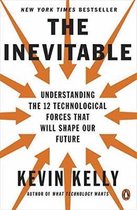
KELLYS FORCES - SUMMARY
BECOMING
Our greatest invention in the last 200 years has been the scientific process
itself because it has enabled us to create thousands of other amazing things
that we could never have discovered any other way.
Existence, it seems, is chiefly maintenance. For example, keeping a website
afloat is like keeping a yacht afloat.
Continual upgrades are so critical for technological systems that they are
now automatic for the major personal computer operating systems and some
software apps. Technological life in the future will be a series of endless
upgrades.
Only 40 per cent of the web is commercially manufactured. The rest is
fuelled by duty and passion.
Half of all web pages in the world today are hosted on more than 35 million
servers running free Apache software, which is open source, community
created.
The web will more and more resemble a presence that you relate to rather
than a place. By 2050 we’ll come to think of the web as an ever-present type
of conversation.
There has never been a better day in the whole history of the world to invent
something.
FLOWING
The digital age can be seen to have developed in three stages:
The initial age of computing imitated the medium it replaced. Our screens
had a “desktop” and “folders” and “files”. They were hierarchically ordered,
like much of the industrial age that the computer was overthrowing.
The second stage overturned the office metaphor and brought us the
organising principle of the web. The basic unit was no longer files but
“pages”. Pages were not organised into folders, but were arranged into a
networked web of both stored information and active knowledge.
Now we are transitioning to the third age of computation. Pages and
browsers are far less important. Today the prime units are flows and
streams. The cloud is the new organising metaphor for computers.
SCREENING
To everyone’s surprise, ultra thin screens and tablets have launched an
epidemic of reading and writing that has continued to swell. The amount of
time people spend reading has almost trebled since 1980. By 2015 more
than 60 trillion pages have been added to the World Wide Web, and that total
grows by several billion a day.
Screening, in which information is read on a screen, encourages rapid pattern
making, associating one idea with another, equipping us to deal with the
thousands of new thoughts expressed every day.
Propaganda is less effective in a world of screens, because while
misinformation travels fast, corrections do too. Wikipedia works so well
, because it removes an error in a single click, making it easier to eliminate a
falsehood than to post a falsehood in the first place.
In the goodness of time, each Wikipedia page will become saturated with
blue links as every statement is cross-referenced. In the goodness of time,
as all books become fully digital, every one of them will accumulate the
equivalent of blue underlined passages as each literary reference is
networked within that book to all other books.
Brewster Kahle, an archivist who is backing up the entire Internet, says that a
universal library is now within reach in which all the world’s literature is
accessible to all the people of the world. All the books within the books’
bibliographies will themselves be available, and so you can hop through the
library in the same way we hop through web links, travelling from footnote to
footnote until you reach the bottom of things. In this way, all the books the
world will be knitted together into a single networked literature. A reader will
be able to generate a social graph of an idea, or a timeline of a concept, or a
networked map of influence for any notion in the library. We’ll come to
understand that no work, no idea stands alone, but that all good, true and
beautiful things are ecosystems of intertwined parts and related entities, past
and present.
If you can truly incorporate all texts – past and present in all languages – on a
particular subject, then you can have a clearer sense of what we as a
civilisation do and don’t know.
As portable screens become more powerful, lighter and larger, they will be
used to view more of the ‘inner world’. Hold an electronic tablet up as you
walk along a street – or wear a pair of contact lenses – and it will show you an
annotated overlay of the real street ahead: where the restrooms are, which
stores sell your favourite items, where your friends are hanging out. In the
next 30 years semitransparent eyeglasses will apply an information layer to
reality. In this way, screens will enable us to “read” everything, not just text.
In the near future we will never be far from a screen from some sort. Screens
will be the first place we’ll look for answers, for friends, for news, for
meaning, for our sense of who we are and who we can be.
ACCESSING
A reporter for TechCrunch recently observed, “Uber, the world’s largest taxi
company, owns no vehicles. Facebook, the world’s most popular media
owner, creates no content. Alibaba, the world’s most valuable retailer, has
no inventory. And Airbnb, the world’s largest accommodation provider, owns
no real estate. Something interesting is happening.”
Possession is not as important as it once was. Accessing is more important
than ever.
The trend in the past 30 years has been to make better stuff using fewer
materials. That’s called dematerialisation. The total amount of material we
use per GDP dollar is going down, which means we use less material for
greater value. A central advantage of the cloud for example, is that the
BECOMING
Our greatest invention in the last 200 years has been the scientific process
itself because it has enabled us to create thousands of other amazing things
that we could never have discovered any other way.
Existence, it seems, is chiefly maintenance. For example, keeping a website
afloat is like keeping a yacht afloat.
Continual upgrades are so critical for technological systems that they are
now automatic for the major personal computer operating systems and some
software apps. Technological life in the future will be a series of endless
upgrades.
Only 40 per cent of the web is commercially manufactured. The rest is
fuelled by duty and passion.
Half of all web pages in the world today are hosted on more than 35 million
servers running free Apache software, which is open source, community
created.
The web will more and more resemble a presence that you relate to rather
than a place. By 2050 we’ll come to think of the web as an ever-present type
of conversation.
There has never been a better day in the whole history of the world to invent
something.
FLOWING
The digital age can be seen to have developed in three stages:
The initial age of computing imitated the medium it replaced. Our screens
had a “desktop” and “folders” and “files”. They were hierarchically ordered,
like much of the industrial age that the computer was overthrowing.
The second stage overturned the office metaphor and brought us the
organising principle of the web. The basic unit was no longer files but
“pages”. Pages were not organised into folders, but were arranged into a
networked web of both stored information and active knowledge.
Now we are transitioning to the third age of computation. Pages and
browsers are far less important. Today the prime units are flows and
streams. The cloud is the new organising metaphor for computers.
SCREENING
To everyone’s surprise, ultra thin screens and tablets have launched an
epidemic of reading and writing that has continued to swell. The amount of
time people spend reading has almost trebled since 1980. By 2015 more
than 60 trillion pages have been added to the World Wide Web, and that total
grows by several billion a day.
Screening, in which information is read on a screen, encourages rapid pattern
making, associating one idea with another, equipping us to deal with the
thousands of new thoughts expressed every day.
Propaganda is less effective in a world of screens, because while
misinformation travels fast, corrections do too. Wikipedia works so well
, because it removes an error in a single click, making it easier to eliminate a
falsehood than to post a falsehood in the first place.
In the goodness of time, each Wikipedia page will become saturated with
blue links as every statement is cross-referenced. In the goodness of time,
as all books become fully digital, every one of them will accumulate the
equivalent of blue underlined passages as each literary reference is
networked within that book to all other books.
Brewster Kahle, an archivist who is backing up the entire Internet, says that a
universal library is now within reach in which all the world’s literature is
accessible to all the people of the world. All the books within the books’
bibliographies will themselves be available, and so you can hop through the
library in the same way we hop through web links, travelling from footnote to
footnote until you reach the bottom of things. In this way, all the books the
world will be knitted together into a single networked literature. A reader will
be able to generate a social graph of an idea, or a timeline of a concept, or a
networked map of influence for any notion in the library. We’ll come to
understand that no work, no idea stands alone, but that all good, true and
beautiful things are ecosystems of intertwined parts and related entities, past
and present.
If you can truly incorporate all texts – past and present in all languages – on a
particular subject, then you can have a clearer sense of what we as a
civilisation do and don’t know.
As portable screens become more powerful, lighter and larger, they will be
used to view more of the ‘inner world’. Hold an electronic tablet up as you
walk along a street – or wear a pair of contact lenses – and it will show you an
annotated overlay of the real street ahead: where the restrooms are, which
stores sell your favourite items, where your friends are hanging out. In the
next 30 years semitransparent eyeglasses will apply an information layer to
reality. In this way, screens will enable us to “read” everything, not just text.
In the near future we will never be far from a screen from some sort. Screens
will be the first place we’ll look for answers, for friends, for news, for
meaning, for our sense of who we are and who we can be.
ACCESSING
A reporter for TechCrunch recently observed, “Uber, the world’s largest taxi
company, owns no vehicles. Facebook, the world’s most popular media
owner, creates no content. Alibaba, the world’s most valuable retailer, has
no inventory. And Airbnb, the world’s largest accommodation provider, owns
no real estate. Something interesting is happening.”
Possession is not as important as it once was. Accessing is more important
than ever.
The trend in the past 30 years has been to make better stuff using fewer
materials. That’s called dematerialisation. The total amount of material we
use per GDP dollar is going down, which means we use less material for
greater value. A central advantage of the cloud for example, is that the