Inhoudsopgave
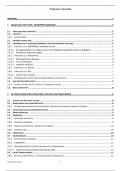
Week 1 how to prepare a budget?................................................................................................................. 2
Week 2 flexible budgets and variance analysis...............................................................................................7
Week 3 flexible budgets and variance analysis.............................................................................................13
Week 4 measurement of cost behavior........................................................................................................ 19
Week 5 management control in decentralized organizations........................................................................28
.................................................................................................................................................................... 38
Week 6 transfer pricing................................................................................................................................ 40
Week 7 recap............................................................................................................................................... 46
By the end of the module you are able to:
Analyze the financial performance of a decentralized international organization, more
specifically:
- the construction and interpretation of financial budgets,
- the evaluation of financial performance,
- the application and measurement of cost behavior,
- the application of decision making in decentralized organizations,
- the application of transfer pricing,
Horngren --> Introduction to Management Accounting
Chapters: 3, 7, 8, 10
,Week 1 how to prepare a budget?
- To prepare yourself for lecture # 1 you should read Horngren Chapter 7, pages 288 to
310 (including Summary and Highlights to remember) upfront. For Training 1 in week
2 you should prepare: 7-28, 7-33, 7-38, 7-40
When you have finished studying this chapter 7, you should be able to:
1. Explain how budgets facilitate planning and coordination.
2. Anticipate possible human relations problems caused by budgets.
3. Explain potentially dysfunctional incentives in the budget process.
4. Explain the difficulties of sales forecasting.
5. Explain the major features and advantages of a master budget.
6. Follow the principal steps in preparing a master budget.
7. Prepare the operating budget and the supporting schedules.
8. Prepare the financial budget.
9. Use a spreadsheet to develop a budget (Appendix 7).
1. Explain how budgets facilitate planning and coordination.
Budget: A budget is a quantitative expression of a plan of action that imposes the formal
structure of an organization
- A Budget provides a Comprehensive Financial overview of Planned Company
Operations
- Managers use budgeting as an effective cost-management tool.
- Budgets facilitate planning and coordination.
Benefits of budgets
- Compel managers to think ahead formalizing their responsibilities for planning.
- Provide an opportunity to reevaluate existing activities and evaluate new ones
- Aid managers in communicating objectives and coordinating actions across the
organization.
- Provide benchmarks to evaluate subsequent performance.
2. Anticipate possible human relations problems caused by budgets.
Problems in implementing budgets:
- Low level of participation in the budget process,
- Lack of acceptance of responsibility for the final budget,
- Incentives to lie and cheat in the budget process,
- Difficulties in obtaining accurate sales forecasts
Possible human relationship problems:
The advantages of budgeting: The main factors affecting budget acceptance
- The perceived attitude of top management,
- The level of participation in the budget process,
- The degree of alignment between the budget and other performance goals.
-An environment where there is a two-way flow of information reduces negative attitudes.
-Participative budgets are formulated with the active participation of all affected employees.
,Message conveyed by the budget system may be misaligned with incentives provided by the
compensation system.
Misalignment between performance goals stressed in budgets versus performance measures
the company uses to reward employees and managers can limit advantages of budgeting.
3. Explain potentially dysfunctional incentives in the budget process.
Dysfunctional incentives lead managers to make poor decisions – lying if the budget process
creates incentives to bias budget information.
Budgetary slack (budget padding)=
an overstatement or understatement of budgeted revenue to create an easier goal to achieve->
distortion
And one more complication; managerial bonuses based on making budget.
4. Explain the difficulties of sales forecasting.
Sales forecasting: A sales forecast is a prediction of sales under a given set of conditions
- Sales forecasts are usually prepared under the direction of the top sales executive.
- The sales budget is the result of decisions to create conditions that will generate a
desired level of sales.
Factors to Consider When Forecasting Sales
- Past patterns of sales
- Estimates made by sales force
- General economic conditions
- Competitors’ actions
- Changes in the firm’s prices
- Changes in product mix
- Advertising and sales promotion plans
- Market research studies
5. Explain the major features and advantages of a master budget.
s
, Continuous budget: or rolling budgets are master budgets that simply add a month (or
quarter) in the future as they drop the month (or quarter) just ended. In this way, budgeting
becomes an ongoing process instead of an annual exercise. Continuous budgets force
managers to always think about the next full year, not just the remainder of the current fiscal
year.
- are a common form of master budgets that add a month in the future as the month just
ended is dropped.
Strategic plan: The most forward-looking Budgetis the Strategic Plan, which setsthe Overall
Goals and Objectives of the Organization.
- The Strategic Plan leads to Long-Range Planning, which produces Forecasted
Financial Statements for Five- to Ten-year Periods.
Long range plans : Long-range plans typically produce forecasted financial statements for 5-
to 10-year periods. Decisions made during long-range planning include addition or deletion of
product lines, design and location of new plants, acquisitions of buildings and equipment, and
other long-term commitments.
Companies coordinate their long-range plans with capital budgets, which detail the planned
expenditures for facilities, equipment, new products, and other long-term investments. Short-
term plans and budgets guide day-to-day operations.
Master budget: The master budget is a detailed and comprehensive analysis of the first year
of the long-range plan. It summarizes the planned activities of all subunits of an organization.
- Sales
- Purchases
- Production
- Distribution
The master budget is an important management tool for evaluating and revising strategy
The first draft of a master budget is rarely the final draft. As managers revise strategy, the
budgeting process becomes an integral part of the management process itself—budgeting is
planning and communicating.
The two major parts of a master budget are the operating budget and the financial budget.
The operating budget—sometimes called the profit plan—focuses on the income statement
and its supporting schedules or, in an organization with no sales revenues, on budgeted
expenses and supporting schedules.
In contrast, the financial budget focuses on the effects that the operating budget and other
plans (such as capital budgets and repayments of debt) will have on cash balances.
The distinction between the operating budget and the financial budget is important because of
the distinction between profitability and financial position. There are many examples of firms
with strong profits where a weak cash position placed them in bankruptcy. There are also
many examples of firms whose strong financial position allowed them to survive periods of
temporary unprofitability.
Week 1 how to prepare a budget?................................................................................................................. 2
Week 2 flexible budgets and variance analysis...............................................................................................7
Week 3 flexible budgets and variance analysis.............................................................................................13
Week 4 measurement of cost behavior........................................................................................................ 19
Week 5 management control in decentralized organizations........................................................................28
.................................................................................................................................................................... 38
Week 6 transfer pricing................................................................................................................................ 40
Week 7 recap............................................................................................................................................... 46
By the end of the module you are able to:
Analyze the financial performance of a decentralized international organization, more
specifically:
- the construction and interpretation of financial budgets,
- the evaluation of financial performance,
- the application and measurement of cost behavior,
- the application of decision making in decentralized organizations,
- the application of transfer pricing,
Horngren --> Introduction to Management Accounting
Chapters: 3, 7, 8, 10
,Week 1 how to prepare a budget?
- To prepare yourself for lecture # 1 you should read Horngren Chapter 7, pages 288 to
310 (including Summary and Highlights to remember) upfront. For Training 1 in week
2 you should prepare: 7-28, 7-33, 7-38, 7-40
When you have finished studying this chapter 7, you should be able to:
1. Explain how budgets facilitate planning and coordination.
2. Anticipate possible human relations problems caused by budgets.
3. Explain potentially dysfunctional incentives in the budget process.
4. Explain the difficulties of sales forecasting.
5. Explain the major features and advantages of a master budget.
6. Follow the principal steps in preparing a master budget.
7. Prepare the operating budget and the supporting schedules.
8. Prepare the financial budget.
9. Use a spreadsheet to develop a budget (Appendix 7).
1. Explain how budgets facilitate planning and coordination.
Budget: A budget is a quantitative expression of a plan of action that imposes the formal
structure of an organization
- A Budget provides a Comprehensive Financial overview of Planned Company
Operations
- Managers use budgeting as an effective cost-management tool.
- Budgets facilitate planning and coordination.
Benefits of budgets
- Compel managers to think ahead formalizing their responsibilities for planning.
- Provide an opportunity to reevaluate existing activities and evaluate new ones
- Aid managers in communicating objectives and coordinating actions across the
organization.
- Provide benchmarks to evaluate subsequent performance.
2. Anticipate possible human relations problems caused by budgets.
Problems in implementing budgets:
- Low level of participation in the budget process,
- Lack of acceptance of responsibility for the final budget,
- Incentives to lie and cheat in the budget process,
- Difficulties in obtaining accurate sales forecasts
Possible human relationship problems:
The advantages of budgeting: The main factors affecting budget acceptance
- The perceived attitude of top management,
- The level of participation in the budget process,
- The degree of alignment between the budget and other performance goals.
-An environment where there is a two-way flow of information reduces negative attitudes.
-Participative budgets are formulated with the active participation of all affected employees.
,Message conveyed by the budget system may be misaligned with incentives provided by the
compensation system.
Misalignment between performance goals stressed in budgets versus performance measures
the company uses to reward employees and managers can limit advantages of budgeting.
3. Explain potentially dysfunctional incentives in the budget process.
Dysfunctional incentives lead managers to make poor decisions – lying if the budget process
creates incentives to bias budget information.
Budgetary slack (budget padding)=
an overstatement or understatement of budgeted revenue to create an easier goal to achieve->
distortion
And one more complication; managerial bonuses based on making budget.
4. Explain the difficulties of sales forecasting.
Sales forecasting: A sales forecast is a prediction of sales under a given set of conditions
- Sales forecasts are usually prepared under the direction of the top sales executive.
- The sales budget is the result of decisions to create conditions that will generate a
desired level of sales.
Factors to Consider When Forecasting Sales
- Past patterns of sales
- Estimates made by sales force
- General economic conditions
- Competitors’ actions
- Changes in the firm’s prices
- Changes in product mix
- Advertising and sales promotion plans
- Market research studies
5. Explain the major features and advantages of a master budget.
s
, Continuous budget: or rolling budgets are master budgets that simply add a month (or
quarter) in the future as they drop the month (or quarter) just ended. In this way, budgeting
becomes an ongoing process instead of an annual exercise. Continuous budgets force
managers to always think about the next full year, not just the remainder of the current fiscal
year.
- are a common form of master budgets that add a month in the future as the month just
ended is dropped.
Strategic plan: The most forward-looking Budgetis the Strategic Plan, which setsthe Overall
Goals and Objectives of the Organization.
- The Strategic Plan leads to Long-Range Planning, which produces Forecasted
Financial Statements for Five- to Ten-year Periods.
Long range plans : Long-range plans typically produce forecasted financial statements for 5-
to 10-year periods. Decisions made during long-range planning include addition or deletion of
product lines, design and location of new plants, acquisitions of buildings and equipment, and
other long-term commitments.
Companies coordinate their long-range plans with capital budgets, which detail the planned
expenditures for facilities, equipment, new products, and other long-term investments. Short-
term plans and budgets guide day-to-day operations.
Master budget: The master budget is a detailed and comprehensive analysis of the first year
of the long-range plan. It summarizes the planned activities of all subunits of an organization.
- Sales
- Purchases
- Production
- Distribution
The master budget is an important management tool for evaluating and revising strategy
The first draft of a master budget is rarely the final draft. As managers revise strategy, the
budgeting process becomes an integral part of the management process itself—budgeting is
planning and communicating.
The two major parts of a master budget are the operating budget and the financial budget.
The operating budget—sometimes called the profit plan—focuses on the income statement
and its supporting schedules or, in an organization with no sales revenues, on budgeted
expenses and supporting schedules.
In contrast, the financial budget focuses on the effects that the operating budget and other
plans (such as capital budgets and repayments of debt) will have on cash balances.
The distinction between the operating budget and the financial budget is important because of
the distinction between profitability and financial position. There are many examples of firms
with strong profits where a weak cash position placed them in bankruptcy. There are also
many examples of firms whose strong financial position allowed them to survive periods of
temporary unprofitability.