Failure to Thrive (FTT)
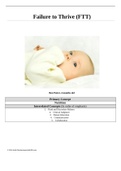
Ben Potter, 4 months old
Primary Concept
Nutrition
Interrelated Concepts (In order of emphasis)
1. Fluid and Electrolyte Balance
2. Clinical Judgment
3. Patient Education
4. Communication
5. Collaboration
© 2016 Keith Rischer/www.KeithRN.com
, UNFOLDING Reasoning Case Study: STUDENT
Failure to Thrive (FTT)
History of Present Problem:
Ben Potter is a 4-month-old male presented to the pediatrician’s office for a routine well-child exam. Ben is accompanied
by his mother, Pamela, a 19-year-old single mother. Pamela appears visibly tired and reports that Ben has been getting up
more frequently in the night, crying but refusing to eat. Pamela reports that over the past three weeks, Ben often refuses
his formula feedings and reports episodes of gagging, arching his back, and frequent crying during and immediately
following formula feedings. Pamela reports that she has interpreted this behavior as a sign that she is overfeeding Ben and
has started watering down his Similac.
According to his chart, Pamela has never breastfed Ben. In addition, the following growth measurements are noted:
Date: Weight: Length: Head Circumference:
April 22 (birth) 8 lbs 1 oz (3.7kg) 19 inches (48.3 cm) 35.5 cm
May 2 7 lbs 9 oz (3.4 kg) 19 inches (48.3 cm) 36 cm
June 19 10 lbs 8 oz (4.8 kg) 20.5 inches (52.1 cm) 38.8 cm
August 20 (current) 12 lbs 4 oz (5.6 kg) 22 inches (55.9 cm) 42.3 cm
Using the CDC chart, what percentile is Ben with weight and length?
Weight: 25%
Length: <5%
Important FYI: There is no consensus of a definition of FTT in literature (Kirkland et al 2015) but these authors define
as when weight is less than 2nd percentile for gestation corrected age and sex when plotted out on growth chart. Some
sources describe when WT less than 5%
Ben is thin and pale in appearance. Skin folds noted around his buttocks. No respiratory or neurological concerns noted.
Reflexes and muscle tone within normal limits. Ben is alert, minimally interactive, and does not make eye contact with his
mother. Ben’s anterior fontanel is flat and open. Pamela leaves the room during the assessment to make a telephone call
and smoke a cigarette. Ben’s pediatrician makes the decision to transport Ben to the local Children’s Hospital to admit him
for observation. You are the nurse assigned to care for Ben.
What would be reasons for a hospital admission based on data collected to this point?
Risk for Dehydration
Inadequate nutrition
Suspected neglect
Personal/Social History:
Ben lives with his 19-year-old mother (Pamela) and maternal grandmother (Susan) in Susan’s small two-bedroom mobile
home. Susan is 45 years old, is obese, and suffers from poorly controlled type 2 diabetes, hypertension, and smokes 2
packs per day. Susan watches Ben during the day while Pamela works part-time at a local gas station. Susan also cares for
Ben three or four nights per week while Pamela spends her nights drinking and socializing with men and other adults at
the local bar. Pamela became pregnant with Ben following a brief relationship with a 52-year-old man named Ryan. Ryan
is not involved in Ben or Pamela’s life and is currently in prison for assault.
Past Medical History (PMH):
• Pamela gave birth to Ben via spontaneous vaginal delivery at 37 weeks.
• Prenatal care received after 12 weeks due to lack of insurance.
• Maternal alcohol use during pregnancy – quantity unknown. Maternal blood alcohol level negative at delivery.
• NKDA
© 2016 Keith Rischer/www.KeithRN.com
Ben Potter, 4 months old
Primary Concept
Nutrition
Interrelated Concepts (In order of emphasis)
1. Fluid and Electrolyte Balance
2. Clinical Judgment
3. Patient Education
4. Communication
5. Collaboration
© 2016 Keith Rischer/www.KeithRN.com
, UNFOLDING Reasoning Case Study: STUDENT
Failure to Thrive (FTT)
History of Present Problem:
Ben Potter is a 4-month-old male presented to the pediatrician’s office for a routine well-child exam. Ben is accompanied
by his mother, Pamela, a 19-year-old single mother. Pamela appears visibly tired and reports that Ben has been getting up
more frequently in the night, crying but refusing to eat. Pamela reports that over the past three weeks, Ben often refuses
his formula feedings and reports episodes of gagging, arching his back, and frequent crying during and immediately
following formula feedings. Pamela reports that she has interpreted this behavior as a sign that she is overfeeding Ben and
has started watering down his Similac.
According to his chart, Pamela has never breastfed Ben. In addition, the following growth measurements are noted:
Date: Weight: Length: Head Circumference:
April 22 (birth) 8 lbs 1 oz (3.7kg) 19 inches (48.3 cm) 35.5 cm
May 2 7 lbs 9 oz (3.4 kg) 19 inches (48.3 cm) 36 cm
June 19 10 lbs 8 oz (4.8 kg) 20.5 inches (52.1 cm) 38.8 cm
August 20 (current) 12 lbs 4 oz (5.6 kg) 22 inches (55.9 cm) 42.3 cm
Using the CDC chart, what percentile is Ben with weight and length?
Weight: 25%
Length: <5%
Important FYI: There is no consensus of a definition of FTT in literature (Kirkland et al 2015) but these authors define
as when weight is less than 2nd percentile for gestation corrected age and sex when plotted out on growth chart. Some
sources describe when WT less than 5%
Ben is thin and pale in appearance. Skin folds noted around his buttocks. No respiratory or neurological concerns noted.
Reflexes and muscle tone within normal limits. Ben is alert, minimally interactive, and does not make eye contact with his
mother. Ben’s anterior fontanel is flat and open. Pamela leaves the room during the assessment to make a telephone call
and smoke a cigarette. Ben’s pediatrician makes the decision to transport Ben to the local Children’s Hospital to admit him
for observation. You are the nurse assigned to care for Ben.
What would be reasons for a hospital admission based on data collected to this point?
Risk for Dehydration
Inadequate nutrition
Suspected neglect
Personal/Social History:
Ben lives with his 19-year-old mother (Pamela) and maternal grandmother (Susan) in Susan’s small two-bedroom mobile
home. Susan is 45 years old, is obese, and suffers from poorly controlled type 2 diabetes, hypertension, and smokes 2
packs per day. Susan watches Ben during the day while Pamela works part-time at a local gas station. Susan also cares for
Ben three or four nights per week while Pamela spends her nights drinking and socializing with men and other adults at
the local bar. Pamela became pregnant with Ben following a brief relationship with a 52-year-old man named Ryan. Ryan
is not involved in Ben or Pamela’s life and is currently in prison for assault.
Past Medical History (PMH):
• Pamela gave birth to Ben via spontaneous vaginal delivery at 37 weeks.
• Prenatal care received after 12 weeks due to lack of insurance.
• Maternal alcohol use during pregnancy – quantity unknown. Maternal blood alcohol level negative at delivery.
• NKDA
© 2016 Keith Rischer/www.KeithRN.com