Forensic Psychology
, LT1
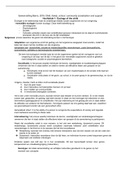
Offender Profiling; Top down Approach
→ An investigative tool employed by the police when solving crimes with the main aim to SUITED TO CERTAIN CRIME SCENES: only crimes that reveal
narrow the field of enquiry and list of suspects important detailed about the suspect e.g. rape, arson and cult killings
→ Professional profilers are called upon to work alongside police or macabre practices e.g. sadistic tourture or disection. More
→ Methods vary but compiling a profile involves careful scrutiny of the crime scene common offences such as burglary or destruction of property do not
and analysis of the evidence to generate hypothesis about the probable lead themselves to profiling because the resulting crime scene
characteristics of the offender reveals little about the offender = limited in identifying = reduces
credibility
THE AMERICAN APPROACH - TOP DOWN APPROACH
- Profiling originated in the US from the FBI in 1970s → drew on in depth TYPOLOGY CLASSIFICATION SYSTEM IS OUTDATED AND LIMITED:
interviews with 36 sexually motivated serial killers including Ted Bundy based on assumption that offenders have patterns of behaviour and
and Charles Manson motivations that remain consistent across situations and contexts
- Typology approach - offender profilers who use this method will match e.g. Alison et al suggested it is naive and informed by old fashioned
what is known about the crime and the offender to a pre existing template personality models or personality that see behaviour as being driven
the FBI developed by stable dispositional traits rather than external factors which could
- Murderers or rapists are classified as either organised or disorganised on be changing = based on static models = poor validity
the basis of evidence and this informs the subsequent police investigation
ONLY SUPPORTS ORGANISED AND NOT DISORGANISED OFFENDER:
ORGANISED & DISORGANISED TYPES OF OFFENDER Canter et al used a technique called smallest space analysis and
→ offenders have signature ‘ways of working’ which correlate with a set of social and analysed data from 100 murderers in USA. The details of each case
psychological characteristics that relate to them were examined with reference to 39 characteristics thought to be
1. Organised: plan the crime, victim deliberately targeted, high control, little disorganised/ organised killers. Findings suggested some evidence of
evidence left behind, above avg intelligence, skilled/ professional a district organised type but not disorganised = undermines
occupation, socially and sexually competent, married and maybe have classification system = lacks credibility
children
2. Disorganised: little evidence of planning, may spontaneous, crime scene BEHAVIOURS THAT DESCRIBE ORGANISED AND DISORGANISED
reflects impulsive nature, body still there and little control, lower avg IQ, CRIMES ARE NOT MUTUALLY EXCLUSIVE: variety of combinations
unskilled/ unemployed, history of sexual dysfunction and failed could occur e.g. Godwin asks how police investigators would classify
relationships, live alone and close a killed with high intelligence and sexual competance who commits a
CONSTRUCTING AN FBI PROFILE spontaneous murder where the vitims body is left (subjective) =
1. Data assimilation - profiler reviews evidence prompted other researchers to propose more detailed typological
2. Crime scene classification - organised or disorganised models e.g. Holmes suggests there are 4 types; visionary, mission,
3. Crime reconstruction - hypothesis - sequence of events, behaviour hedonistic and power/ control whilst Keppel and Walter focus on
4. Profile generation - hypothesis related to the offender different motivations they may have = questions overall credibility
, LT1
Offender Profiling; Top down Approach
→ An investigative tool employed by the police when solving crimes with the main aim to SUITED TO CERTAIN CRIME SCENES: only crimes that reveal
narrow the field of enquiry and list of suspects important detailed about the suspect e.g. rape, arson and cult killings
→ Professional profilers are called upon to work alongside police or macabre practices e.g. sadistic tourture or disection. More
→ Methods vary but compiling a profile involves careful scrutiny of the crime scene common offences such as burglary or destruction of property do not
and analysis of the evidence to generate hypothesis about the probable lead themselves to profiling because the resulting crime scene
characteristics of the offender reveals little about the offender = limited in identifying = reduces
credibility
THE AMERICAN APPROACH - TOP DOWN APPROACH
- Profiling originated in the US from the FBI in 1970s → drew on in depth TYPOLOGY CLASSIFICATION SYSTEM IS OUTDATED AND LIMITED:
interviews with 36 sexually motivated serial killers including Ted Bundy based on assumption that offenders have patterns of behaviour and
and Charles Manson motivations that remain consistent across situations and contexts
- Typology approach - offender profilers who use this method will match e.g. Alison et al suggested it is naive and informed by old fashioned
what is known about the crime and the offender to a pre existing template personality models or personality that see behaviour as being driven
the FBI developed by stable dispositional traits rather than external factors which could
- Murderers or rapists are classified as either organised or disorganised on be changing = based on static models = poor validity
the basis of evidence and this informs the subsequent police investigation
ONLY SUPPORTS ORGANISED AND NOT DISORGANISED OFFENDER:
ORGANISED & DISORGANISED TYPES OF OFFENDER Canter et al used a technique called smallest space analysis and
→ offenders have signature ‘ways of working’ which correlate with a set of social and analysed data from 100 murderers in USA. The details of each case
psychological characteristics that relate to them were examined with reference to 39 characteristics thought to be
1. Organised: plan the crime, victim deliberately targeted, high control, little disorganised/ organised killers. Findings suggested some evidence of
evidence left behind, above avg intelligence, skilled/ professional a district organised type but not disorganised = undermines
occupation, socially and sexually competent, married and maybe have classification system = lacks credibility
children
2. Disorganised: little evidence of planning, may spontaneous, crime scene BEHAVIOURS THAT DESCRIBE ORGANISED AND DISORGANISED
reflects impulsive nature, body still there and little control, lower avg IQ, CRIMES ARE NOT MUTUALLY EXCLUSIVE: variety of combinations
unskilled/ unemployed, history of sexual dysfunction and failed could occur e.g. Godwin asks how police investigators would classify
relationships, live alone and close a killed with high intelligence and sexual competance who commits a
CONSTRUCTING AN FBI PROFILE spontaneous murder where the vitims body is left (subjective) =
1. Data assimilation - profiler reviews evidence prompted other researchers to propose more detailed typological
2. Crime scene classification - organised or disorganised models e.g. Holmes suggests there are 4 types; visionary, mission,
3. Crime reconstruction - hypothesis - sequence of events, behaviour hedonistic and power/ control whilst Keppel and Walter focus on
4. Profile generation - hypothesis related to the offender different motivations they may have = questions overall credibility