methods of SNS - (psycho)physiology
- psychological methods: behavioural and cognitive measures
- physiological methods: skin conductance, heart-rate, muscle activity (EMG)
psychological methods
- behavioral and cognitive measures
- these are essential measures, because biological measures without additional
information make no sense in social neuroscience
1. subjective measures
- emotional experience (feeling)
- using interviews or questionnaires
- POMS: profile of mood states
- personality questionnaires
- STAI/STAS (state-trait anxiety/anger)
- LSAS (Liebowitz social anxiety scale)
- ES-SQ (empathy/systemizing, related to autism)
- BIS/BAS (behavioral inhibition/activation)
- many more
- these data is useful
- as control variable
- for correlation with other measure
- to compare different studies (validate questionnaires)
2. observational measures
- frequency of behaviors, measured by scoring and counting
- creating a situation and measuring: what will the participant do?
- often used in animals and infant studies
- methods
- camera (blinding and inter-rater reliability to make sure the study is
valid and reliable)
- eye-tracking
3. performance measures
- reaction time and accuracy
- create a social or emotional situation and
measure the reaction time and accuracy
changes
- speed-accuracy trade-off
- restricted, but ‘real’ behavior
- stable because of many, many measurements
- the faster a participant is, the more error that will be made
- bringing a participant in social or emotional situation and measure how
it affects the results
- IQ-tests
- (emotion) recognition tests
- selective attention
- implicit association task
- (Gaze) cueing tasks
- so the participant is performing a task while being distracted
1
, - classical stroop task: interference of color and word
- emotional stroop: interference of emotion
- facial fear stroop: interference of expression ( angry or happy
faces → participants with high trait angriness are slowing at
naming the color after presentation of an angry face relative
to a neutral face)
summary
- subjective measures: emotional experience, personality, questionnaires
- observational measures: frequency of behaviors
- performance measures: reaction time, accuracy,
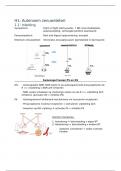
parasympathetic and sympathetic nervous system
- the body is controlled by the brain through the spinal cord
- sympathetic nervous system
- gets activated when your stressed or activated
- your heart-rate will go up, pupil gets bigger, digesting system goes down to
prepare the body for action
- parasympathetic nervous system
- gets activated when your relaxed and in rest
- your heart-rate will go down, digesting system will digest your food because
you have the time to do that
(electro)physiological methods
- skin conductance, heart-rate, muscle activity (EMG)
- examples
- sympathetic nervous system (stress): heart-rate goes up, pupils get bigger,
digesting system goes down to prepare the body for action
- parasympathetic nervous system (rest): heart-rate goes down, digesting
system will now digest your food because you have the time to do that
2
- psychological methods: behavioural and cognitive measures
- physiological methods: skin conductance, heart-rate, muscle activity (EMG)
psychological methods
- behavioral and cognitive measures
- these are essential measures, because biological measures without additional
information make no sense in social neuroscience
1. subjective measures
- emotional experience (feeling)
- using interviews or questionnaires
- POMS: profile of mood states
- personality questionnaires
- STAI/STAS (state-trait anxiety/anger)
- LSAS (Liebowitz social anxiety scale)
- ES-SQ (empathy/systemizing, related to autism)
- BIS/BAS (behavioral inhibition/activation)
- many more
- these data is useful
- as control variable
- for correlation with other measure
- to compare different studies (validate questionnaires)
2. observational measures
- frequency of behaviors, measured by scoring and counting
- creating a situation and measuring: what will the participant do?
- often used in animals and infant studies
- methods
- camera (blinding and inter-rater reliability to make sure the study is
valid and reliable)
- eye-tracking
3. performance measures
- reaction time and accuracy
- create a social or emotional situation and
measure the reaction time and accuracy
changes
- speed-accuracy trade-off
- restricted, but ‘real’ behavior
- stable because of many, many measurements
- the faster a participant is, the more error that will be made
- bringing a participant in social or emotional situation and measure how
it affects the results
- IQ-tests
- (emotion) recognition tests
- selective attention
- implicit association task
- (Gaze) cueing tasks
- so the participant is performing a task while being distracted
1
, - classical stroop task: interference of color and word
- emotional stroop: interference of emotion
- facial fear stroop: interference of expression ( angry or happy
faces → participants with high trait angriness are slowing at
naming the color after presentation of an angry face relative
to a neutral face)
summary
- subjective measures: emotional experience, personality, questionnaires
- observational measures: frequency of behaviors
- performance measures: reaction time, accuracy,
parasympathetic and sympathetic nervous system
- the body is controlled by the brain through the spinal cord
- sympathetic nervous system
- gets activated when your stressed or activated
- your heart-rate will go up, pupil gets bigger, digesting system goes down to
prepare the body for action
- parasympathetic nervous system
- gets activated when your relaxed and in rest
- your heart-rate will go down, digesting system will digest your food because
you have the time to do that
(electro)physiological methods
- skin conductance, heart-rate, muscle activity (EMG)
- examples
- sympathetic nervous system (stress): heart-rate goes up, pupils get bigger,
digesting system goes down to prepare the body for action
- parasympathetic nervous system (rest): heart-rate goes down, digesting
system will now digest your food because you have the time to do that
2