K: knowledge clip Attitudes_Context
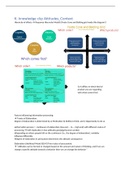
Hierarchy of effects Response Hierarchy Models (Foote Cone and Belding grid made this diagram!)
So it differs in which kind of
product you are regarding,
with what comes first!
Factors influencing information processing:
Tenets of Elaboration:
Degree of elaboration is determined by a) Motivation b) Ability to think, and c) Opportunity to do so
•Information process = continuum of elaboration (low end ... to ... high end) with different routes of
processing heft implicaties in hoe attitudes gewijzigd kunnen worden
•Depending on where people fall on the continuum (i.e., the degree of elaboration), variables
influence differently
•Degree of elaboration in persuasion determines the attitude consequence
Elaboration Likelihood Model (ELM) (Two routes of persuasion):
“Attitudes can be formed or changed based on the amount and nature of thinking, and if we can
change a specific attitude towards a behavior then we can change the behavior ”
,•We tend to use systematic processing when: (we are high involved and ready to think about it)
–we are strongly motivated, and
–we have a high ability and opportunity to do so
•We tend to use heuristic ( = a shortcut) processing when:
–we are unmotivated, or
–we lack the ability and/or opportunity to systematically process info
Two routes to attitude change:
1. Central route :
-involvement high, and
-motivation and ability and opportunity are high
consumers attend message carefully →major determinant of attitude change: argument quality
2. Peripheral route (= the short cut route!)
-involvement low, and/or
-motivation and/or, ability and/or opportunity are low
consumers do not carefully consider the message →major determinant of attitude change:
peripheral cues
To wrap it up:
•Central Route:
–arguments = explicit reason-why (good service, good quality, etc.)
–true-false, strong-weak
–requires thinking (inference) e.g., top quality, prompt service, most reliable, best price
•Periferal Route:
–cues = implicit reason-why
–almost automatic (people already know the products)
–allows shortcuts (heuristics) e.g., source attractiveness, music, now on sale, number of arguments
Central route (example: Miele “er is geen betere”):
•Strong arguments will produce positive shifts in attitude resulting in change:
•that is persistent over time.
•that resists counter persuasion.
•that predicts future behavior.
•Weak arguments can lead to negative boomerang effects paralleling the positive effects of strong
arguments. (men heft een luisterend oor en staat voor je open, maar als je dan met slechte
argumenten komt (denk aan 50+, of CDA), dan geeft dat een enorm boomerang effect)
Peripheral route:
•Most messages are processed through the peripheral route (attitude changes
without issue-relevant thinking).
•Peripheral route change doesn’t have the impact of message elaboration.
•Cues include tangible rewards, source credibility, and celebrity endorsement
(see also Cialdini’s six persuasion elements).
Jenner is een voorbeeld van hoe een celebrity invloed kan hebben op de
perifere cues!
, Heuristic cues (examples):
The two routes in the SOR-model
FCB = Food Colding Belding Grid
Attitude: an overall evaluation that expresses how much we like or dislike an object, issue, person or
action
They are learned, and they tend to persist over time
Are a mix of cognitive, affective and conative components
, Ao = attitude toward object (deze Mercedes is om
deze redenen mijn drrom auto)
Aact / Ab= attitude towards the act (dusk open van de
Mercedes doen we maar niet)
•Attitudes have been shown to affect and predict
various sorts of behavior, including environmental
behavior, consumer behavior, voting behavior, contraceptive use, marijuana use, discrimination and
many others (see for reviews, Eagly& Chaiken, 1993; Fazio, 1995)
•Attitudes have a motivational quality, that is, they might propel a consumer toward a particular
behavior or repel the consumer away from a particular behavior
•Attitudes perform multiple functions: i.e., we develop attitudes: (a) simply on the basis of whether
the product provides pleasure or pain (utilitarian) (b) because of what the product expresses about
us as a person (value expressive) (c) to protect and defend one's egos and images against external
influences and internal feelings of short-coming (ego-defensive) (d) as a means of organizing beliefs
about objects and their meaning or activities such as brands and shopping
•The goal of attitude research in marketing is to increase sales by better satisfying customer needs.
•Awareness of consumer attitudes is of paramount importance to both goods and services marketers
in designing marketing strategies.
•An understanding of consumer attitudes has very basic implications for marketing, for two reasons.
–Firstly, attitudes are based on beliefs consumers hold about the attributes or features of the
products being evaluated. In many instances, these attributes form the basis for the development of
marketing strategies.
–Secondly, attitudes are primary causes of behaviors which makes them very relevant to marketers
who want to understand why consumers buy or do not buy their products.
Attitude concept: (= summary last big lines!)
We want consumers to hold positive attitudes about us
We want to change consumers attitudes positive
We measure consumer attitudes all the time
Etc.
Hierarchy of effects Response Hierarchy Models (Foote Cone and Belding grid made this diagram!)
So it differs in which kind of
product you are regarding,
with what comes first!
Factors influencing information processing:
Tenets of Elaboration:
Degree of elaboration is determined by a) Motivation b) Ability to think, and c) Opportunity to do so
•Information process = continuum of elaboration (low end ... to ... high end) with different routes of
processing heft implicaties in hoe attitudes gewijzigd kunnen worden
•Depending on where people fall on the continuum (i.e., the degree of elaboration), variables
influence differently
•Degree of elaboration in persuasion determines the attitude consequence
Elaboration Likelihood Model (ELM) (Two routes of persuasion):
“Attitudes can be formed or changed based on the amount and nature of thinking, and if we can
change a specific attitude towards a behavior then we can change the behavior ”
,•We tend to use systematic processing when: (we are high involved and ready to think about it)
–we are strongly motivated, and
–we have a high ability and opportunity to do so
•We tend to use heuristic ( = a shortcut) processing when:
–we are unmotivated, or
–we lack the ability and/or opportunity to systematically process info
Two routes to attitude change:
1. Central route :
-involvement high, and
-motivation and ability and opportunity are high
consumers attend message carefully →major determinant of attitude change: argument quality
2. Peripheral route (= the short cut route!)
-involvement low, and/or
-motivation and/or, ability and/or opportunity are low
consumers do not carefully consider the message →major determinant of attitude change:
peripheral cues
To wrap it up:
•Central Route:
–arguments = explicit reason-why (good service, good quality, etc.)
–true-false, strong-weak
–requires thinking (inference) e.g., top quality, prompt service, most reliable, best price
•Periferal Route:
–cues = implicit reason-why
–almost automatic (people already know the products)
–allows shortcuts (heuristics) e.g., source attractiveness, music, now on sale, number of arguments
Central route (example: Miele “er is geen betere”):
•Strong arguments will produce positive shifts in attitude resulting in change:
•that is persistent over time.
•that resists counter persuasion.
•that predicts future behavior.
•Weak arguments can lead to negative boomerang effects paralleling the positive effects of strong
arguments. (men heft een luisterend oor en staat voor je open, maar als je dan met slechte
argumenten komt (denk aan 50+, of CDA), dan geeft dat een enorm boomerang effect)
Peripheral route:
•Most messages are processed through the peripheral route (attitude changes
without issue-relevant thinking).
•Peripheral route change doesn’t have the impact of message elaboration.
•Cues include tangible rewards, source credibility, and celebrity endorsement
(see also Cialdini’s six persuasion elements).
Jenner is een voorbeeld van hoe een celebrity invloed kan hebben op de
perifere cues!
, Heuristic cues (examples):
The two routes in the SOR-model
FCB = Food Colding Belding Grid
Attitude: an overall evaluation that expresses how much we like or dislike an object, issue, person or
action
They are learned, and they tend to persist over time
Are a mix of cognitive, affective and conative components
, Ao = attitude toward object (deze Mercedes is om
deze redenen mijn drrom auto)
Aact / Ab= attitude towards the act (dusk open van de
Mercedes doen we maar niet)
•Attitudes have been shown to affect and predict
various sorts of behavior, including environmental
behavior, consumer behavior, voting behavior, contraceptive use, marijuana use, discrimination and
many others (see for reviews, Eagly& Chaiken, 1993; Fazio, 1995)
•Attitudes have a motivational quality, that is, they might propel a consumer toward a particular
behavior or repel the consumer away from a particular behavior
•Attitudes perform multiple functions: i.e., we develop attitudes: (a) simply on the basis of whether
the product provides pleasure or pain (utilitarian) (b) because of what the product expresses about
us as a person (value expressive) (c) to protect and defend one's egos and images against external
influences and internal feelings of short-coming (ego-defensive) (d) as a means of organizing beliefs
about objects and their meaning or activities such as brands and shopping
•The goal of attitude research in marketing is to increase sales by better satisfying customer needs.
•Awareness of consumer attitudes is of paramount importance to both goods and services marketers
in designing marketing strategies.
•An understanding of consumer attitudes has very basic implications for marketing, for two reasons.
–Firstly, attitudes are based on beliefs consumers hold about the attributes or features of the
products being evaluated. In many instances, these attributes form the basis for the development of
marketing strategies.
–Secondly, attitudes are primary causes of behaviors which makes them very relevant to marketers
who want to understand why consumers buy or do not buy their products.
Attitude concept: (= summary last big lines!)
We want consumers to hold positive attitudes about us
We want to change consumers attitudes positive
We measure consumer attitudes all the time
Etc.