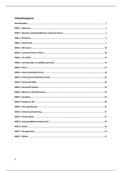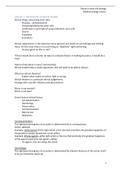
Table of contents - DEJ Readings
1
LECTURE 1 4
Maussen, Hakhverdian: Social and political inequality 4
Tilly: Durable inequalities 6
LECTURE 2 11
Pierik: Developing responsibility-sensitive egalitarianism: A synthesis of five decades of
liberal-egalitarian theorizing 11
Nussbaum: A woman seeking justice 16
LECTURE 3 18
Piketty and Saez: Inequality in the long run 18
Bourdieu: The forms of capital 22
Lehmann: ‘I just didn’t feel like I fit in’: The role of habitus in university drop-out decisions
26
LECTURE 4 30
West and Zimmerman: Doing Gender 30
Celis et al.: Introduction: Gender and politics: A gendered world, a gendered discipline 35
LECTURE 5 39
Robeyns: When will society be gender just? 39
Brighouse and Wright: Strong gender egalitarianism 43
Lewis: What instruments to foster what kind of gender equality? The problem of
gendered inequalities in the division of paid and unpaid work 46
LECTURE 6 51
Puwar: Dissonant bodies 51
Anderson, Chapter 3: Segregation, racial stigma and discrimination 55
LECTURE 7 60
Hankivsky and Jordan-Zachery: Introduction: Bringing intersectionality to public policy =>
Wrong reading 60
Hankivsky and Cormier: Intersectionality and public policy: Some lessons for existing
models 63
Fredman: Double Trouble: Multiple discrimination and EU law 69
LECTURE 8 70
Snow and Owens: Social movements and social inequality: Toward a more balanced
assessment of relationship 70
Holzhacker: National and transnational strategies of LGBT civil society organisations in
different political environments: Modes of interaction in Western and Eastern Europe for
equality 77
LECTURE 9 83
Paxton: Women’s suffrage in the measurement of democracy: Problems of
operationalisation 83
1
, Waylen: Engendering the “crisis of democracy”: institutions, representation and
participation 88
Baldez: Women’s movements and democratic transition in Chile, Brazil, East Germany
and Poland 93
LECTURE 10 97
Smith, Chapter 1: Studying democratic innovations: an analytical framework 97
Smith, Chapter 2: Popular assemblies: from New England town meetings to participatory
budgeting 103
Afsahi: Gender differences in willingness and capacity for deliberation 113
LECTURE 11 118
Peters: Democratic representation and political inequality: how social differences
translate into differential representation 118
Mansbridge: Should blacks represent blacks and women represent women? A
contingent “Yes” 123
LECTURE 12 129
Burchardt: Capabilities and disability: The capabilities framework and the social model of
disability 129
Monforte and Dufour: Mobilizing in borderline citizenship regimes: A comparative
analysis of undocumented migrants’ collective actions 135
Anderson, Chapter 5: Democratic ideals and segregation 142
FURTHER READINGS 148
Anderson, Chapter 1: Segregation and social inequality 148
Anderson, Chapter 2: Racial segregation and material inequality in the United States 152
Anderson, Chapter 4: Racial segregation today: A normative assessment 155
Anderson, Chapter 5: Democratic ideals and segregation 161
Anderson, Chapter 6: The imperative of integration 167
Anderson, Chapter 7: Understanding affirmative action 172
Anderson, Chapter 8: The folly and incoherence of colorblindness 178
Anderson, Chapter 9: The ordeal and promise of integration 181
Milanovic: Introduction 184
Milanovic: Chapter 1: The rise of the global middle class and global plutocracy 185
Milanovic: Chapter 3: Inequality among countries 190
Milanovic: Chapter 5: What Next? 195
Rodenberg and Wagenaar: Essentializing ´Black Pete’: Competing narratives
surrounding the Sinterklaas tradition in the Netherlands 199
Van den Brink and Benschop: Gender practices in the construction of academic
excellence: Sheep with five legs 203
Wängerud: Women in parliaments: Descriptive and substantive representation 208
Fuwa: Macro-level gender inequality and the division of household labor in 22 countries
213
Giger et al.: The poor representation of the poor in a comparative perspective 218
Lister: Inclusive citizenship: Realizing the potential 221
Harding: After the neutrality ideal: Science, politics and “strong objectivity” 225
2
,3
, LECTURE 1
Maussen, Hakhverdian: Social and political inequality
1. Introduction
In public discourse, political and social inequality is gaining momentum in recent years (e.g.
Occupy movement in NL; wealth gap concerns).
Social inequality is a subject of research in political science in at least two ways:
- Social inequality leads to an inexhaustible breeding ground for potential conflict
- Interest in the relationship between social inequality and inequality in terms of politics
and power; relationship between social and political power
2. Equality and inequality, both social and political
Social inequality = Unequal distribution of life chances among different people and groups
- Life chances enable the realisation of goals, ambitions and expectations.
- Life chances are determined by the access to resources.
Distinction between social and political inequality:
- Social inequality = unequal distribution of life chances
- Political inequality = unequal opportunities to influence decision-making
Social inequalities are almost always pointed out, but they are not always regarded as
objectionable or unjust. E.g. in colonial times, social inequality was justified by racist
ideologies.
The rise of modern natural law (Rousseau, Locke, Hobbes) was a major turning point in the
thinking of social inequality => people were equal.
In the 18th century, critiques on social and political inequality arose in the lack of democracy.
Modern natural law, the enlightenment and the democratic revolutions converged in a
fundamental criticism of feudal society (social and political privileges intertwined with
lineage).
Tocquevill travelled to the US in the 1830s and wrote that Americans were passionate about
equality.
In 1948, the UNDHR formulated that there was a moral equivalence of all people.
3. Social inequality
Diversity = When entities are not the same, they are different.
Inequality = More versus less, better versus worse, healthier versus more unhealthy and so
on.
In society, social differentiation (occupation, roles, etc.) go hand in hand with social
inequalities.
4
1
LECTURE 1 4
Maussen, Hakhverdian: Social and political inequality 4
Tilly: Durable inequalities 6
LECTURE 2 11
Pierik: Developing responsibility-sensitive egalitarianism: A synthesis of five decades of
liberal-egalitarian theorizing 11
Nussbaum: A woman seeking justice 16
LECTURE 3 18
Piketty and Saez: Inequality in the long run 18
Bourdieu: The forms of capital 22
Lehmann: ‘I just didn’t feel like I fit in’: The role of habitus in university drop-out decisions
26
LECTURE 4 30
West and Zimmerman: Doing Gender 30
Celis et al.: Introduction: Gender and politics: A gendered world, a gendered discipline 35
LECTURE 5 39
Robeyns: When will society be gender just? 39
Brighouse and Wright: Strong gender egalitarianism 43
Lewis: What instruments to foster what kind of gender equality? The problem of
gendered inequalities in the division of paid and unpaid work 46
LECTURE 6 51
Puwar: Dissonant bodies 51
Anderson, Chapter 3: Segregation, racial stigma and discrimination 55
LECTURE 7 60
Hankivsky and Jordan-Zachery: Introduction: Bringing intersectionality to public policy =>
Wrong reading 60
Hankivsky and Cormier: Intersectionality and public policy: Some lessons for existing
models 63
Fredman: Double Trouble: Multiple discrimination and EU law 69
LECTURE 8 70
Snow and Owens: Social movements and social inequality: Toward a more balanced
assessment of relationship 70
Holzhacker: National and transnational strategies of LGBT civil society organisations in
different political environments: Modes of interaction in Western and Eastern Europe for
equality 77
LECTURE 9 83
Paxton: Women’s suffrage in the measurement of democracy: Problems of
operationalisation 83
1
, Waylen: Engendering the “crisis of democracy”: institutions, representation and
participation 88
Baldez: Women’s movements and democratic transition in Chile, Brazil, East Germany
and Poland 93
LECTURE 10 97
Smith, Chapter 1: Studying democratic innovations: an analytical framework 97
Smith, Chapter 2: Popular assemblies: from New England town meetings to participatory
budgeting 103
Afsahi: Gender differences in willingness and capacity for deliberation 113
LECTURE 11 118
Peters: Democratic representation and political inequality: how social differences
translate into differential representation 118
Mansbridge: Should blacks represent blacks and women represent women? A
contingent “Yes” 123
LECTURE 12 129
Burchardt: Capabilities and disability: The capabilities framework and the social model of
disability 129
Monforte and Dufour: Mobilizing in borderline citizenship regimes: A comparative
analysis of undocumented migrants’ collective actions 135
Anderson, Chapter 5: Democratic ideals and segregation 142
FURTHER READINGS 148
Anderson, Chapter 1: Segregation and social inequality 148
Anderson, Chapter 2: Racial segregation and material inequality in the United States 152
Anderson, Chapter 4: Racial segregation today: A normative assessment 155
Anderson, Chapter 5: Democratic ideals and segregation 161
Anderson, Chapter 6: The imperative of integration 167
Anderson, Chapter 7: Understanding affirmative action 172
Anderson, Chapter 8: The folly and incoherence of colorblindness 178
Anderson, Chapter 9: The ordeal and promise of integration 181
Milanovic: Introduction 184
Milanovic: Chapter 1: The rise of the global middle class and global plutocracy 185
Milanovic: Chapter 3: Inequality among countries 190
Milanovic: Chapter 5: What Next? 195
Rodenberg and Wagenaar: Essentializing ´Black Pete’: Competing narratives
surrounding the Sinterklaas tradition in the Netherlands 199
Van den Brink and Benschop: Gender practices in the construction of academic
excellence: Sheep with five legs 203
Wängerud: Women in parliaments: Descriptive and substantive representation 208
Fuwa: Macro-level gender inequality and the division of household labor in 22 countries
213
Giger et al.: The poor representation of the poor in a comparative perspective 218
Lister: Inclusive citizenship: Realizing the potential 221
Harding: After the neutrality ideal: Science, politics and “strong objectivity” 225
2
,3
, LECTURE 1
Maussen, Hakhverdian: Social and political inequality
1. Introduction
In public discourse, political and social inequality is gaining momentum in recent years (e.g.
Occupy movement in NL; wealth gap concerns).
Social inequality is a subject of research in political science in at least two ways:
- Social inequality leads to an inexhaustible breeding ground for potential conflict
- Interest in the relationship between social inequality and inequality in terms of politics
and power; relationship between social and political power
2. Equality and inequality, both social and political
Social inequality = Unequal distribution of life chances among different people and groups
- Life chances enable the realisation of goals, ambitions and expectations.
- Life chances are determined by the access to resources.
Distinction between social and political inequality:
- Social inequality = unequal distribution of life chances
- Political inequality = unequal opportunities to influence decision-making
Social inequalities are almost always pointed out, but they are not always regarded as
objectionable or unjust. E.g. in colonial times, social inequality was justified by racist
ideologies.
The rise of modern natural law (Rousseau, Locke, Hobbes) was a major turning point in the
thinking of social inequality => people were equal.
In the 18th century, critiques on social and political inequality arose in the lack of democracy.
Modern natural law, the enlightenment and the democratic revolutions converged in a
fundamental criticism of feudal society (social and political privileges intertwined with
lineage).
Tocquevill travelled to the US in the 1830s and wrote that Americans were passionate about
equality.
In 1948, the UNDHR formulated that there was a moral equivalence of all people.
3. Social inequality
Diversity = When entities are not the same, they are different.
Inequality = More versus less, better versus worse, healthier versus more unhealthy and so
on.
In society, social differentiation (occupation, roles, etc.) go hand in hand with social
inequalities.
4