Summary MARKETING 101
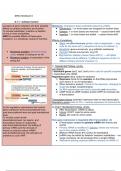
Chapter 1: An Introduction to Integrated Marketing Communications Focuses Charmin toilet tissue and how Procter & Gamble has added social media to traditional media to the IMC program for the brand. Also discusses how Charmin is one of the most creative brands on social media. Charmin is one of the brands being featured in the new video cases being produced for 11e. KEY TERMS Exchange : may be the core phenomenon or domain for study in marketing Marketing : Marketing is the activity, set of institutions, and processes for creating, communicating, delivering and exchanging offerings that have value for customers, clients, partners, and society at large Value : Value is the customer’s perception of all the benefits of a product or service weighed against all the costs of acquiring and consuming it. Marketing mix : Product, price, place (distribution), and promotion Integrated marketing communications (IMC) : involves coordinating the various promotional elements and other marketing activities that communicate with a firm’s customers Sustainability : development that meets the needs of the current generation without compromising the ability of future generations to meet their needs Promotion : the coordination of all seller-initiated efforts to set up channels of information and persuasion in order to sell goods and services or promote an idea Promotional mix : The basic tools used to accomplish an organization’s communication objectives Advertising : any paid form of nonpersonal communication about an organization, product, service, or idea by an identified sponsor Direct marketing : organizations communicate directly with target customers to generate a response and/ or a transaction Direct-response advertising : a product is promoted through an ad that encourages the consumer to purchase directly from the manufacturer Omnichannel retailing : companies sell their products through multiple distribution channels including retail stores, online, catalogs, and mobile apps Interactive media: allow for a two-way flow of communication whereby users can participate in and modify the form and content of the information they receive in real time (allow users to perform a variety of activities such as receive, alter, and share information and images; make inquiries; respond to questions; and even make purchases online) Social media : online means of communication and interactions among people that are used to create, share, and exchange content such as information, insights, experiences, perspectives, and even media themselves Mobile marketing : promotional activity designed for delivery to cell phones, smartphones, tablets, and other handheld devices including apps, messaging, commerce, and customer relationship management Sales promotion: marketing activities that provide extra value or incentives to the sales force, the distributors, or the ultimate consumer and can stimulate immediate sales Publicity: non-personal communications regarding an organization, product, service, or idea not directly paid for or run under identified sponsorship Public relations: When an organization systematically plans and distributes information in an attempt to control and manage its image and the nature of the publicity it receives. “a strategic communication process that builds mutually beneficial relationships between organizations and their publics.” Personal selling: a form of person-to-person communication in which a seller attempts to assist and/or persuade prospective buyers to purchase the company’s product or service or to act on an idea Touch point: A touch point refers to each and every opportunity the customer has to see or hear about the company and/or its brands or have an encounter or experience with it. Like Yelp reviews Paid media: channels a marketer pays to leverage and includes traditional advertising media such as television, radio, print, outdoor, and direct mail as well as various forms of digital advertising such as paid search and online display and video ads Owned media: channels of marketing communication that a company controls, such as its websites, blogs, and mobile apps as well as social media channels such as Facebook, Twitter, Instagram, and YouTube Earned media: exposure for a company or brand that it did not have to pay for and is generated by outside entities such as the media or the general public Integrated marketing communications management: the process of planning, executing, evaluating, and controlling the use of the various promotional-mix elements to effectively communicate with target audiences. Integrated marketing communications plan: provides the framework for developing, implementing, and controlling the organization’s IMC program. Those involved with the IMC program must decide on the role and function of the specific elements of the promotional mix, develop strategies for each element, determine how they will be integrated, plan for their implementation, and consider how to evaluate the results achieved and make any necessary adjustments Marketing plan: a written document that describes the overall marketing strategy and programs developed for an organization, a particular product line, or a brand. Marketing plans can take several forms but generally include five basic elements 1. A detailed situation analysis that consists of an internal marketing audit and review and an external analysis of the market competition and environmental factors. 2. Specific marketing objectives that provide direction, a time frame for marketing activities, and a mechanism for measuring performance. 3. A marketing strategy and program that include selection of target market(s) and decisions and plans for the four elements of the marketing mix. 4. A program for implementing the marketing strategy, including determining specific tasks to be performed and responsibilities. 5. A process for monitoring and evaluating performance and providing feedback so that proper control can be maintained and any necessary changes can be made in the overall marketing strategy or tactics. Internal analysis: assesses relevant areas involving the product/service offering and the firm itself External analysis: focuses on factors such as characteristics of the firm’s customers, market segments, positioning strategies, and competitors Internal Analysis External Analysis Assessment of firm’s promotional organization and capabilities Review of firm’s previous promotional programs and results Assessment of firm or brand image and those implications for promotion Assessment of strengths and weaknesses of product or service customer analysis Competitive analysis Environmental analysis Marketing objectives: what is to be accomplished by the overall marketing program. Communication objectives: what the firm seeks to accomplish with its promotional program Chapter 2: The Role of IMC in the Marketing Process Focuses on “Creating a New Image for Buick” and discusses Buick’s attempt to reposition the 100+-year-old auto to appeal to a younger market. KEY TERMS strategic marketing plan: A strategic marketing plan usually evolves from an organization’s overall corporate strategy and serves as a guide for specific marketing programs and policies market segments: target markets the company wishes to pursue market opportunities: areas where there are favorable demand trends, where the company believes customer needs and opportunities are not being satisfied, and where it can compete effectively competitive advantage: something special a firm does or has that gives it an edge over competitors. target marketing: involves four basic steps 1. identifying markets with unfulfilled needs 2. segmenting the market 3. targeting specific segments 4. positioning one’s product or service through marketing strategies. market segmentation: dividing a market into distinct groups that (1) have common needs and (2) will respond similarly to a marketing action. geographic segmentation: markets are divided into different geographic units. These units may include nations, states, counties, or even neighborhoods. Consumers often have different buying habits depending on where they reside demographic segmentation: Dividing the market on the basis of demographic variables such as age, sex, family size, education, income, and social class is called demographic segmentation psychographic segmentation: Dividing the market on the basis of personality, lifecycles, and/or lifestyles is referred to as psychographic segmentation. behavioristic segmentation: Dividing consumers into groups according to their usage, loyalties, or buying responses to a product is behavioristic segmentation. 80–20 rule: 20 percent of their buyers account for 80 percent of their sales volume. benefit segmentation: The grouping of consumers on the basis of attributes sought in a product is known as benefit segmentation and is widely used undifferentiated marketing: ignoring segment differences and offering just one product or service to the entire market differentiated marketing: marketing in a number of segments, developing separate marketing strategies for each. concentrated marketing: is used when the firm selects one segment and attempts to capture a large share of this market. Positioning: “the art and science of fitting the product or service to one or more segments of the broad market in such a way as to set it meaningfully apart from competition.”1 Salient attributes: (those that are important to consumers and are the basis for making a purchase decision) Repositioning: usually occurs because of declining or stagnant sales or because of anticipated opportunities in other market positions. Repositioning is often difficult to accomplish because of entrenched perceptions about and attitudes toward the product or brand. product symbolism: what a product or brand means to consumers and what they experience in purchasing and using it. brand identity: name, logo, symbols, design, packaging, and image of associations held by consumers. brand equity: intangible asset of added value or goodwill that results from the favorable image, impressions of differentiation, and/or the strength of consumer attachment to a company name, brand name, or trademark marketing channels: the place element of the marketing mix, are “sets of interdependent organizations involved in the process of making a product or service available for use or consumption.” direct channel: selling to consumers directly. firms that use direct-response advertising, telemarketing, or the Internet to sell their products indirect channel: using a network of wholesalers (institutions that sell to other resellers) and/or retailers (which sell primarily to the final consumer) promotional push strategy: Programs designed to persuade the trade to stock, merchandise, and promote a manufacturer’s products trade advertising: to interest wholesalers and retailers and motivate them to purchase its products for resale to their customers. promotional pull strategy: spending money on advertising and sales promotion efforts directed toward the ultimate consumer. Chapter 3: Organizing for Advertising and Promotion: The Role of Ad Agencies and Other Marketing Communication Organizations KEY TERMS Clients: the advertisers advertising agency: an outside firm that specializes in the creation, production, and/or placement of the communications message and that may provide other services to facilitate the marketing and promotions process. media organizations: The primary function of most media is to provide information or entertainment to their subscribers, viewers, or readers. But from the perspective of the promotional planner, the purpose of media is to provide an environment for the firm’s marketing communications messages. The media must have editorial or program content that attracts consumers so that advertisers and their agencies will want to buy time or space with them specialized marketing communication services: They include direct-marketing agencies, sales promotion agencies, digital/interactive agencies, and public relations firms. collateral services: the wide range of support functions used by advertisers, agencies, media organizations, and specialized marketing communication firms. advertising manager: responsible for all promotions activities except sales (in some companies this individual has the title of marketing communications manager). in-house agency: an advertising agency that is set up, owned, and operated by the advertiser centralized system: In the most common example of a centralized system, the advertising or marcom manager controls the entire promotions operation, including budgeting, coordinating creation and production of ads, planning media schedules, and monitoring and administering the sales promotions programs for all the company’s products or services. decentralized system: separate manufacturing, research and development, sales, and marketing departments for various divisions, product lines, or businesses brand manager: responsible for the total management of the brand, including planning, budgeting, sales, and profit performance category management system: additional layer(s) of management above the brand managers to coordinate the efforts of all the brand managers handling a related group of products. This system—generally referred to as a category management system—includes category managers as well as brand and advertising managers. The category manager oversees management of the entire product category and focuses on the strategic role of the various brands in order to build profits and market share. Billings: the amount of client money agencies spend on media purchases and other equivalent activities Superagencies: During the late 1980s and into the 90s, the advertising industry underwent major changes as large agencies merged with or acquired other agencies and support organizations to form large advertising organizations, or superagencies. These superagencies were formed so that agencies could provide clients with integrated marketing communications services worldwide. full-service agency: offers its clients a full range of marketing, communications, and promotions services, including planning, creating, and producing the advertising; performing research; and selecting media. A full-service agency may also offer non-advertising services such as strategic market planning; sales promotions, direct marketing, and digital/interactive capabilities; package design; and public relations and publicity. account executive: responsible for understanding the advertiser’s marketing and promotions needs and interpreting them to agency personnel. account planner: individuals that gather information that is relevant to the client’s product or service and can be used in the development of the creative strategy as well as other aspects of the IMC campaign. Copywriter: The individuals who conceive the ideas for the ads and write the headlines, subheads, and body copy departmental system: each of the agency functions shown in Figure 3–6 is set up as a separate department and is called on as needed to perform its specialty and serve all of the agency’s clients. group system: individuals from each department work together in groups to service particular accounts. creative boutique: small ad agencies that provide only creative services and have long been an important part of the advertising industry. media specialist companies: organizations that specialize in the buying of media, particularly for television and digital advertising. programmatic buying: wide range of technologies that are automating the buying, placement, and optimization of advertising media commission system: the agency receives a specified commission (usually 15 percent) from the media on any advertising time or space it purchases for its client negotiated commission: the commissions average from 8 to 10 percent or are based on a sliding scale that becomes lower as the clients’ media expenditures increase. fixed-fee method: the agency charges a basic monthly fee for all of its services and credits to the client any media commissions earned. the media commissions received by the agency are credited against the fee. If the commissions are less than the agreed-on fee, the client must make up the difference. If the agency does much work for the client in non-commissionable media, the fee may be charged over and above the commissions received. fee–commission combination: cost-plus system: the client agrees to pay the agency a fee based on the costs of its work plus some agreed-on profit margin (often a percentage of total costs). This system requires that the agency keep detailed records of the costs it incurs in working on the client’s account. Direct costs (personnel time and out-of-pocket expenses) plus an allocation for overhead and a markup for profits determine the amount the agency bills the client incentive-based system: percentage charges: Another way to compensate an agency is by adding a markup of percentage charges to various services the agency purchases from outside providers. These may include market research, artwork, printing, photography, and other services or materials. Markups usually range from 17.65 to 20 percent and are added to the client’s overall bill. financial audit: qualitative audit: direct-marketing agency: sales promotion agency: public relations firm: digital/interactive agency Chapter 4 New chapter opener focuses on “Is Successful Branding Just about Emotions, Color, and Emojis?” Chapter 5 New chapter opener focuses on award winning “Like a Girl” viral campaign for Procter & Gamble’s Always feminine protection product. ● Updated Digital and Social Media Perspective “Consumer Packaged-Goods Marketers Turn to Digital Media” discusses role of digital and social media for low-involvement products ● Updated perspective on Elaboration Likelihood Model and research challenging its findings Chapter 6 How Under Armour has been able to compete against larger competitors such as Nike and Adidas in the battle to sign athletes to endorsement deals. Discusses UA endorsers such as NBA basketball star Stephen Curry, golfer Jordan Spieth, MLB baseball star Bryce Harper, and ballerina Misty Copeland. Under Armour was featured in a video case study for the 10e that focused on its IMC program for targeting women as well as its entry into the market for basketball shoes; this video is available for use with the 11e as well. ● New IMC Perspective “Marketers Run into Problems with Athlete Endorsers” discusses problems Nike has had with some of its high-profile endorsers such as Maria Sharapova, Tiger Woods, Lance Armstrong, and others ● New Digital and Social Media Perspective “YouTube Stars Are the New Celebrities to Teens” discusses implications for marketers Chapter 7 New chapter opener reviews “Changing Media Habits Means Changing Budget Allocations. Is Digital the New King?” and discusses whether the rush to digital media is the best strategy using examples of how traditional companies like Hershey are changing their media strategies. ● New Digital and Social Media Perspective “Are Social, Digital, and Mobile Media Changing the Ways Marketers Use Consumer Funnels—Or Are These Funnels Even Relevant?” Examines how some companies no longer feel consumer funnels are relevant ● New IMC Perspective “Companies Like Coca Cola, Kraft, P&G, and 7UP Believe That Advertising Works” discusses how during periods of decreasing sales or economic downturns many successful companies increase, rather than decrease, media expenditures Chapter 8 Focuses on IMC program used by Intuit’s TurboTax tax preparation software and creative advertising developed for the brands such as the “It Doesn’t Take a Genius to Do Your Taxes” campaign. TurboTax is one of the companies/brands being featured in the new video cases for 11e. ● New Digital and Social Media Perspective that discusses the top ad campaigns of the 21st century and how they are moving beyond traditional media and using social media ● Additional new Digital and Social Media Perspective that focuses on how the move toward digital advertising is creating a need for speed and challenging the pretesting of creative work Chapter 9 Focuses on the Coca Cola Company’s DASANI brand of bottled water, and how creative advertising has helped the brand become the market leader and led to several new line extensions, such as DASANI Drops® and DASANI Sparkling water. DASANI is one of the companies/brands being featured in the new video cases for 11e. ● New Digital and Social Media perspective “Marketers Use Virtual Reality to Create Immersive Experiences for Consumers” focuses on how AT&T has used VR to help deter texting and driving, and how retailers and professional sports teams are using the technology for creative experiences for customers and fans ● Updated IMC Perspective on IMC program for fastfood chain Taco Bell and its “Live Más” campaign which led to company being selected as Marketer of the Year by Advertising Age in 2013. Taco Bell was featured in a video case study for the 10e and this video is available for use with the 11e as well. ● New section added to the 11e on Creative Tactics for Online Advertising that includes discussion of tactics for online display advertising as well as online video ● New Digital and Social Media Perspective on awardwinning “Unstoppable” campaign created by the Martin Agency for GEICO insurance; this campaign won all of the major creative awards in 2016 Chapter 10 “Programmatic: Advertising’s Newer, Better Mousetrap—Is Buying Better with Robots?” describes and examines the hottest new means of purchasing media today and the pros and cons of programmatic media buying ● Updated figure on leading national advertisers ● New explanation of how to read an MRI+ report, written and provided by GfK-MRI ● New figure on media usage by snowboarders reflecting more digital media usage ● New IMC Perspective “Being Social, Cosmopolitan, and Other Factors May Determine Which Media You Use”
École, étude et sujet
- Établissement
- New York University
- Cours
- MARKETING 101
Infos sur le Document
- Publié le
- 9 novembre 2021
- Nombre de pages
- 12
- Écrit en
- 2021/2022
- Type
- Resume
Sujets
-
strategic marketing plan a strategic marketing plan usually evolves from an organization’s overall corporate strategy and serves as a guide for specific marketing programs and policies market segments