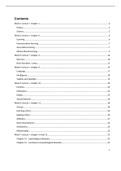
Contents
Week 1: lecture + chapter 1.........................................................................................................................2
History......................................................................................................................................................3
Science......................................................................................................................................................5
Week 2: lecture + chapter 6.........................................................................................................................6
Learning....................................................................................................................................................6
Nonassociative learning............................................................................................................................7
Associative learning..................................................................................................................................7
Observational learning.............................................................................................................................9
Week 3: lecture + chapter 3.......................................................................................................................10
Neurons..................................................................................................................................................10
Brain functions / areas............................................................................................................................11
Week 4: lecture + chapter 8.......................................................................................................................14
Language................................................................................................................................................17
Intelligence.............................................................................................................................................18
Validity and reliability.............................................................................................................................19
Week 5: lecture + chapter 10.....................................................................................................................20
Emotion..................................................................................................................................................20
Motivation..............................................................................................................................................23
Eating......................................................................................................................................................25
Sexual behavior......................................................................................................................................26
Week 6: lecture + chapter 12.....................................................................................................................28
Groups....................................................................................................................................................28
Harming others.......................................................................................................................................30
Helping others........................................................................................................................................30
Attitudes.................................................................................................................................................31
Nonverbal behavior................................................................................................................................32
Attributions.............................................................................................................................................32
Relationships..........................................................................................................................................33
Week 7: lecture + chapter 14 and 15..........................................................................................................35
Chapter 14 – psychological disorders.....................................................................................................35
Chapter 15 – treatment of psychological disorders................................................................................41
1
,Week 1: lecture + chapter 1
Psychology = the study of mental activity and behavior
Literally: the study of soul
2
,Human beings reflect on their own psychological well-being, by for example religion or using a diary,
going on trips etc. Animals, for example don’t do this. This is an individual experience and thus is not
scientific, but observing other people and drawing conclusion it is actually psychology.
Psychological science = the study, through research, of mind, brain and behavior.
Mind > mental activity: memories, smell, thoughts, feelings. Stuff of thought.
Behavior > total of observable human actions. For example, Eating. It’s what we do.
Brain > biological processes that cause your mind.
Many levels in which we can study psychology:
Groups vs. individuals
Behavior vs. brain activity
Mind/body problem = a fundamental psychological issue: are mind and body separate and
distinct, or is the mind simply the physical brain’s subjective experience?
Nature vs. nurture = the arguments concerning whether psychological characteristics are
biologically innate or acquired through education, experience, and culture.
Culture = the beliefs, values, rules, and customs that exist withing a group of people who share a
common language and environment.
Critical thinking = to systematically question and evaluate information using well-supported evidence.
Amiable skepticism = open to new ideas, but is wary about new ‘scientific findings’.
In the media is nowadays said a lot about groundbreaking findings, which is not always the fully truth.
Intuitions are often wrong and wrong in predictable ways.
Biases: They exist because we are motivated to understand the world and due to this we link things.
Ignoring evidence (confirmation bias) > placing great importance on evidence that supports their
beliefs and downgrading evidence that doesn’t.
Seeing relationships that do not exist > for example: a sporter who believes wearing his favorite
shirt helps him to win a game.
Accepting after-the-fact explanation
Hindsight bias > we can explain why things happened, but we are bad at predicting things are
going to happen.
Taking mental shortcuts > using simple rules to make decisions – choosing the thought that
comes easily to mind.
Hearing a few times about abusing > conclusions: it happens a lot. (Could or could not be true,
but there is no evidence based on seeing it a few times).
History
Psychology comes from philosophy > the great thinkers sought to understand human nature.
Da Vinci: all sensory messages arrive at one location in the brain: the sensus communis > probably why
it’s called ‘common sense’.
3
, Dualism – Descartes
Separation of soul/mind and body.
Body is governed by ‘reflex’. Rational thinking is separate from your body.
Wundt:
Reaction times = how long it takes to recognize something.
Introspection = trying to describe you own mental experiences. Your own feelings.
Another person describing the same situation, would describe it different. Which changes the
experience for each of us.
Structuralism - one of the earliest moments you can talk about psychology – William James
Complex mental processes can be reduced to simpler processes.
For example, perception of an orange reduced to the color and shape.
This uses introspection
Game: colors and words
Functionalism – Mary Whiton Calkins
Concerned with the adaptive purpose/function of mind and behavior
Mind is more complex than its elements.
Structuralism: describing, functionalism: adaption of it.
What is certain behavior good for?
Disgust – our body who shows something is not good for us, like food that is bad.
Laughter – social role, helps a group to share certain experiences and bring a group closer together.
Evolution – Darwin, on the origin of species.
Focus on the functions of behavior, the ways our behavior helps us to survive and reproduce
It’s not really related to psychology: dualism separates us from the animal world.
What it means for psychology
Genetic diversity, mutation = variation
Environmental pressures: evolution has no foresight
Evolution can provide answers to the ‘why’ questions
Psychoanalytical approach – Freud
Mental processes operate below the level of conscious awareness.
Unconscious drives
Iceberg
A lot build on individual experiences.
4
Week 1: lecture + chapter 1.........................................................................................................................2
History......................................................................................................................................................3
Science......................................................................................................................................................5
Week 2: lecture + chapter 6.........................................................................................................................6
Learning....................................................................................................................................................6
Nonassociative learning............................................................................................................................7
Associative learning..................................................................................................................................7
Observational learning.............................................................................................................................9
Week 3: lecture + chapter 3.......................................................................................................................10
Neurons..................................................................................................................................................10
Brain functions / areas............................................................................................................................11
Week 4: lecture + chapter 8.......................................................................................................................14
Language................................................................................................................................................17
Intelligence.............................................................................................................................................18
Validity and reliability.............................................................................................................................19
Week 5: lecture + chapter 10.....................................................................................................................20
Emotion..................................................................................................................................................20
Motivation..............................................................................................................................................23
Eating......................................................................................................................................................25
Sexual behavior......................................................................................................................................26
Week 6: lecture + chapter 12.....................................................................................................................28
Groups....................................................................................................................................................28
Harming others.......................................................................................................................................30
Helping others........................................................................................................................................30
Attitudes.................................................................................................................................................31
Nonverbal behavior................................................................................................................................32
Attributions.............................................................................................................................................32
Relationships..........................................................................................................................................33
Week 7: lecture + chapter 14 and 15..........................................................................................................35
Chapter 14 – psychological disorders.....................................................................................................35
Chapter 15 – treatment of psychological disorders................................................................................41
1
,Week 1: lecture + chapter 1
Psychology = the study of mental activity and behavior
Literally: the study of soul
2
,Human beings reflect on their own psychological well-being, by for example religion or using a diary,
going on trips etc. Animals, for example don’t do this. This is an individual experience and thus is not
scientific, but observing other people and drawing conclusion it is actually psychology.
Psychological science = the study, through research, of mind, brain and behavior.
Mind > mental activity: memories, smell, thoughts, feelings. Stuff of thought.
Behavior > total of observable human actions. For example, Eating. It’s what we do.
Brain > biological processes that cause your mind.
Many levels in which we can study psychology:
Groups vs. individuals
Behavior vs. brain activity
Mind/body problem = a fundamental psychological issue: are mind and body separate and
distinct, or is the mind simply the physical brain’s subjective experience?
Nature vs. nurture = the arguments concerning whether psychological characteristics are
biologically innate or acquired through education, experience, and culture.
Culture = the beliefs, values, rules, and customs that exist withing a group of people who share a
common language and environment.
Critical thinking = to systematically question and evaluate information using well-supported evidence.
Amiable skepticism = open to new ideas, but is wary about new ‘scientific findings’.
In the media is nowadays said a lot about groundbreaking findings, which is not always the fully truth.
Intuitions are often wrong and wrong in predictable ways.
Biases: They exist because we are motivated to understand the world and due to this we link things.
Ignoring evidence (confirmation bias) > placing great importance on evidence that supports their
beliefs and downgrading evidence that doesn’t.
Seeing relationships that do not exist > for example: a sporter who believes wearing his favorite
shirt helps him to win a game.
Accepting after-the-fact explanation
Hindsight bias > we can explain why things happened, but we are bad at predicting things are
going to happen.
Taking mental shortcuts > using simple rules to make decisions – choosing the thought that
comes easily to mind.
Hearing a few times about abusing > conclusions: it happens a lot. (Could or could not be true,
but there is no evidence based on seeing it a few times).
History
Psychology comes from philosophy > the great thinkers sought to understand human nature.
Da Vinci: all sensory messages arrive at one location in the brain: the sensus communis > probably why
it’s called ‘common sense’.
3
, Dualism – Descartes
Separation of soul/mind and body.
Body is governed by ‘reflex’. Rational thinking is separate from your body.
Wundt:
Reaction times = how long it takes to recognize something.
Introspection = trying to describe you own mental experiences. Your own feelings.
Another person describing the same situation, would describe it different. Which changes the
experience for each of us.
Structuralism - one of the earliest moments you can talk about psychology – William James
Complex mental processes can be reduced to simpler processes.
For example, perception of an orange reduced to the color and shape.
This uses introspection
Game: colors and words
Functionalism – Mary Whiton Calkins
Concerned with the adaptive purpose/function of mind and behavior
Mind is more complex than its elements.
Structuralism: describing, functionalism: adaption of it.
What is certain behavior good for?
Disgust – our body who shows something is not good for us, like food that is bad.
Laughter – social role, helps a group to share certain experiences and bring a group closer together.
Evolution – Darwin, on the origin of species.
Focus on the functions of behavior, the ways our behavior helps us to survive and reproduce
It’s not really related to psychology: dualism separates us from the animal world.
What it means for psychology
Genetic diversity, mutation = variation
Environmental pressures: evolution has no foresight
Evolution can provide answers to the ‘why’ questions
Psychoanalytical approach – Freud
Mental processes operate below the level of conscious awareness.
Unconscious drives
Iceberg
A lot build on individual experiences.
4