Sean Fitzgerald
FIT18000750
Level 3 Early Years
Literacy development
D1:
The term speech means speech sounds that the children use to build up words, saying sounds accurately
and in the right places. Also, means speaking fluently and without hesitating, prolonging, or repeating
words or sounds. Speaking with expression and a clear voice using pitch, volume and intonation to
support meaning. Language and speech are different, language is a set of shared rules that allows a
person to express their ideas in a meaningful way and understand the ideas of another. Language is the
tool children use to make many connections, understanding meaning, sharing feelings and needs,
connecting with others, processing new information, solving problems and understanding and
processing new information as well as understanding society’s expectations. Communication is when
children are able to understand and be understood by others and is the foundation of relationships and
is essential for learning, play and social interaction and for babies if the foundation of attachment.
“Speech, language and communication skills are crucial to young children's overall development.”
(Online source).
D2:
Reading and writing from birth to 26 months children will enjoy looking at books, handle books with
interest and be interested in books and rhythms and may also have favourites. At this young age the
children will do mark-marking but this is a sensory element and is not the same as writing as at this age
they will communicate verbally before they start to form symbols or write words that they know. At
ages 22 to 50 months the children will have some favourite stories and song and poems, repeat words,
shows awareness of rhythm and alliteration, listens and joins in on stories and poems, suggests how a
story may end. At this age, their writing skills will be that they can distinguishes between the different
marks that they make, sometimes gives meanings to the marks that they make and ascribes meaning s
to marks they see in different places. At the ages of 40 to 60 plus months children’s reading skills include
linking sounds to letters, naming, and sounding the letters of the alphabet, begins to read simple
sentences and words, enjoying a range of books and knows information can be retrieved from books
and computers. Their writing skills include giving meanings to marks they make as they draw, write and
paint, begins to break the flow of speech into words and attempts to write short sentences in
meaningful contexts.
From ages four to eight years “children are consolidating their communication and language learning”
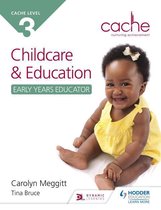
(Meggitt and Bruce, 2015, p.395). the children are building on what they know about communication
with themselves and with other people and are using more conventional grammar patterns. The
children will also think about who they are talking to with greater sensitivity and awareness. They will
also put their ideas together and feelings into words and more easily than when they were toddlers. At
the ages between 5 and 7 children’s development for reading and writing is called the partial alphabetic
and letter alphabetic stage. The children are able to read simple texts containing high frequency words
and words with regular phonology (sound patterns), they can sound out or blend new one-syllable
words and rely more on memory than in later stages. In the letter alphabetic writing stage the children
learn the alphabetic principle, write words with consonants in all positions and all short vowel sounds
present, know diphthongs and begin producing fewer letter reversals and learn the conventions of
Page 1 of 3
FIT18000750
Level 3 Early Years
Literacy development
D1:
The term speech means speech sounds that the children use to build up words, saying sounds accurately
and in the right places. Also, means speaking fluently and without hesitating, prolonging, or repeating
words or sounds. Speaking with expression and a clear voice using pitch, volume and intonation to
support meaning. Language and speech are different, language is a set of shared rules that allows a
person to express their ideas in a meaningful way and understand the ideas of another. Language is the
tool children use to make many connections, understanding meaning, sharing feelings and needs,
connecting with others, processing new information, solving problems and understanding and
processing new information as well as understanding society’s expectations. Communication is when
children are able to understand and be understood by others and is the foundation of relationships and
is essential for learning, play and social interaction and for babies if the foundation of attachment.
“Speech, language and communication skills are crucial to young children's overall development.”
(Online source).
D2:
Reading and writing from birth to 26 months children will enjoy looking at books, handle books with
interest and be interested in books and rhythms and may also have favourites. At this young age the
children will do mark-marking but this is a sensory element and is not the same as writing as at this age
they will communicate verbally before they start to form symbols or write words that they know. At
ages 22 to 50 months the children will have some favourite stories and song and poems, repeat words,
shows awareness of rhythm and alliteration, listens and joins in on stories and poems, suggests how a
story may end. At this age, their writing skills will be that they can distinguishes between the different
marks that they make, sometimes gives meanings to the marks that they make and ascribes meaning s
to marks they see in different places. At the ages of 40 to 60 plus months children’s reading skills include
linking sounds to letters, naming, and sounding the letters of the alphabet, begins to read simple
sentences and words, enjoying a range of books and knows information can be retrieved from books
and computers. Their writing skills include giving meanings to marks they make as they draw, write and
paint, begins to break the flow of speech into words and attempts to write short sentences in
meaningful contexts.
From ages four to eight years “children are consolidating their communication and language learning”
(Meggitt and Bruce, 2015, p.395). the children are building on what they know about communication
with themselves and with other people and are using more conventional grammar patterns. The
children will also think about who they are talking to with greater sensitivity and awareness. They will
also put their ideas together and feelings into words and more easily than when they were toddlers. At
the ages between 5 and 7 children’s development for reading and writing is called the partial alphabetic
and letter alphabetic stage. The children are able to read simple texts containing high frequency words
and words with regular phonology (sound patterns), they can sound out or blend new one-syllable
words and rely more on memory than in later stages. In the letter alphabetic writing stage the children
learn the alphabetic principle, write words with consonants in all positions and all short vowel sounds
present, know diphthongs and begin producing fewer letter reversals and learn the conventions of
Page 1 of 3