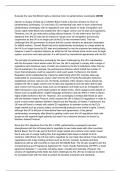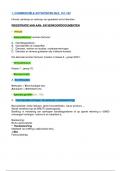
500-250 BCE
The security dilemma was universal:
- The Peloponnesian War
- Seen as the bedrock of Western strategic culture, defined by anarchy and a fixation with the
BOP: the rise of one state = a threat to another.
- Also in Asian civilisation: in China and India, as their imperial harmonic ideal collapsed into chaos.
500 BCE:
- One large dynasty: Achaemenid Dynasty,
- Built on the traditions of Babylon, Assyria, Medes.
- Subjugated an unprecedentedly large realm: including:
- The rich irrigation economies of Egypt and Meso
- The trade routes
- After the downfall and short occupation by AtG, ME would not be unified again til 7CE (Islamic
conquests)
- Century after AtG’s death: fighting between cities in the Med, South Asia, NCP.
- Diplomatic relations formed and destroyed
- Turmoil slowly gave way to a Eurasian order dominated by O1H the Ptolemaic Dynasty and the
Seleucid Dynasty, each fighting for the remains of AtG’s empire, and as well as the Romans, Maurya,
and Han Dynasty.
- Outlook of the world also changed: expanding populations in China, Europe, SEA.
- Central America: forest -> farmland
==> Achaemenids (-> AtG) → anarchy/turmoil ==> Ptolemies vs Seleucids, Romans, Maurya, Han.
=> Empire -> anarchy -> empire
The Middle East
Persia
● Strong imperial tradition
○ Ruled over the world with divine blessing
○ Preserved much of the traditions of Babylon and Assyria
■ Epic of Gilgamesh, Code of Hammurabi, Ashur
■ Divided the realm into provinces ruled by satraps who taxed, maintained stability,
upheld law, monitored the events on the border, reported.
○ Received delegations from subject peoples. Had to pay tribute.
○ Lenient treatment for those who accepted Persian rule, harsh for resistors.
○ Local self-government under Persian supervision was the objective.
■ → see the Ionian revolt response; or the symbolic submission demand from Sparta
and Athens.
○ Used money as a chief diplomatic weapon
■ Sent gold to Athens, Thebes, Corinth, Argos to persuade them to form an alliance
against Sparta
○ Policy of divide and rule
■ Against Greece: subsidised a Spartan fleet, then aided Athens.
Its downfall:
● Darius I succeeded Cambyses II (522)
, ● Confronted with insurrections in Babylon, Elam, Assyria, Egypt, Parthia, Bactria (+ Ionia (Greek states
in Anatolia))
○ Overcame them all
● But Persian victory was short-lived:
○ 499: Ionian Revolt - several Greek cities in Asia Minor rebelled, supported by Greek forces.
○ Greek islands and mainland supported Ionia
■ Wanted to keep Persia at bay
■ Because of trade interests
■ Persian king was the most hated figure in the Greek world
○ First response of the Persians was for the local satrap to restore order.
○ Battle of Lade (494): Persians defeated them
● The Persian Wars (499-449) followed: Darius I went after Greece (wanted to expand)
○ → hadn’t ruled over Greece yet, just Greek states in Anatolia.
○ Sent envoys to demand (symbolic (water and earth)) submission
○ Many cities gave in, except Sparta and Athens.
○ Punitive expedition
○ Persian troops were heavily defeated.
○ Darius’ death (486) prevented a second invasion.
○ Xerves invaded Greece (480)
○ Greeks defeated the Persians at Salamis, then again at Plataea (479)
○ End of invasion of Greece.
● But conflict with Persia was not over:
○ Rebellion reignited all over Anatolia
○ Uprisings in Cyprus and Egypt (470s-460s), supported by the Delian League - anti-Persian
alliance of Greek states.
● 449: Peace of Callias between Athens and Persia
○ End of hostilities.
○ Provided autonomy to Greek cities in Anatolia.
○ Persians would not interfere in Athens, the Delian League would not interfere with Egypt and
Cyprus.
● But not the end of Persia yet: there was widespread unrest, but not worse than previous times
○ Evidence of flourishing commercial life
○ Still vast armies
○ Strategically astute Persian rulers
■ Took advantage of the Peloponnesian War, playing off Greeks against each other.
■ Forced a revision of Peace of Callias on exhausted Greeks, regaining full control over
Anatolia
○ By C4: still by far the greatest power: enormous economy, dominated trade gateways.
● BUT this apparent strength made Darius III underestimate the threat posed by AtG.
○ AtG: new hugely ambitious king of Greek state of Macedon.
○ Macedonian king Phillip II (AtG’s father) had conquered a large part of the Greek peninsula.
■ Athens asked Persians for help, who agreed
■ Persian king Antaxerxes was murdered; court descended into turmoil
■ Phillip II defeated Athens, could now exploit Persian turmoil.
■ Formed the League of Corinth to unite the Greeks in a sacred war against the
Persians and liberate the Greek cities in Anatolia.
■ Was murdered
The security dilemma was universal:
- The Peloponnesian War
- Seen as the bedrock of Western strategic culture, defined by anarchy and a fixation with the
BOP: the rise of one state = a threat to another.
- Also in Asian civilisation: in China and India, as their imperial harmonic ideal collapsed into chaos.
500 BCE:
- One large dynasty: Achaemenid Dynasty,
- Built on the traditions of Babylon, Assyria, Medes.
- Subjugated an unprecedentedly large realm: including:
- The rich irrigation economies of Egypt and Meso
- The trade routes
- After the downfall and short occupation by AtG, ME would not be unified again til 7CE (Islamic
conquests)
- Century after AtG’s death: fighting between cities in the Med, South Asia, NCP.
- Diplomatic relations formed and destroyed
- Turmoil slowly gave way to a Eurasian order dominated by O1H the Ptolemaic Dynasty and the
Seleucid Dynasty, each fighting for the remains of AtG’s empire, and as well as the Romans, Maurya,
and Han Dynasty.
- Outlook of the world also changed: expanding populations in China, Europe, SEA.
- Central America: forest -> farmland
==> Achaemenids (-> AtG) → anarchy/turmoil ==> Ptolemies vs Seleucids, Romans, Maurya, Han.
=> Empire -> anarchy -> empire
The Middle East
Persia
● Strong imperial tradition
○ Ruled over the world with divine blessing
○ Preserved much of the traditions of Babylon and Assyria
■ Epic of Gilgamesh, Code of Hammurabi, Ashur
■ Divided the realm into provinces ruled by satraps who taxed, maintained stability,
upheld law, monitored the events on the border, reported.
○ Received delegations from subject peoples. Had to pay tribute.
○ Lenient treatment for those who accepted Persian rule, harsh for resistors.
○ Local self-government under Persian supervision was the objective.
■ → see the Ionian revolt response; or the symbolic submission demand from Sparta
and Athens.
○ Used money as a chief diplomatic weapon
■ Sent gold to Athens, Thebes, Corinth, Argos to persuade them to form an alliance
against Sparta
○ Policy of divide and rule
■ Against Greece: subsidised a Spartan fleet, then aided Athens.
Its downfall:
● Darius I succeeded Cambyses II (522)
, ● Confronted with insurrections in Babylon, Elam, Assyria, Egypt, Parthia, Bactria (+ Ionia (Greek states
in Anatolia))
○ Overcame them all
● But Persian victory was short-lived:
○ 499: Ionian Revolt - several Greek cities in Asia Minor rebelled, supported by Greek forces.
○ Greek islands and mainland supported Ionia
■ Wanted to keep Persia at bay
■ Because of trade interests
■ Persian king was the most hated figure in the Greek world
○ First response of the Persians was for the local satrap to restore order.
○ Battle of Lade (494): Persians defeated them
● The Persian Wars (499-449) followed: Darius I went after Greece (wanted to expand)
○ → hadn’t ruled over Greece yet, just Greek states in Anatolia.
○ Sent envoys to demand (symbolic (water and earth)) submission
○ Many cities gave in, except Sparta and Athens.
○ Punitive expedition
○ Persian troops were heavily defeated.
○ Darius’ death (486) prevented a second invasion.
○ Xerves invaded Greece (480)
○ Greeks defeated the Persians at Salamis, then again at Plataea (479)
○ End of invasion of Greece.
● But conflict with Persia was not over:
○ Rebellion reignited all over Anatolia
○ Uprisings in Cyprus and Egypt (470s-460s), supported by the Delian League - anti-Persian
alliance of Greek states.
● 449: Peace of Callias between Athens and Persia
○ End of hostilities.
○ Provided autonomy to Greek cities in Anatolia.
○ Persians would not interfere in Athens, the Delian League would not interfere with Egypt and
Cyprus.
● But not the end of Persia yet: there was widespread unrest, but not worse than previous times
○ Evidence of flourishing commercial life
○ Still vast armies
○ Strategically astute Persian rulers
■ Took advantage of the Peloponnesian War, playing off Greeks against each other.
■ Forced a revision of Peace of Callias on exhausted Greeks, regaining full control over
Anatolia
○ By C4: still by far the greatest power: enormous economy, dominated trade gateways.
● BUT this apparent strength made Darius III underestimate the threat posed by AtG.
○ AtG: new hugely ambitious king of Greek state of Macedon.
○ Macedonian king Phillip II (AtG’s father) had conquered a large part of the Greek peninsula.
■ Athens asked Persians for help, who agreed
■ Persian king Antaxerxes was murdered; court descended into turmoil
■ Phillip II defeated Athens, could now exploit Persian turmoil.
■ Formed the League of Corinth to unite the Greeks in a sacred war against the
Persians and liberate the Greek cities in Anatolia.
■ Was murdered