

Corporate Social Responsibility
What is CSR?
Example: a company had huge chemical leakage which led to a disaster
-> + 1000 people were killed and injured
-> almost no compensation for workers/victims
-> CEO was never found guilty for murder or charged for it
Example: Rana Plaza building, building where a lot of textile companies are producing clothes
ex. Primark, C&A, Benetton…
BUT collapsed which killed many workers
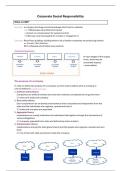
The justice argument
In each stages of the supply
chain, there may be
unwanted impacts
= externalities
The purpose of a company
In order to define the purpose of a company, we first need to define what a company is
can be defined in 4 different ways
1. Artificial entity theory
Companies are artificial entities that owe their existence completely to the government
SO direct link state and company
2. Real entity theory
Each corporation has an identity and existence that is separate and independent from the
state and the individuals who organize, operate and own it
SO state and company are separated
3. Aggregate theory
corporations are merely collections of individuals tied together through the intersection of
various obligations
SO company separated from state and defined by actors inside it
4. Collaboration theory
collaborations among the state governments and the people who organize, operate and own
them
SO mix of link with state and actors inside the company
1
,There are multiple ways to define the purpose of a company, we will discuss 2 extreme ones
FRIEDMAN DOCTRINE
there is only 1 CSR of business
= use its resources and engage in activities designed to increase its profits
BUT need to stay within the rules of the game
PURPOSE-DRIVEN COMPANIES
maximize the contribution to society while ensuring adequate return for shareholders
SO profit is not the only goals, starts from a need of consumers
! important !
it is not all black and white, both extremes have important aspects
Verschillen tussen beide kunnen
gevraagd worden op het examen!
BUT there is a new paradigm
-> companies should operate for the benefit of all the stakeholders
maximizing value of shareholders ≠ maximizing value of all stakeholders
ex. SH, customers, suppliers, employees…
there are 5 leading principles linked to it
° deliver value to their customers
° invest in their employess
° deal fairly and ethicaly with their suppliers
° support the communities in which they work
° generate long-term value for shareholders
What is CSR?
There are multiple definitions on what CSR is
“ The term CSR is a brilliant one; it means something, but not always the same thing to
everybody”
EU definition: “CSR is the responsibility of enterprises for their impact on society”
ISO 26000: “social responsibility is the responsibility of an organization (that means, not just
corporate enterprises) for the impacts of its decisions and activities on society and
the environment, through transparent and ethical behavior”
Together it leads to this definiton ! exam question !
- stakeholder-oriented notion
- involves voluntary commitments of a business organization
- issues bith inside and beyond the boundaries of the organization
- driven by the organization’s understanding and acknowledgment of its moral responsibilities
2
, Important common aspects
-> sustainble development applied to a company
-> creating value for all stakeholders
SO shift from shareholder oriented logic (profit driven) to stakeholders-oriented logic
(value driven)
There are 6 key characteristics
1. Responsibility: awareness that the organization has to adapt to the needs of stakeholders
2. Beyond existing laws: consider ethical behaviour as imperative
3. CSR is an endless process
4. CSR follows a LR perspective
5. CSR needs to be embedded in al companies opertaion’s and core strategies
6. CSR is context-specific
2 approaches
PROACTIVE BEHAVIOR: taking the initiative to do something
ex. innovators and early adopters
REACTIVE BEHAVIOR: doing something because it is mandatory or because others are doing it
ex. early majority, late majority and laggards
Carroll’s pyramid
INSIDE PERSPECTIVE OUTSIDE PERSPECTIVE
A company should
A company needs to be profitable economically benefit its
ECONOMIC
to survive community by paying fair
RESPONSIBILITY
(focus SH) wages
(focus employees)
LEGAL A company needs to follow
RESPONSIBILITY legislations
A company should protect their A compnay should not
ETHICAL
workers harm the involved
RESPONSIBILITY
(focus employees) communities
Company encourages its workers Company supports
PHILANTHROPIC
to do volunteering external good causes
RESPONSIBILITY
(focus employees) (focus communities)
Their are 4 different ways to fulfill the philantrophic dimension
1. Cause promotion
a compnay contributes money to raise awareness (vb. Kbc met warmste week)
2. Cause marketing
a compnay contributes a percentage of sales of a particular product to a cause
3. Social marketing (not really phylantrophy)
a compnay tries to influence behavior to promote a social good, such as recycling or social
concern
4. Volunteering
a compnay encourages employees to volunteer or partner with specific organizations
! important to know !
purpose-driven companies have an omgekeerde driehoek
3
What is CSR?
Example: a company had huge chemical leakage which led to a disaster
-> + 1000 people were killed and injured
-> almost no compensation for workers/victims
-> CEO was never found guilty for murder or charged for it
Example: Rana Plaza building, building where a lot of textile companies are producing clothes
ex. Primark, C&A, Benetton…
BUT collapsed which killed many workers
The justice argument
In each stages of the supply
chain, there may be
unwanted impacts
= externalities
The purpose of a company
In order to define the purpose of a company, we first need to define what a company is
can be defined in 4 different ways
1. Artificial entity theory
Companies are artificial entities that owe their existence completely to the government
SO direct link state and company
2. Real entity theory
Each corporation has an identity and existence that is separate and independent from the
state and the individuals who organize, operate and own it
SO state and company are separated
3. Aggregate theory
corporations are merely collections of individuals tied together through the intersection of
various obligations
SO company separated from state and defined by actors inside it
4. Collaboration theory
collaborations among the state governments and the people who organize, operate and own
them
SO mix of link with state and actors inside the company
1
,There are multiple ways to define the purpose of a company, we will discuss 2 extreme ones
FRIEDMAN DOCTRINE
there is only 1 CSR of business
= use its resources and engage in activities designed to increase its profits
BUT need to stay within the rules of the game
PURPOSE-DRIVEN COMPANIES
maximize the contribution to society while ensuring adequate return for shareholders
SO profit is not the only goals, starts from a need of consumers
! important !
it is not all black and white, both extremes have important aspects
Verschillen tussen beide kunnen
gevraagd worden op het examen!
BUT there is a new paradigm
-> companies should operate for the benefit of all the stakeholders
maximizing value of shareholders ≠ maximizing value of all stakeholders
ex. SH, customers, suppliers, employees…
there are 5 leading principles linked to it
° deliver value to their customers
° invest in their employess
° deal fairly and ethicaly with their suppliers
° support the communities in which they work
° generate long-term value for shareholders
What is CSR?
There are multiple definitions on what CSR is
“ The term CSR is a brilliant one; it means something, but not always the same thing to
everybody”
EU definition: “CSR is the responsibility of enterprises for their impact on society”
ISO 26000: “social responsibility is the responsibility of an organization (that means, not just
corporate enterprises) for the impacts of its decisions and activities on society and
the environment, through transparent and ethical behavior”
Together it leads to this definiton ! exam question !
- stakeholder-oriented notion
- involves voluntary commitments of a business organization
- issues bith inside and beyond the boundaries of the organization
- driven by the organization’s understanding and acknowledgment of its moral responsibilities
2
, Important common aspects
-> sustainble development applied to a company
-> creating value for all stakeholders
SO shift from shareholder oriented logic (profit driven) to stakeholders-oriented logic
(value driven)
There are 6 key characteristics
1. Responsibility: awareness that the organization has to adapt to the needs of stakeholders
2. Beyond existing laws: consider ethical behaviour as imperative
3. CSR is an endless process
4. CSR follows a LR perspective
5. CSR needs to be embedded in al companies opertaion’s and core strategies
6. CSR is context-specific
2 approaches
PROACTIVE BEHAVIOR: taking the initiative to do something
ex. innovators and early adopters
REACTIVE BEHAVIOR: doing something because it is mandatory or because others are doing it
ex. early majority, late majority and laggards
Carroll’s pyramid
INSIDE PERSPECTIVE OUTSIDE PERSPECTIVE
A company should
A company needs to be profitable economically benefit its
ECONOMIC
to survive community by paying fair
RESPONSIBILITY
(focus SH) wages
(focus employees)
LEGAL A company needs to follow
RESPONSIBILITY legislations
A company should protect their A compnay should not
ETHICAL
workers harm the involved
RESPONSIBILITY
(focus employees) communities
Company encourages its workers Company supports
PHILANTHROPIC
to do volunteering external good causes
RESPONSIBILITY
(focus employees) (focus communities)
Their are 4 different ways to fulfill the philantrophic dimension
1. Cause promotion
a compnay contributes money to raise awareness (vb. Kbc met warmste week)
2. Cause marketing
a compnay contributes a percentage of sales of a particular product to a cause
3. Social marketing (not really phylantrophy)
a compnay tries to influence behavior to promote a social good, such as recycling or social
concern
4. Volunteering
a compnay encourages employees to volunteer or partner with specific organizations
! important to know !
purpose-driven companies have an omgekeerde driehoek
3

