Explore how William Blake presents worship and the church in ‘Holy Thursday’ (I) and
make connections with one or two other poems from your collection.
You should consider Blake’s use of poetic and stylistic techniques and significant
literary or other relevant contexts. [32]
• Write 800-1,000 words
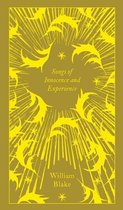
William Blake wrote Songs of Innocence and Experience to explore the two contrary states of the
human soul. He often uses dichotomies and binary oppositions to present ideas such as good vs evil,
decency vs corruption etc. Subsequently, his work can also be looked at as a social criticism which
sought to expose the wrongdoings of powerful institutions such as the Established Church.
In ‘Holy Thursday (I)’ Blake describes children marching to a charity school service orchestrated by
St. Paul’s Cathedral which annually occurs on Ascension Day. At first glance, the harmonious
ceremony appears captivating and joyful as the narrator admires the children’s devout commitment
to the Church. This encompasses Blake’s perception of children as holy beings connected to natural
beauty and God. However, at a closer look, there are subtle implications about the superficial nature
of the parade. Children were meant to give thanks to God for the blessing of their education, yet
many children of the contextual period were usually forced to learn a trade or work in factories and
workhouses to augment the wealth of business magnates in the Industrial Revolution.
Blake presents worship and the Church in ‘Holy Thursday’ as mere instruments of tyranny and
exploitation (despite the explicit positive representations) through bleak undertones and polysemy.
Blake describes the children as ‘multitudes of lambs’ which typically implies they must be nurtured
and treated with care as the idea of a ‘lamb’ is a repeated motif in Blake’s collection and acts as an
allusion to Jesus as a ‘lamb of God’. Nevertheless, being mindful of Blake’s tendency to merge
conflicting meanings into single images, it should be questioned whether they are being well cared
for or if their vulnerability places them at risk of corruption or exploitation which ran rampant in the
18th century. The latter would therefore imply that their strong devotion to the Church, which Blake
believed to be a dishonest system, is just an example of how impressionable they are. The opening
line of ‘…their innocent faces clean’ corroborates the idea that the scene is simply a façade to
disguise the lack of compassionate care they were given by society.
Romanticists such as Jean-Jacques Rousseau rejected the doctrine of Original Sin and believed
children we entitled to childhood play and freedom which is not represented in this poem; rather
there is a sense of pious restriction. In ‘London (E)’, the alliterative ‘mind-forged manacles’ captures
the essence of the general psyche of the masses and demonstrates how the Church had a
suffocating effect on people as controlling and domineering institution. Blake, as a radical, wanted to
challenge his readers to break free from the socially imposed and habitual beliefs installed in them.
Colour connotations in ‘blackening Church appalls’, when referring to the ‘Chimney Sweeper’s cry’,
indicate the Church has become apathetic and corrupt. Blake wanted to reveal the lack of moral
principles and hypocrisy within the Church. For example, in ‘Holy Thursday’ how they allow children
who suffer in poverty to partake in a performance designed to celebrate its benevolence.
In ‘Holy Thursday’, Blake alludes to the idea that the Church and their public displays of charity were
superficial and deceptive. He uses long rhythmic sentences and biblical allusions to the Story of
make connections with one or two other poems from your collection.
You should consider Blake’s use of poetic and stylistic techniques and significant
literary or other relevant contexts. [32]
• Write 800-1,000 words
William Blake wrote Songs of Innocence and Experience to explore the two contrary states of the
human soul. He often uses dichotomies and binary oppositions to present ideas such as good vs evil,
decency vs corruption etc. Subsequently, his work can also be looked at as a social criticism which
sought to expose the wrongdoings of powerful institutions such as the Established Church.
In ‘Holy Thursday (I)’ Blake describes children marching to a charity school service orchestrated by
St. Paul’s Cathedral which annually occurs on Ascension Day. At first glance, the harmonious
ceremony appears captivating and joyful as the narrator admires the children’s devout commitment
to the Church. This encompasses Blake’s perception of children as holy beings connected to natural
beauty and God. However, at a closer look, there are subtle implications about the superficial nature
of the parade. Children were meant to give thanks to God for the blessing of their education, yet
many children of the contextual period were usually forced to learn a trade or work in factories and
workhouses to augment the wealth of business magnates in the Industrial Revolution.
Blake presents worship and the Church in ‘Holy Thursday’ as mere instruments of tyranny and
exploitation (despite the explicit positive representations) through bleak undertones and polysemy.
Blake describes the children as ‘multitudes of lambs’ which typically implies they must be nurtured
and treated with care as the idea of a ‘lamb’ is a repeated motif in Blake’s collection and acts as an
allusion to Jesus as a ‘lamb of God’. Nevertheless, being mindful of Blake’s tendency to merge
conflicting meanings into single images, it should be questioned whether they are being well cared
for or if their vulnerability places them at risk of corruption or exploitation which ran rampant in the
18th century. The latter would therefore imply that their strong devotion to the Church, which Blake
believed to be a dishonest system, is just an example of how impressionable they are. The opening
line of ‘…their innocent faces clean’ corroborates the idea that the scene is simply a façade to
disguise the lack of compassionate care they were given by society.
Romanticists such as Jean-Jacques Rousseau rejected the doctrine of Original Sin and believed
children we entitled to childhood play and freedom which is not represented in this poem; rather
there is a sense of pious restriction. In ‘London (E)’, the alliterative ‘mind-forged manacles’ captures
the essence of the general psyche of the masses and demonstrates how the Church had a
suffocating effect on people as controlling and domineering institution. Blake, as a radical, wanted to
challenge his readers to break free from the socially imposed and habitual beliefs installed in them.
Colour connotations in ‘blackening Church appalls’, when referring to the ‘Chimney Sweeper’s cry’,
indicate the Church has become apathetic and corrupt. Blake wanted to reveal the lack of moral
principles and hypocrisy within the Church. For example, in ‘Holy Thursday’ how they allow children
who suffer in poverty to partake in a performance designed to celebrate its benevolence.
In ‘Holy Thursday’, Blake alludes to the idea that the Church and their public displays of charity were
superficial and deceptive. He uses long rhythmic sentences and biblical allusions to the Story of