NR283 Pathophysiology Exam 3 Review GRADED A VERIFIED
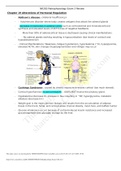
NR283 Pathophysiology Exam 3 Review Chapter 19 Alterations of Hormonal Regulation - Addison’s disease – (Adrenal Insufficiency)- - - Autoimmune disorder where body creates antigens that attack the adrenal glands - - decrease in hormones in adrenal cortex such as corticosteroid and mineralocorticoid synthesis and elevated levels of ACTH (loss of negative feedback). - -More then 90% of adrenocortical tissue is destroyed causing clinical manifestations. - - No adrenal glands working resulting in hypocortisolism (low levels of cortisol) and hypoaldosteronism - - Clinical Manifestations: Weakness, fatigue hypotension, hyperkalemia (^K), hypoglycemia, elevated ACTH, skin changes (hyperpigmentation and vitiligo) may occur - Cushings Syndrome- caused by chronic exposure to excess cortisol (too much steroid). - Cortical hyperfunction (hypercortisolism) – DOES NOT involve the pituitary gland. - Hypokalemia (decrease K), increase in Na+ resulting in ^BP, hyperglycemia, metabolic alkalosis (decrease H+) - Weight gain is the most common feature and results from the accumulation of adipose tissue in the trunk, facial, and cervical areas (truncal obesity, moon face, and buffalo hump) - Glucose intolerance occurs because of cortisol-induced insulin resistance and increased gluconeogenesis and glycogen storage by the liver. - caused by either excessive cortisol-like medication such as prednisone or a tumor that either produces or results in the production of excessive cortisol by the adrenal glands. - Cases due to a pituitary adenoma are known as Cushing's disease. Acromegaly- Hypersecretion of Growth Hormone- o A disorder in adults in which the pituitary gland produces too much growth hormone - Results from continuous exposure to high levels of growth hormone (GH) and insulin-like growth factor 1 (IGF-1); it almost always is caused by a GH secreting pituitary adenoma. - Pheochromocytoma - Chromaffin cell Tumors - A hormone-secreting tumor (benign) that can occur in the adrenal glands (neuroendocrine tumor of the medulla of the adrenal glands). - adrenal gland releases hormones that cause persistent or episodic high blood pressure, headaches, diaphoresis, palpitations - Sympathetic paragangliomas cause excessive production of norepinephrine and epinephrine. - Tumor releases catecholamine (Epi & NE) episodically so symptoms occur in paroxysmal (come and go) - Catecholamine breakdown to metabolites that are tested in urine: - VMA & HVA the VMA with be increased. Thyroid Dysfunction- Hypothyroidism- Underactive Thyroid Gland - deficient production of TH by the thyroid gland - DX w/ blood test looks at T3, T4, and TSH Levels - T3 or T4 both of which regulate metabolism. o thyroid gland predominantly secretes thyroxine (T4), which is converted into triiodothyronine (T3) in other organs by the selenium-dependent enzyme iodothyronine deiodinase. o Triiodothyronine binds to the thyroid hormone receptor in the nucleus of cells, where it stimulates the turning on of particular genes and the production of specific proteins - too little iodine in the diet is the most common cause of hypothyroidism - Primary Hypothyroidism – Autoimmune Thyroiditis- loss of thyroid function leads to decrease production of TH and increased secretion of TSH (thyroid-stimulating hormone) and TRH. o Common reason is loss of thyroid tissue after surgical or radioactive treatment. - Secondary Hypothyroidism- pituitary failure to synthesize adequate amounts of TSH or lack of TRH o surgical removal of the thyroid, and radiation treatment Parathyroid Dysfunction- Hyperparathyroidism – Excessive Secretion of Parathyroid Hormone (PTH) by parathyroid gland - Hyperkalemia ^Ca+ and Hypophosphatemia - Primary- Problem with parathyroid gland o Noncancerous growth “Adenoma” (most common cause) o Hyperplasia of gland o Cancer growth - Secondary – Disease causing parathyroid to mess up o Chronic renal failure; over working of parathyroid gland (most common) o Hyperkalemia; low levels over work that parathyroid o Vitamin D Deficiency Diabetes Mellitus (DM)- a group of metabolic disease characterized by hyperglycemia resulting from defects in insulin secretion, insulin action, or both. - Body cannot properly use insulin leading to hyperglycemia Type I Diabetes: beta- cell destruction, usually leading to absolute insulin deficiency (insulin-dependent diabetes) - Most common pediatric chronic disease - Ketones in urine Type II Diabetes: ranging from predominantly insulin resistance with relative insulin deficiency to predominantly an insulin secretory defect with insulin resistance. Cells stop responding to insulin “insulin resistant” glucose hangs in the body, pancreas thinks you need insulin to makes more, over secretion of insulin (hyperinsulemia) - Related to lifestyle (poor diet, over weight, sedentary, genetics) Normal Feedback Loop: Diabetes Mellitus- Assessment findings in hypoglycemia- reduction in plasma glucose concentration to a level that may induce symptoms or signs such as altered mental status and/or sympathetic nervous system stimulation. Diabetic ketoacidosis – A serious diabetes complication where the body produces excess blood acids (ketones)- - acute, major, life-threatening complication of diabetes that mainly occurs in patients with type 1 diabetes, but it is not uncommon in some patients with type 2 diabetes with sever illness. - disordered metabolic state characterized by hyperglycemia, ketoacidosis, and ketonuria. - common early symptoms of DKA are the insidious increase in polydipsia and polyuria o Polydipsia – cell dehydration- frequent drinking from feeling of thirst o Polyuria – osmotic diuresis too much glucose for kidneys to reabsorbed to frequent urination. - Malaise, generalized weakness, and fatigability - tachycardia - Altered consciousness - Kussmal Breathing – respiratory system trying to compensate metabolic acidosis
École, étude et sujet
- Établissement
- Chamberlain College Of Nursing
- Cours
- NR283 Pathophysiology Exam 3 Review (NR283PATHOPHYSIOLOGYEXAM3REV
Infos sur le Document
- Publié le
- 7 avril 2021
- Nombre de pages
- 5
- Écrit en
- 2020/2021
- Type
- Examen
- Contient
- Questions et réponses
Sujets
-
nr283 pathophysiology exam 3 review graded a verified
-
chapter 19 alterations of hormonal regulation addison’s disease – adrenal insufficiency
-
autoimmune disorder where body creates antigens that

Document également disponible en groupe