Alevel Chemistry Revision OC 15
Revision Material
Duration: 9th – 14th March
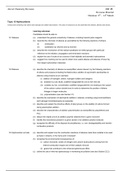
Topic 15 Hydrocarbons
Compounds containing only carbon and hydrogen are called hydrocarbons. This class of compound can be subdivided into alkanes, alkenes and arenes.
Learning outcomes
Candidates should be able to:
15.1 Alkanes (a) understand the general unreactivity of alkanes, including towards polar reagents
(b) describe the chemistry of alkanes as exemplified by the following reactions of ethane:
(i) combustion
(ii) substitution by chlorine and by bromine
(c) describe the mechanism of free-radical substitution at methyl groups with particular
reference to the initiation, propagation and termination reactions
(d) explain the use of crude oil as a source of both aliphatic and aromatic hydrocarbons
(e) suggest how cracking can be used to obtain more useful alkanes and alkenes of lower Mr
from larger hydrocarbon molecules
15.2 Alkenes (a) describe the chemistry of alkenes as exemplified, where relevant, by the following reactions
of ethene and propene (including the Markovnikov addition of asymmetric electrophiles to
alkenes using propene as an example):
(i) addition of hydrogen, steam, hydrogen halides and halogens
(ii) oxidation by cold, dilute, acidified manganate(VII) ions to form the diol
(iii) oxidation by hot, concentrated, acidified manganate(VII) ions leading to the rupture
of the carbon–carbon double bond in order to determine the position of alkene
linkages in larger molecules
(iv) polymerisation (see also Section 21)
(b) describe the mechanism of electrophilic addition in alkenes, including using bromine/ethene
and hydrogen bromide/propene as examples
(c) describe and explain the inductive effects of alkyl groups on the stability of cations formed
during electrophilic addition
(d) describe the characteristics of addition polymerisation as exemplified by poly(ethene) and
PVC
(e) deduce the repeat unit of an addition polymer obtained from a given monomer
(f) identify the monomer(s) present in a given section of an addition polymer molecule
(g) recognise the difficulty of the disposal of poly(alkene)s, i.e. non- biodegradability and harmful
combustion products
15.3 Hydrocarbon as fuels (a) describe and explain how the combustion reactions of alkanes make them suitable to be used
as fuels in industry, in the home and in transport
(b) recognise the environmental consequences of:
(i) carbon monoxide, oxides of nitrogen and unburnt hydrocarbons arising from the
internal combustion engine and of their catalytic removal
(ii) gases that contribute to the enhanced greenhouse effect
(c) outline the use of infra-red spectroscopy in monitoring air pollution (see also Section 22.2)
, 15.1 Alkanes
(a) understand the general unreactivity of alkanes, including towards polar reagents
Alkanes are generally unreactive. This is because alkanes are largely made up of C-C and C-H covalent bonds which
require a lot of energy to break.
Alkanes are also ‘non polar’ because there is only a very small difference in electronegativity of the carbon and
hydrogen atoms. This means alkanes are also generally not very reactive with polar reagents.
1. Structural of alkanes (saturated) single bonds only
109.5
Tetrahedral structure
2. Physical properties
- Insoluble in water
- Mainly denser (less) than water
- Low melting point and boiling point (weak VdWs forces between molecules)
ü To compare melting point and boiling point
Carbon chain get longer as increasing in the number of electron, molecules get large
Induced dipole, VdWs forces get stronger.
ü C5H12 boiling point comparison
pentane 2-methylbutane 2, 2-dimethylpropane
molecules with same number of C & H atoms, the more branched chains, the lower boiling point.
Explanation: the linear molecules (non-branched) can be regularly arranged. And there are more contacting
points between the molecules. Therefore the induced dipole – induced dipole between their linear
molecules are stronger (VdWs Forces)
(b) describe the chemistry of alkanes as exemplified by the following reactions of ethane:
1. combustion
flammability
Complete combustion occurs in excess oxygen. Complete combustion of alkanes produces water and carbon
dioxide. Examples of balanced combustion equations:
CxHy + (x + y/4)O2 → xO2 + (y/2)H2O complete combustion
Incomplete combustion of alkanes occurs when there is insufficient oxygen. This leads to the formation of water
and various other products including, carbon particulates, C, carbon monoxide, CO, and some carbon dioxide,
CO . Examples of these reactions: 2
CH4 + 3/2O2 → CO + 2H2O
2. Substitution by chlorine and by bromine
Alkanes can undergo substitution reactions with halogens.
This reaction only occurs in the presence of ultraviolet light.
A substitution takes place when a hydrogen atom is replaced by a halogen atom from a halogen molecule (Cl2 or Br2).
When this reaction takes place, a halogenoalkane is produced.
CH4 + Br2 → CH3Br + HBr
CH3CH3 + Cl2 → CH3CH2Cl + HCl
Revision Material
Duration: 9th – 14th March
Topic 15 Hydrocarbons
Compounds containing only carbon and hydrogen are called hydrocarbons. This class of compound can be subdivided into alkanes, alkenes and arenes.
Learning outcomes
Candidates should be able to:
15.1 Alkanes (a) understand the general unreactivity of alkanes, including towards polar reagents
(b) describe the chemistry of alkanes as exemplified by the following reactions of ethane:
(i) combustion
(ii) substitution by chlorine and by bromine
(c) describe the mechanism of free-radical substitution at methyl groups with particular
reference to the initiation, propagation and termination reactions
(d) explain the use of crude oil as a source of both aliphatic and aromatic hydrocarbons
(e) suggest how cracking can be used to obtain more useful alkanes and alkenes of lower Mr
from larger hydrocarbon molecules
15.2 Alkenes (a) describe the chemistry of alkenes as exemplified, where relevant, by the following reactions
of ethene and propene (including the Markovnikov addition of asymmetric electrophiles to
alkenes using propene as an example):
(i) addition of hydrogen, steam, hydrogen halides and halogens
(ii) oxidation by cold, dilute, acidified manganate(VII) ions to form the diol
(iii) oxidation by hot, concentrated, acidified manganate(VII) ions leading to the rupture
of the carbon–carbon double bond in order to determine the position of alkene
linkages in larger molecules
(iv) polymerisation (see also Section 21)
(b) describe the mechanism of electrophilic addition in alkenes, including using bromine/ethene
and hydrogen bromide/propene as examples
(c) describe and explain the inductive effects of alkyl groups on the stability of cations formed
during electrophilic addition
(d) describe the characteristics of addition polymerisation as exemplified by poly(ethene) and
PVC
(e) deduce the repeat unit of an addition polymer obtained from a given monomer
(f) identify the monomer(s) present in a given section of an addition polymer molecule
(g) recognise the difficulty of the disposal of poly(alkene)s, i.e. non- biodegradability and harmful
combustion products
15.3 Hydrocarbon as fuels (a) describe and explain how the combustion reactions of alkanes make them suitable to be used
as fuels in industry, in the home and in transport
(b) recognise the environmental consequences of:
(i) carbon monoxide, oxides of nitrogen and unburnt hydrocarbons arising from the
internal combustion engine and of their catalytic removal
(ii) gases that contribute to the enhanced greenhouse effect
(c) outline the use of infra-red spectroscopy in monitoring air pollution (see also Section 22.2)
, 15.1 Alkanes
(a) understand the general unreactivity of alkanes, including towards polar reagents
Alkanes are generally unreactive. This is because alkanes are largely made up of C-C and C-H covalent bonds which
require a lot of energy to break.
Alkanes are also ‘non polar’ because there is only a very small difference in electronegativity of the carbon and
hydrogen atoms. This means alkanes are also generally not very reactive with polar reagents.
1. Structural of alkanes (saturated) single bonds only
109.5
Tetrahedral structure
2. Physical properties
- Insoluble in water
- Mainly denser (less) than water
- Low melting point and boiling point (weak VdWs forces between molecules)
ü To compare melting point and boiling point
Carbon chain get longer as increasing in the number of electron, molecules get large
Induced dipole, VdWs forces get stronger.
ü C5H12 boiling point comparison
pentane 2-methylbutane 2, 2-dimethylpropane
molecules with same number of C & H atoms, the more branched chains, the lower boiling point.
Explanation: the linear molecules (non-branched) can be regularly arranged. And there are more contacting
points between the molecules. Therefore the induced dipole – induced dipole between their linear
molecules are stronger (VdWs Forces)
(b) describe the chemistry of alkanes as exemplified by the following reactions of ethane:
1. combustion
flammability
Complete combustion occurs in excess oxygen. Complete combustion of alkanes produces water and carbon
dioxide. Examples of balanced combustion equations:
CxHy + (x + y/4)O2 → xO2 + (y/2)H2O complete combustion
Incomplete combustion of alkanes occurs when there is insufficient oxygen. This leads to the formation of water
and various other products including, carbon particulates, C, carbon monoxide, CO, and some carbon dioxide,
CO . Examples of these reactions: 2
CH4 + 3/2O2 → CO + 2H2O
2. Substitution by chlorine and by bromine
Alkanes can undergo substitution reactions with halogens.
This reaction only occurs in the presence of ultraviolet light.
A substitution takes place when a hydrogen atom is replaced by a halogen atom from a halogen molecule (Cl2 or Br2).
When this reaction takes place, a halogenoalkane is produced.
CH4 + Br2 → CH3Br + HBr
CH3CH3 + Cl2 → CH3CH2Cl + HCl