Problem 1 – The birds and the bees
Fertilization
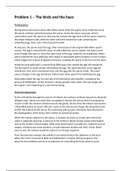
During sexual intercourse about 300 million sperm enter the vagina. Once inside the cervix
the sperm continue swimming toward the uterus. Inside the uterus muscular uterine
contractions assist the sperm on their journey toward the egg. Next, half the sperm head for
the empty fallopian tube, while the other half swim toward the tube containing the
unfertilized egg. Now, only a few thousand remain.
At long last, the sperm reach the egg. Only a few dozen of the original 300 million sperm
remain. The egg is covered with a layer of cells called the corona radiata. The sperm must
push through this layer to reach the outer layer of the egg, called the zona pellucida. When
sperm reached the zona pellucida, they attach to specialized sperm receptors on the surface,
which triggers the release of digestive enzymes, enabling the sperm to burrow into the layer.
Inside the zona pellucida is a narrow fluid filled space just outside the egg cell membrane.
The first sperm to make contact will fertilize the egg. The sperm attaches to the egg cell
membrane, their outer membranes fuse and the egg pulls the sperm inside. This event
causes changes in the egg membrane that prevent other sperm from fertilizing the egg.
Meanwhile inside the egg, the two sets of chromosomes join together, completing the
process of fertilization. At this moment a unique genetic code arises. This new single cell,
the zygote, is the beginning of a new human being.
Fetal development
As the cells divide through the process of mitosis, the embryo continues its journey along the
fallopian tube. About one week after conception it reaches the uterus which is prepared to
receive it with the network of blood vessels and glands. By this time the embryo has become
a fluid-filled sphere of nearly 100 cells. Some of the cells become finger like projections that
anchor the embryo to the uterus. The anchoring cells secrete a hormone that will prevent
the disintegration of the lining, there will be no menstrual period.
When the embryo attaches to the uterus, a complex structure of vessels and cells forms
which is called the placenta. A network of the embryo’s blood vessels closely intermingled
next to the mother’s blood supply. While their blood doesn’t actually mix, materials such as
oxygen, nutrients and waste products can pass between mother and child. If their blood
were to mix, the embryo would be rejected as a foreign organism.
From the placenta emerges the umbilical cord which leads to the abdomen of the fetus.
When the cord is removed at birth, the bellybutton is created. During pregnancy the
placenta and umbilical cord serve as pathways for everything the fetus needs to grow.
, Ovulation and pregnancy
Every month, hormones in a woman’s body tell the uterus to make a lining of blood and
tissue. Also once a month, your body will send a signal to begin ovulation. Ovulation is when
a woman’s ovaries release an egg, about 14 days before the first day of a woman’s period.
The egg then travels down one of the fallopian tubes. When a couple has sexual intercourse
and does not use birth control around the time of ovulation, a man’s sperm will swim to
meet the woman’s egg. When a sperm penetrates the egg, it’s called fertilization or
conception. The fertilized egg or zygote then travels to the woman’s uterus. Here the
embryo attaches itself into the lining of the uterus and begins to grow.
Mitosis and meiosis
- Haploid (n) = Half the contingency of chromosomes (23 chromosomes in humans).
o Germ cells in the testes and ovaries produce gametes (sperm and ova).
- Diploid (2n) = The full contingency of chromosomes (46 chromosomes in humans).
o Somatic cells outside of the gonads produce diploid body cells.
Mitosis
DNA is replicated before mitosis. During mitosis the replicated chromosomes separate and
move to opposite poles of the cell, thus providing the same genetic material at each of these
locations. Cytokinesis takes place and daughter cells are formed. Mitosis has four phases:
Prokaryotes
asexual reproduction single chromosomes circular DNA
Eukaryotes sexual reproduction pairs of chromosomes linear DNA
Meiosis
DNA replication occurs before meiosis. Meiosis is a step-by-step process by which a diploid
parent cell produces four haploid daughter cells. One of the characteristics that distinguishes
meiosis from mitosis is that, during the prophase, there is an exchange of genetic material
between non-sister chromatids in a process called crossing-over. This helps increase the
variety among offspring from the same two parents, which increases survival changes.
Fertilization
During sexual intercourse about 300 million sperm enter the vagina. Once inside the cervix
the sperm continue swimming toward the uterus. Inside the uterus muscular uterine
contractions assist the sperm on their journey toward the egg. Next, half the sperm head for
the empty fallopian tube, while the other half swim toward the tube containing the
unfertilized egg. Now, only a few thousand remain.
At long last, the sperm reach the egg. Only a few dozen of the original 300 million sperm
remain. The egg is covered with a layer of cells called the corona radiata. The sperm must
push through this layer to reach the outer layer of the egg, called the zona pellucida. When
sperm reached the zona pellucida, they attach to specialized sperm receptors on the surface,
which triggers the release of digestive enzymes, enabling the sperm to burrow into the layer.
Inside the zona pellucida is a narrow fluid filled space just outside the egg cell membrane.
The first sperm to make contact will fertilize the egg. The sperm attaches to the egg cell
membrane, their outer membranes fuse and the egg pulls the sperm inside. This event
causes changes in the egg membrane that prevent other sperm from fertilizing the egg.
Meanwhile inside the egg, the two sets of chromosomes join together, completing the
process of fertilization. At this moment a unique genetic code arises. This new single cell,
the zygote, is the beginning of a new human being.
Fetal development
As the cells divide through the process of mitosis, the embryo continues its journey along the
fallopian tube. About one week after conception it reaches the uterus which is prepared to
receive it with the network of blood vessels and glands. By this time the embryo has become
a fluid-filled sphere of nearly 100 cells. Some of the cells become finger like projections that
anchor the embryo to the uterus. The anchoring cells secrete a hormone that will prevent
the disintegration of the lining, there will be no menstrual period.
When the embryo attaches to the uterus, a complex structure of vessels and cells forms
which is called the placenta. A network of the embryo’s blood vessels closely intermingled
next to the mother’s blood supply. While their blood doesn’t actually mix, materials such as
oxygen, nutrients and waste products can pass between mother and child. If their blood
were to mix, the embryo would be rejected as a foreign organism.
From the placenta emerges the umbilical cord which leads to the abdomen of the fetus.
When the cord is removed at birth, the bellybutton is created. During pregnancy the
placenta and umbilical cord serve as pathways for everything the fetus needs to grow.
, Ovulation and pregnancy
Every month, hormones in a woman’s body tell the uterus to make a lining of blood and
tissue. Also once a month, your body will send a signal to begin ovulation. Ovulation is when
a woman’s ovaries release an egg, about 14 days before the first day of a woman’s period.
The egg then travels down one of the fallopian tubes. When a couple has sexual intercourse
and does not use birth control around the time of ovulation, a man’s sperm will swim to
meet the woman’s egg. When a sperm penetrates the egg, it’s called fertilization or
conception. The fertilized egg or zygote then travels to the woman’s uterus. Here the
embryo attaches itself into the lining of the uterus and begins to grow.
Mitosis and meiosis
- Haploid (n) = Half the contingency of chromosomes (23 chromosomes in humans).
o Germ cells in the testes and ovaries produce gametes (sperm and ova).
- Diploid (2n) = The full contingency of chromosomes (46 chromosomes in humans).
o Somatic cells outside of the gonads produce diploid body cells.
Mitosis
DNA is replicated before mitosis. During mitosis the replicated chromosomes separate and
move to opposite poles of the cell, thus providing the same genetic material at each of these
locations. Cytokinesis takes place and daughter cells are formed. Mitosis has four phases:
Prokaryotes
asexual reproduction single chromosomes circular DNA
Eukaryotes sexual reproduction pairs of chromosomes linear DNA
Meiosis
DNA replication occurs before meiosis. Meiosis is a step-by-step process by which a diploid
parent cell produces four haploid daughter cells. One of the characteristics that distinguishes
meiosis from mitosis is that, during the prophase, there is an exchange of genetic material
between non-sister chromatids in a process called crossing-over. This helps increase the
variety among offspring from the same two parents, which increases survival changes.