Week 2 ICIL
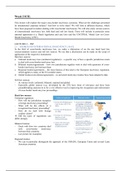
This lecture will explore the major cross-border insolvency scenarios. What are the challenges presented
by international corporate failures? And how to solve them? We will look at different theories, which
have been proposed in matters dealing with cross-border insolvencies. We will also study various sources
of (international) insolvency law, both hard and soft law based. These will include in particular some
national approaches (i.e. Dutch legislation and case law) and the UNCITRAL Model Law on Cross-
Border Insolvency (1997).
LECTURE 2 – INT
2.1 – SOURCES OF INTERNATIONAL INSOLVENCY [18:43]
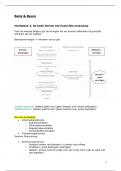
In the field of cross-border insolvency law, we make a distinction of on the one hand hard law
sources/statutory sources and soft law sources. We see that a disctinction can be made on the scope of
application of the respective instruments:
Hard law sources:
a. National insolvency laws (unilateral regulation) – a specific way of how a specific jurisdiction wants
to deal with cross-border insolvency law.
b. Bilateral treaties/agreements – how two jurisdictions together wish to deal with questions of corss-
border insolvency law between them
c. Regional treaties/agreements – the most famous of this kind is the European insolvency regulation,
which applies to many of the EU-member states.
d. Global treaties/conventions/agreements – no universal insolvency treaties have been adopted to date.
Soft law sources:
- At various levels: unilateral, bilateral, regional and global.
- Especially global sources (e.g. developed by the UN) have been of relevance and have been
groundbreaking and proven to be a very effective tool in improving the recognition and enforcement
of cross-border insolvency law proceedings.
Hard law sources
Unilateral regulation:
- How will my jurisdiction recognize
a foreign insolvency proceeding?
- What will be the effects of a
recognized insolvency proceeding?
- How do we deal with foreign
creditor claims?
Still the types of regulations can
differ strongly
Bilateral treaties:
- Deals with how two countries deal
with cross-border insolvency
between their countries.
- (see picture for examples)
Regional treaties:
- We can in particular distinguish the approach of the OHADA, European Union and several Latin
American countries.
,European Union (EU):
In 2000, the European Insolvency Regulation (EIR) came into force. The regulation has 27 EU Member
States (all except Denmark). There are two versions of the EIR:
- EIR 1348/2000, which has been applicable since 2002, and;
- EIR 2015/848, which has been applicable to insolvency proceedings opened since the 27 th of June
2017. This version recasted/amended the version of 2002 and extended it in many respects.
Nowadays both are still applicable, as the EIR 2000 is applicable to all those insolvency proceedings
with cross-border effects in European that have been opened before the 27 th of June 2017.
Organization for Harmonization of Business law in Africa (OHADA):
There are currently 17 member states including Cameroon, Chad, Côte d’Ivoire, Senegal, DRC, which
work together to try to uniform certain parts of their commercial laws. They have adopted two particular
instruments:
- Uniform Insolvency Act 1998 (258 articles) – this one deals with more substantive insolvency
restructuring law.
- Uniform Act on Insolvency and Restructuring in Africa 2015 (378 articles) – this version implements
the UN commission on international trade, model law and cross border insolvency
- Adoption of UNCITRSL Model Law on Cross-Border Insolvency in 2018.
Several Latin American Countries – Treaty of Montevideo on international Commercial Law (1889)
A third example is the approach taken by several Latin American countries. Since the early 1800s, in
many different compositions, these countries have adopted several treaties ensuring more effective
handling of e.g. cross-border insolvency.
- Argentina, Bolivia, Colombia, Paraguay, Peru and Uruguay (1940)
- Jurisdiction to open proceedings linked to ‘commercial domicile’ of debtor.
- Only one set of proceedings with universal effect (no automatic)
- Recognition of powers of foreign insolvency representatives
- Local creditors can initiate local insolvency proceedings
Soft law sources
In dealing with cross-border insolvency, the arrangements of unilateral, bilateral and regional agreements
are often not enough. Unilateral agreements are not coherent nor consistent between jurisdictions. This
therefore also decreases the predictability of cross-border insolvency cases. The same might apply even
for regional agreements, in the sence that it might mnot be sure for outsiders what is meant or expected
and how the rules are applied, or it might be faced with the fact that some countries fall within the
agreement, but others don’t. Therefore, the step-by-step approach of soft law could prove to be a better
approach. What is soft law? Soft law instruments are often described as:
a. Vague
b. Hard to find
c. Difficult to interpret
d. Not binding, simply not relevant
By hearing the aforementioned criticisms, one might think that soft law is not relevant and should be
rejected in full. However, this would be an early and possibly wrong conclusion. Soft law has proven to
have an important role in furthering and improving the cross-border insolvency law practice. There are
various approaches to define soft law:
a. A concept on a continuum of law in the making – situated between hard law and political
arrangements.
o Hard law provisions: 1. very specific, 2. binding and 3. providing specific rules or authority for
someone/specific institutions to interpret and implement the law.
, o Political arrangements being completely non-binding in every way and the weakest type of
arrangement.
In between these two extremes we would find soft law, in different shades of the
aforementioned criteria of hard law either not being applied or being weakened. Therefore, a
soft law instrument could be less binding, not as precise in what kind of obligations it intends
to give and has limited applicability in a sense of how it should be interpreted or
implemented.
b. Hard law requires:
a. Referring to binding obligations’
b. Providing for precise obligations, and;
c. Delegating authority for interpreting and implementation.
c. For soft law – one or more hard law dimensions are weakened.
It is important to remember soft law is not merely the opposite of hard law. Instead it is a form situated in
between hard law and political arrangements. Therefore, there are many variations and shades of what it
can be. We can also distinguish soft law by the different types of drafters, or in other words ‘standard-
setting organizations’, of soft law (global, regional, national, informal). They primarily look into two
topics:
a. Cooperation and communication, and;
b. Restructuring.
Standard-Setting Organizations
These Standard-Setting Organizations are quite diverse; however, they share some characteristics:
- Of good reputation;
- Known for expertise and/or experience;
- Outcome of their work is (usually) legally non-binding.
They can also be distinguished into different categories:
1. International intergovernmental standard0setting organization (UNCITRAL, World Bank)
2. Other global, regional, and local standard-setting organizations (INSOL International, International
Insolvency Institute, American Law Institute, INSOL Europe, European Law Institute (ELI), CERIL,
INSOLAD).
3. Informal standard-setters (Working groups for CoCo Guidelines, EU JudgeCo Principles, Nordic-
Baltic Recommendations, CoDiRe Project).
In recent years soft law’s relevance has really increased: from 12 in 2000, to 55 in 2018. Four examples
of the relevance of soft law are that:
1. Practitioners resort to soft law in certain matters which are insufficiently dealt with by hard law. An
example of a matter is cross border cooperation and communication. This can be seen in several
cases:
a. BenQ Holding
b. Automold
c. Lehman Brothers Holdings Inc.
d. PIN AG
e. Nortel Networks
2. Judges include references to soft law in their judgments.
3. Soft law is impacting hard law. Two examples of cases in which this happened are:
a. UK Chancery Guide – refers to ALI-III Global Principles (2012), EU JudgeCo Principles (2014),
JIN Guidelines (2016).
b. UK legislative initiative on insolvency and governance (government response) – refers to
UNCITRAL (2004) and ELI Instrument on Business Rescue (2017).
This lecture will explore the major cross-border insolvency scenarios. What are the challenges presented
by international corporate failures? And how to solve them? We will look at different theories, which
have been proposed in matters dealing with cross-border insolvencies. We will also study various sources
of (international) insolvency law, both hard and soft law based. These will include in particular some
national approaches (i.e. Dutch legislation and case law) and the UNCITRAL Model Law on Cross-
Border Insolvency (1997).
LECTURE 2 – INT
2.1 – SOURCES OF INTERNATIONAL INSOLVENCY [18:43]
In the field of cross-border insolvency law, we make a distinction of on the one hand hard law
sources/statutory sources and soft law sources. We see that a disctinction can be made on the scope of
application of the respective instruments:
Hard law sources:
a. National insolvency laws (unilateral regulation) – a specific way of how a specific jurisdiction wants
to deal with cross-border insolvency law.
b. Bilateral treaties/agreements – how two jurisdictions together wish to deal with questions of corss-
border insolvency law between them
c. Regional treaties/agreements – the most famous of this kind is the European insolvency regulation,
which applies to many of the EU-member states.
d. Global treaties/conventions/agreements – no universal insolvency treaties have been adopted to date.
Soft law sources:
- At various levels: unilateral, bilateral, regional and global.
- Especially global sources (e.g. developed by the UN) have been of relevance and have been
groundbreaking and proven to be a very effective tool in improving the recognition and enforcement
of cross-border insolvency law proceedings.
Hard law sources
Unilateral regulation:
- How will my jurisdiction recognize
a foreign insolvency proceeding?
- What will be the effects of a
recognized insolvency proceeding?
- How do we deal with foreign
creditor claims?
Still the types of regulations can
differ strongly
Bilateral treaties:
- Deals with how two countries deal
with cross-border insolvency
between their countries.
- (see picture for examples)
Regional treaties:
- We can in particular distinguish the approach of the OHADA, European Union and several Latin
American countries.
,European Union (EU):
In 2000, the European Insolvency Regulation (EIR) came into force. The regulation has 27 EU Member
States (all except Denmark). There are two versions of the EIR:
- EIR 1348/2000, which has been applicable since 2002, and;
- EIR 2015/848, which has been applicable to insolvency proceedings opened since the 27 th of June
2017. This version recasted/amended the version of 2002 and extended it in many respects.
Nowadays both are still applicable, as the EIR 2000 is applicable to all those insolvency proceedings
with cross-border effects in European that have been opened before the 27 th of June 2017.
Organization for Harmonization of Business law in Africa (OHADA):
There are currently 17 member states including Cameroon, Chad, Côte d’Ivoire, Senegal, DRC, which
work together to try to uniform certain parts of their commercial laws. They have adopted two particular
instruments:
- Uniform Insolvency Act 1998 (258 articles) – this one deals with more substantive insolvency
restructuring law.
- Uniform Act on Insolvency and Restructuring in Africa 2015 (378 articles) – this version implements
the UN commission on international trade, model law and cross border insolvency
- Adoption of UNCITRSL Model Law on Cross-Border Insolvency in 2018.
Several Latin American Countries – Treaty of Montevideo on international Commercial Law (1889)
A third example is the approach taken by several Latin American countries. Since the early 1800s, in
many different compositions, these countries have adopted several treaties ensuring more effective
handling of e.g. cross-border insolvency.
- Argentina, Bolivia, Colombia, Paraguay, Peru and Uruguay (1940)
- Jurisdiction to open proceedings linked to ‘commercial domicile’ of debtor.
- Only one set of proceedings with universal effect (no automatic)
- Recognition of powers of foreign insolvency representatives
- Local creditors can initiate local insolvency proceedings
Soft law sources
In dealing with cross-border insolvency, the arrangements of unilateral, bilateral and regional agreements
are often not enough. Unilateral agreements are not coherent nor consistent between jurisdictions. This
therefore also decreases the predictability of cross-border insolvency cases. The same might apply even
for regional agreements, in the sence that it might mnot be sure for outsiders what is meant or expected
and how the rules are applied, or it might be faced with the fact that some countries fall within the
agreement, but others don’t. Therefore, the step-by-step approach of soft law could prove to be a better
approach. What is soft law? Soft law instruments are often described as:
a. Vague
b. Hard to find
c. Difficult to interpret
d. Not binding, simply not relevant
By hearing the aforementioned criticisms, one might think that soft law is not relevant and should be
rejected in full. However, this would be an early and possibly wrong conclusion. Soft law has proven to
have an important role in furthering and improving the cross-border insolvency law practice. There are
various approaches to define soft law:
a. A concept on a continuum of law in the making – situated between hard law and political
arrangements.
o Hard law provisions: 1. very specific, 2. binding and 3. providing specific rules or authority for
someone/specific institutions to interpret and implement the law.
, o Political arrangements being completely non-binding in every way and the weakest type of
arrangement.
In between these two extremes we would find soft law, in different shades of the
aforementioned criteria of hard law either not being applied or being weakened. Therefore, a
soft law instrument could be less binding, not as precise in what kind of obligations it intends
to give and has limited applicability in a sense of how it should be interpreted or
implemented.
b. Hard law requires:
a. Referring to binding obligations’
b. Providing for precise obligations, and;
c. Delegating authority for interpreting and implementation.
c. For soft law – one or more hard law dimensions are weakened.
It is important to remember soft law is not merely the opposite of hard law. Instead it is a form situated in
between hard law and political arrangements. Therefore, there are many variations and shades of what it
can be. We can also distinguish soft law by the different types of drafters, or in other words ‘standard-
setting organizations’, of soft law (global, regional, national, informal). They primarily look into two
topics:
a. Cooperation and communication, and;
b. Restructuring.
Standard-Setting Organizations
These Standard-Setting Organizations are quite diverse; however, they share some characteristics:
- Of good reputation;
- Known for expertise and/or experience;
- Outcome of their work is (usually) legally non-binding.
They can also be distinguished into different categories:
1. International intergovernmental standard0setting organization (UNCITRAL, World Bank)
2. Other global, regional, and local standard-setting organizations (INSOL International, International
Insolvency Institute, American Law Institute, INSOL Europe, European Law Institute (ELI), CERIL,
INSOLAD).
3. Informal standard-setters (Working groups for CoCo Guidelines, EU JudgeCo Principles, Nordic-
Baltic Recommendations, CoDiRe Project).
In recent years soft law’s relevance has really increased: from 12 in 2000, to 55 in 2018. Four examples
of the relevance of soft law are that:
1. Practitioners resort to soft law in certain matters which are insufficiently dealt with by hard law. An
example of a matter is cross border cooperation and communication. This can be seen in several
cases:
a. BenQ Holding
b. Automold
c. Lehman Brothers Holdings Inc.
d. PIN AG
e. Nortel Networks
2. Judges include references to soft law in their judgments.
3. Soft law is impacting hard law. Two examples of cases in which this happened are:
a. UK Chancery Guide – refers to ALI-III Global Principles (2012), EU JudgeCo Principles (2014),
JIN Guidelines (2016).
b. UK legislative initiative on insolvency and governance (government response) – refers to
UNCITRAL (2004) and ELI Instrument on Business Rescue (2017).