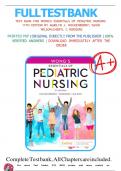
,TEST BANK FOR WONGS ESSENTIAL OF
Stuvia.com - The Marketplace to Buy and Sell your Study Material
PEDIATRIC NURSING 11TH EDITION BY MARILYN
J. HOCKENBERRY,
TEST BANK FOR DAVID WILSON CHERYL C
RODGERS
Wong's Essentials of Pediatric Nursing 11th Edition
Authors: Marilyn J. Hockenberry, David Wilson Cheryl C Rodgers
Table of Content
Chapter 01: Children, Their Families, and the Nurse
Chapter 02: Social, Cultural, Religious, and Family Influences on Child Health Promotion
Chapter 03: Developmental and Genetic Influences on Child Health Promotion
Chapter 04: Communication and Physical Assessment of the Child and Family
Chapter 05: Pain Assessment and Management in Children
Chapter 06: Childhood Communicable and Infectious Diseases
Chapter 07: Health Promotion of the Newborn and Family
Chapter 08: Health Problems of Newborns
Chapter 09: Health Promotion of the Infant and Family
Chapter 10: Health Problems of Infants
Chapter 11: Health Promotion of the Toddler and Family
Chapter 12: Health Promotion of the Preschooler and Family
Chapter 13: Health Problems of Toddlers and Preschoolers
Chapter 14: Health Promotion of the School-Age Child and Family
Chapter 15: Health Promotion of the Adolescent and Family
Chapter 16: Health Problems of School-Age Children and Adolescents
Chapter 17: Impact of Chronic Illness, Disability, or End-of-Life Care on the Child and Family
Chapter 18: Impact of Cognitive or Sensory Impairment on the Child and Family
Chapter 19: Family-Centered Care of the Child During Illness and Hospitalization
Chapter 20: Pediatric Nursing Interventions and Skills
Chapter 21: The Child With Respiratory Dysfunction
Chapter 22: The Child With Gastrointestinal Dysfunction
Chapter 23: The Child With Cardiovascular Dysfunction
Chapter 24: The Child With Hematologic or Immunologic Dysfunction
Chapter 25: The Child With Cancer
Chapter 26: The Child With Genitourinary Dysfunction
Chapter 27: The Child With Cerebral Dysfunction
Chapter 28: The Child With Endocrine Dysfunction
Chapter 29: The Child With Musculoskeletal or Articular Dysfunction
Chapter 30: The Child With Neuromuscular or Muscular Dysfunction
Chapter 31: The Child With Integumentary Dysfunction
Chapter 01: Children, Their Families, and the Nurse
Evolve Resources for Wong’s Essentials of Pediatric Nursing, 11th Edition
MULTIPLE CHOICE
1. The nurse would include which associated risk when planning a teaching session about
childhood obesity?
a. Type I diabetes
b. Respiratory disease
c. Celiac disease
d. Type II diabetes
ANS: D
Downloaded by: roblescindy | Want to earn
Distribution of this document is illegal $103 per month?
, Stuvia.com - The Marketplace to Buy and Sell your Study Material
Childhood obesity has been associated with the rise of type II diabetes in children. Type I
diabetes is not associated with obesity and has a genetic component. Respiratory disease is not
associated with obesity, and celiac disease is the inability to metabolize gluten in foods and is not
associated with obesity.
DIF: Cognitive Level: Remember TOP: Integrated Process: Nursing Process: Planning
MSC: Area of Client Needs: Health Promotion and Maintenance
2. Which second-leading cause of death topic would the nurse emphasize to a group of boys
ranging in age from 15 to 19 years?
a. Suicide
b. Cancer
c. Homicide
d. Occupational injuries
ANS: C
Firearm homicide is the second overall cause of death in this age group and the leading cause of
death in African-American males. Suicide is the third-leading cause of death in this population.
Cancer, although a major health problem, is the fourth-leading cause of death in this age group.
Occupational injuries do not contribute to a significant death rate for this age group.
DIF: Cognitive Level: Understand TOP: Integrated Process: Nursing Process: Planning
MSC: Area of Client Needs: Health Promotion and Maintenance
3. Which is the major cause of death for children older than 1 year?
a. Cancer
b. Heart disease
c. Unintentional injuries
d. Congenital anomalies
ANS: C
Unintentional injuries (accidents) are the leading cause of death after age 1 year through
adolescence. Congenital anomalies are the leading cause of death in those younger than 1 year.
Cancer ranks either second or fourth, depending on the age group, and heart disease ranks fifth in
the majority of the age groups.
DIF: Cognitive Level: Remember TOP: Integrated Process: Nursing Process: Planning
MSC: Area of Client Needs: Health Promotion and Maintenance
4. Which factor most impacts the type of injury a child is susceptible to, according to the child’s
age?
a. Physical health of the child
b. Developmental level of the child
c. Educational level of the child
d. Number of responsible adults in the home
Downloaded by: roblescindy | Want to earn
Distribution of this document is illegal $103 per month?
, Stuvia.com - The Marketplace to Buy and Sell your Study Material
ANS: B
The child’s developmental stage determines the type of injury that is likely to occur. The child’s
physical health may facilitate the child’s recovery from an injury but does not impact the type of
injury. Educational level is related to developmental level, but it is not as important as the child’s
developmental level in determining the type of injury. The number of responsible adults in the
home may affect the number of unintentional injuries, but the type of injury is related to the
child’s developmental stage.
DIF: Cognitive Level: Understand TOP: Integrated Process: Nursing Process: Planning
MSC: Area of Client Needs: Health Promotion and Maintenance
5. A nurse on a pediatric unit is practicing family-centered care. Which is most descriptive of the
care the nurse is delivering?
a. Taking over total care of the child to reduce stress on the family
b. Encouraging family dependence on health care systems
c. Recognizing that the family is the constant in a child’s life
d. Excluding families from the decision-making process
ANS: C
The three key components of family-centered care are respect, collaboration, and support.
Family-centered care recognizes the family as the constant in the child’s life. Taking over total
care does not include the family in the process and may increase stress instead of reducing stress.
The family should be enabled and empowered to work with the health care system. The family is
expected to be part of the decision-making process.
DIF: Cognitive Level: Understand
TOP: Integrated Process: Nursing Process: Implementation
MSC: Area of Client Needs: Health Promotion and Maintenance
6. Which intervention would the nurse include when providing atraumatic care?
a. Prepare the child for separation from parents during hospitalization by reviewing a
video.
b. Prepare the child before any unfamiliar treatment or procedure.
c. Help the child accept the loss of control associated with hospitalization.
d. Help the child accept pain that is connected with a treatment or procedure.
ANS: B
Preparing the child for any unfamiliar treatments, controlling pain, allowing privacy, providing
play activities for expression of fear and aggression, providing choices, and respecting cultural
differences are components of atraumatic care. In the provision of atraumatic care, the separation
of child from parents during hospitalization is minimized. The nurse should promote a sense of
control for the child. Preventing and minimizing bodily injury and pain are major components of
atraumatic care.
Downloaded by: roblescindy | Want to earn
Distribution of this document is illegal $103 per month?
Stuvia.com - The Marketplace to Buy and Sell your Study Material
PEDIATRIC NURSING 11TH EDITION BY MARILYN
J. HOCKENBERRY,
TEST BANK FOR DAVID WILSON CHERYL C
RODGERS
Wong's Essentials of Pediatric Nursing 11th Edition
Authors: Marilyn J. Hockenberry, David Wilson Cheryl C Rodgers
Table of Content
Chapter 01: Children, Their Families, and the Nurse
Chapter 02: Social, Cultural, Religious, and Family Influences on Child Health Promotion
Chapter 03: Developmental and Genetic Influences on Child Health Promotion
Chapter 04: Communication and Physical Assessment of the Child and Family
Chapter 05: Pain Assessment and Management in Children
Chapter 06: Childhood Communicable and Infectious Diseases
Chapter 07: Health Promotion of the Newborn and Family
Chapter 08: Health Problems of Newborns
Chapter 09: Health Promotion of the Infant and Family
Chapter 10: Health Problems of Infants
Chapter 11: Health Promotion of the Toddler and Family
Chapter 12: Health Promotion of the Preschooler and Family
Chapter 13: Health Problems of Toddlers and Preschoolers
Chapter 14: Health Promotion of the School-Age Child and Family
Chapter 15: Health Promotion of the Adolescent and Family
Chapter 16: Health Problems of School-Age Children and Adolescents
Chapter 17: Impact of Chronic Illness, Disability, or End-of-Life Care on the Child and Family
Chapter 18: Impact of Cognitive or Sensory Impairment on the Child and Family
Chapter 19: Family-Centered Care of the Child During Illness and Hospitalization
Chapter 20: Pediatric Nursing Interventions and Skills
Chapter 21: The Child With Respiratory Dysfunction
Chapter 22: The Child With Gastrointestinal Dysfunction
Chapter 23: The Child With Cardiovascular Dysfunction
Chapter 24: The Child With Hematologic or Immunologic Dysfunction
Chapter 25: The Child With Cancer
Chapter 26: The Child With Genitourinary Dysfunction
Chapter 27: The Child With Cerebral Dysfunction
Chapter 28: The Child With Endocrine Dysfunction
Chapter 29: The Child With Musculoskeletal or Articular Dysfunction
Chapter 30: The Child With Neuromuscular or Muscular Dysfunction
Chapter 31: The Child With Integumentary Dysfunction
Chapter 01: Children, Their Families, and the Nurse
Evolve Resources for Wong’s Essentials of Pediatric Nursing, 11th Edition
MULTIPLE CHOICE
1. The nurse would include which associated risk when planning a teaching session about
childhood obesity?
a. Type I diabetes
b. Respiratory disease
c. Celiac disease
d. Type II diabetes
ANS: D
Downloaded by: roblescindy | Want to earn
Distribution of this document is illegal $103 per month?
, Stuvia.com - The Marketplace to Buy and Sell your Study Material
Childhood obesity has been associated with the rise of type II diabetes in children. Type I
diabetes is not associated with obesity and has a genetic component. Respiratory disease is not
associated with obesity, and celiac disease is the inability to metabolize gluten in foods and is not
associated with obesity.
DIF: Cognitive Level: Remember TOP: Integrated Process: Nursing Process: Planning
MSC: Area of Client Needs: Health Promotion and Maintenance
2. Which second-leading cause of death topic would the nurse emphasize to a group of boys
ranging in age from 15 to 19 years?
a. Suicide
b. Cancer
c. Homicide
d. Occupational injuries
ANS: C
Firearm homicide is the second overall cause of death in this age group and the leading cause of
death in African-American males. Suicide is the third-leading cause of death in this population.
Cancer, although a major health problem, is the fourth-leading cause of death in this age group.
Occupational injuries do not contribute to a significant death rate for this age group.
DIF: Cognitive Level: Understand TOP: Integrated Process: Nursing Process: Planning
MSC: Area of Client Needs: Health Promotion and Maintenance
3. Which is the major cause of death for children older than 1 year?
a. Cancer
b. Heart disease
c. Unintentional injuries
d. Congenital anomalies
ANS: C
Unintentional injuries (accidents) are the leading cause of death after age 1 year through
adolescence. Congenital anomalies are the leading cause of death in those younger than 1 year.
Cancer ranks either second or fourth, depending on the age group, and heart disease ranks fifth in
the majority of the age groups.
DIF: Cognitive Level: Remember TOP: Integrated Process: Nursing Process: Planning
MSC: Area of Client Needs: Health Promotion and Maintenance
4. Which factor most impacts the type of injury a child is susceptible to, according to the child’s
age?
a. Physical health of the child
b. Developmental level of the child
c. Educational level of the child
d. Number of responsible adults in the home
Downloaded by: roblescindy | Want to earn
Distribution of this document is illegal $103 per month?
, Stuvia.com - The Marketplace to Buy and Sell your Study Material
ANS: B
The child’s developmental stage determines the type of injury that is likely to occur. The child’s
physical health may facilitate the child’s recovery from an injury but does not impact the type of
injury. Educational level is related to developmental level, but it is not as important as the child’s
developmental level in determining the type of injury. The number of responsible adults in the
home may affect the number of unintentional injuries, but the type of injury is related to the
child’s developmental stage.
DIF: Cognitive Level: Understand TOP: Integrated Process: Nursing Process: Planning
MSC: Area of Client Needs: Health Promotion and Maintenance
5. A nurse on a pediatric unit is practicing family-centered care. Which is most descriptive of the
care the nurse is delivering?
a. Taking over total care of the child to reduce stress on the family
b. Encouraging family dependence on health care systems
c. Recognizing that the family is the constant in a child’s life
d. Excluding families from the decision-making process
ANS: C
The three key components of family-centered care are respect, collaboration, and support.
Family-centered care recognizes the family as the constant in the child’s life. Taking over total
care does not include the family in the process and may increase stress instead of reducing stress.
The family should be enabled and empowered to work with the health care system. The family is
expected to be part of the decision-making process.
DIF: Cognitive Level: Understand
TOP: Integrated Process: Nursing Process: Implementation
MSC: Area of Client Needs: Health Promotion and Maintenance
6. Which intervention would the nurse include when providing atraumatic care?
a. Prepare the child for separation from parents during hospitalization by reviewing a
video.
b. Prepare the child before any unfamiliar treatment or procedure.
c. Help the child accept the loss of control associated with hospitalization.
d. Help the child accept pain that is connected with a treatment or procedure.
ANS: B
Preparing the child for any unfamiliar treatments, controlling pain, allowing privacy, providing
play activities for expression of fear and aggression, providing choices, and respecting cultural
differences are components of atraumatic care. In the provision of atraumatic care, the separation
of child from parents during hospitalization is minimized. The nurse should promote a sense of
control for the child. Preventing and minimizing bodily injury and pain are major components of
atraumatic care.
Downloaded by: roblescindy | Want to earn
Distribution of this document is illegal $103 per month?